
You know the author. Meet the typist.
Exhibit celebrates women who labored behind the scenes of masterworks
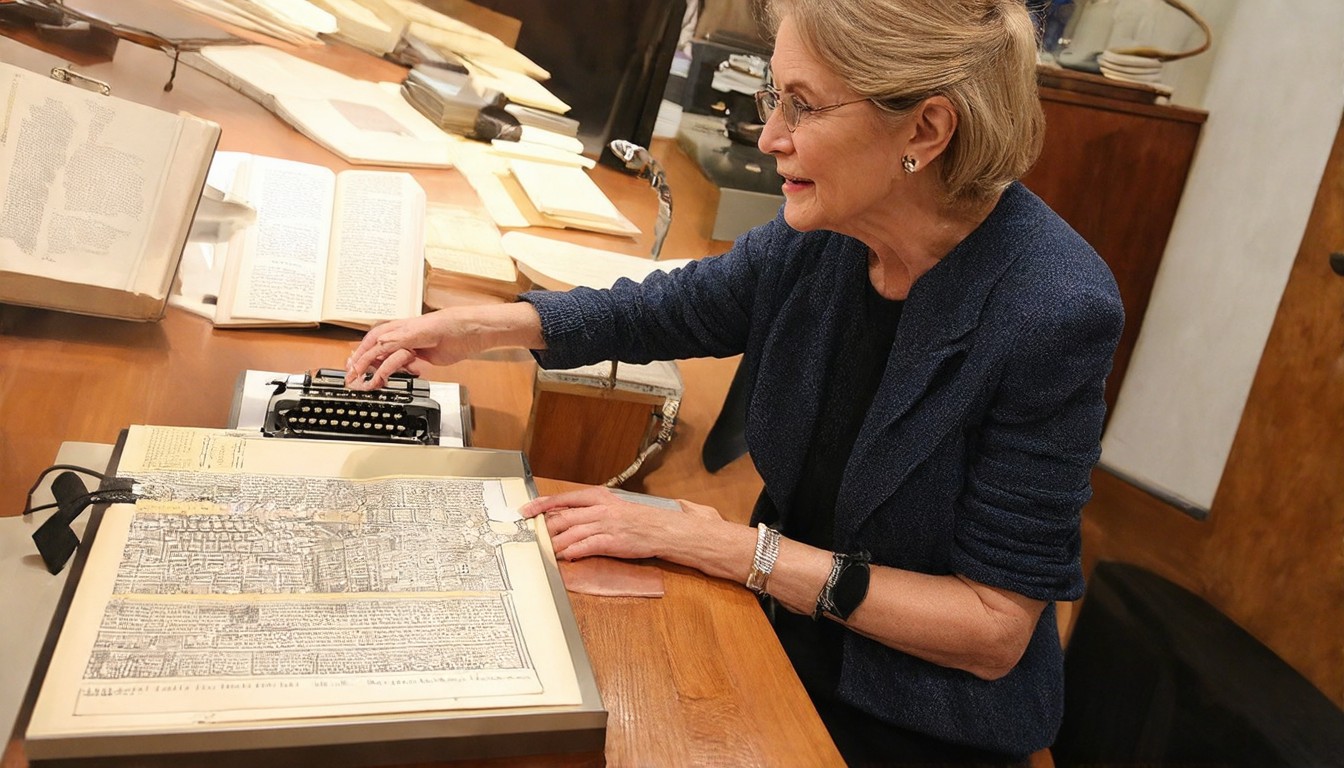
In a world where authors are celebrated for their literary genius, the unsung heroes behind the scenes often remain invisible. That’s changing, however, as a new exhibit at Harvard’s Houghton Library brings light to the women who labored tirelessly as typists, transcribing the words of famous authors, government officials, and Hollywood creatives. Titled “Thanks for Typing: Women’s Type Labor in Literature and the Arts,” the exhibit delves into the stories of these women, including Vera Nabokov, the wife of Vladimir Nabokov, who typed every word of his novels, including the iconic “Lolita” and “Pale Fire.”
Vladimir Nabokov, a prolific writer known for his intricate plots and rich prose, never learned to type. Instead, he wrote his works on small notecards, which he would shuffle and rearrange until he was satisfied with the narrative arc. Once finalized, these notecards were either dictated to his wife, Vera, or handed to her to be typed in their entirety. Vera’s meticulous typing was essential to the publication of Nabokov’s literary masterpieces, yet her contributions have long been overlooked.
The exhibit is not just about Vera Nabokov; it celebrates the countless women who worked as typists, secretaries, and transcribers for influential figures across various fields. These women were the backbone of the literary, governmental, and artistic worlds, yet their labor has often been acknowledged only in passing mentions, such as “Thanks to Judy for typing” or “Thanks to my wife, Mary, for typing the manuscript and transcribing the interviews.”
The inspiration for “Thanks for Typing” came from a viral social media campaign, #thanksfortyping, started by University of Virginia Professor Bruce Holsinger. While browsing academic monographs on Google Books, Holsinger noticed a recurring pattern in the acknowledgment sections: repeated thanks to typists and transcribers. This observation sparked the idea of uncovering the stories of these women and giving them the recognition they deserve.
Curated by Christine Jacobson, associate curator of modern books and manuscripts at Harvard’s Houghton Library, and Dale Stinchcomb of New York’s Morgan Library, the exhibit showcases a range of materials, including typewriters, manuscripts, and personal artifacts. Visitors can explore the lives and work of these women, whose dedication and skill brought countless works to life.
“Thanks for Typing” not only highlights the contributions of women in the past but also raises awareness about the ongoing importance of such labor in today’s world. In an era where digital technology has transformed the way we communicate and create, the exhibit serves as a reminder of the human touch that has always been integral to the production of knowledge and art.
By shining a spotlight on the lives and work of these women, “Thanks for Typing” pays tribute to the unsung heroes who have shaped the world through their labor. It encourages us to appreciate the often invisible efforts that have made history possible and to recognize the value of all forms of work, no matter how overlooked.
In the end, the exhibit is a celebration of resilience, dedication, and the transformative power of the written word. It invites us to reconsider our understanding of history and creativity, acknowledging that every masterpiece is the result of a collaborative effort between the author and the typist.









