
You don’t fight Parkinson’s without ‘raw moments.’ She shared them.
Chan School’s Sue Goldie felt ‘sheer responsibility’ to let journalist tell her story
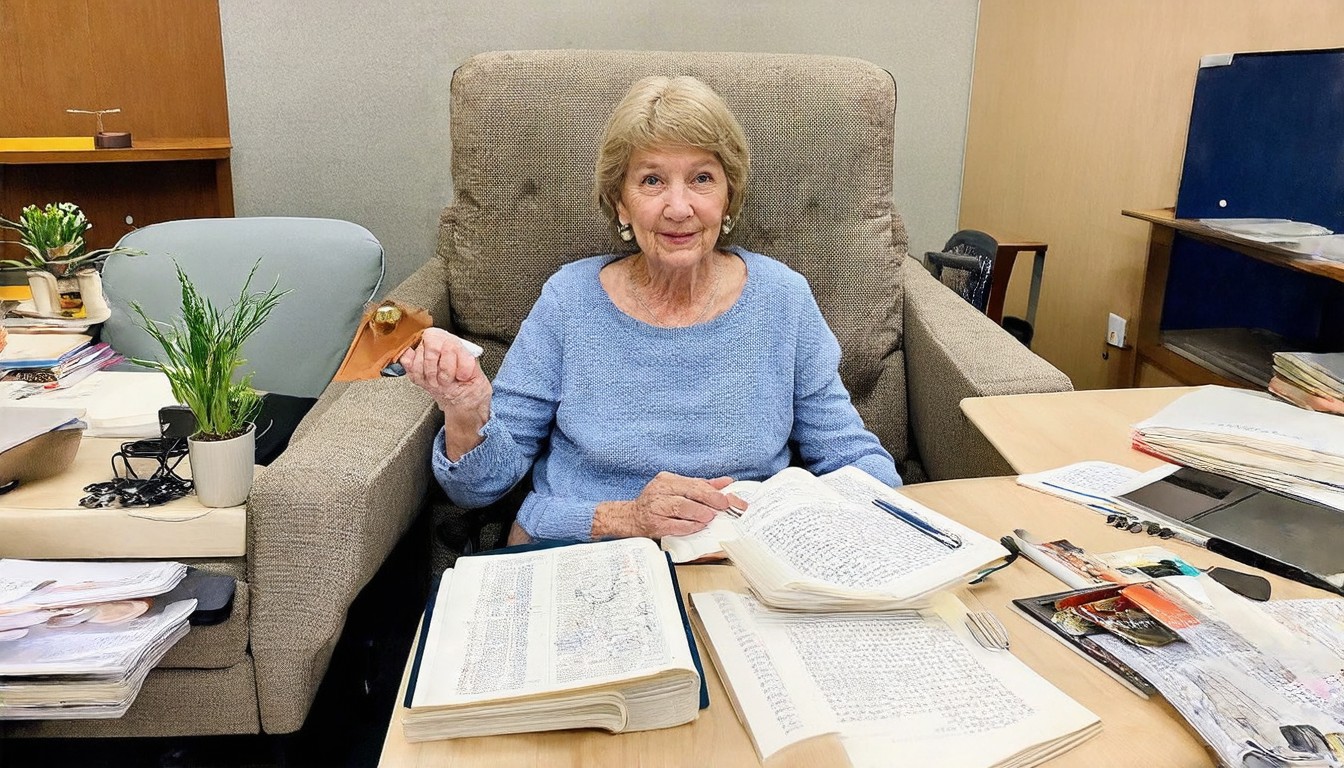
In a world where the fight against Parkinson’s disease often remains hidden behind closed doors, Harvard’s T.H. Chan School of Public Health Professor Sue Goldie chose to share her personal journey with the world. Diagnosed in 2021, Goldie, the Roger Irving Lee Professor of Public Health, allowed New York Times journalist John Branch to document her life over the past two years, including the raw and vulnerable moments that come with living with an incurable disease.
Goldie’s decision to open up about her experience was not made lightly. She acknowledged the challenges of adjusting to the reality of Parkinson’s and the difficulty of sharing such a personal narrative with a stranger. “It was not uncomplicated,” she said. “I think it requires a lot of mutual trust to let someone in your life to see you at those raw moments and you really don’t know what they are going to write… I just felt this sheer responsibility to try to speak out loud and to try to give voice to what is so difficult.”
Parkinson’s disease, a progressive neurological disorder, is characterized by the depletion of dopamine in the brain, leading to motor symptoms such as tremors, rigidity, and slowness of movement. As the condition worsens, it can also cause problems with balance and gait. However, Goldie emphasized that Parkinson’s is far more than just its visible symptoms; it is a multi-system disorder that affects individuals in unique ways. “The one thing about Parkinson’s that is absolutely true is it plays out differently in everyone,” she noted, highlighting the wide variability in symptom onset and progression timelines.
For Goldie, the first signs of the disease appeared during her preparation for her first Ironman triathlon, a challenge introduced to her by her son. “I couldn’t put my finger on it, but I just wasn’t feeling well,” she recalled. Despite these early indications, she continued to train, working with a coach while simultaneously serving as the faculty director of two centers and teaching three large courses. Her coach’s observations eventually led to her seeking medical attention, which ultimately resulted in her diagnosis.
Goldie’s journey with Parkinson’s has been marked by both challenges and triumphs. By sharing her story, she hopes to shed light on the complexities of the disease and the diverse experiences of those living with it. Her decision to make her fight public serves as a powerful reminder of the importance of openness and the need for increased understanding and empathy in the face of such a debilitating condition.
In speaking about her experience at the Chan School, Goldie underscored the significance of her collaboration with the journalist. She acknowledged the trust required for such an intimate portrayal and the responsibility that came with sharing her story. Yet, she believed that by doing so, she could help others navigate their own struggles with Parkinson’s and inspire them to find their own strength in the face of adversity.
As the fight against Parkinson’s continues, Goldie’s courage to share her raw moments serves as a testament to the power of storytelling in raising awareness and fostering a deeper understanding of the disease. Her journey is a poignant reminder that, while Parkinson’s may be incurable, the human spirit remains resilient, and the stories of those who live with it can offer hope and inspiration to others.








