
Will the West betray or save anti-Putin protesters in Georgia?
Democratic activists in Russia’s near-abroad pin their hopes on admission by the EU and NATO
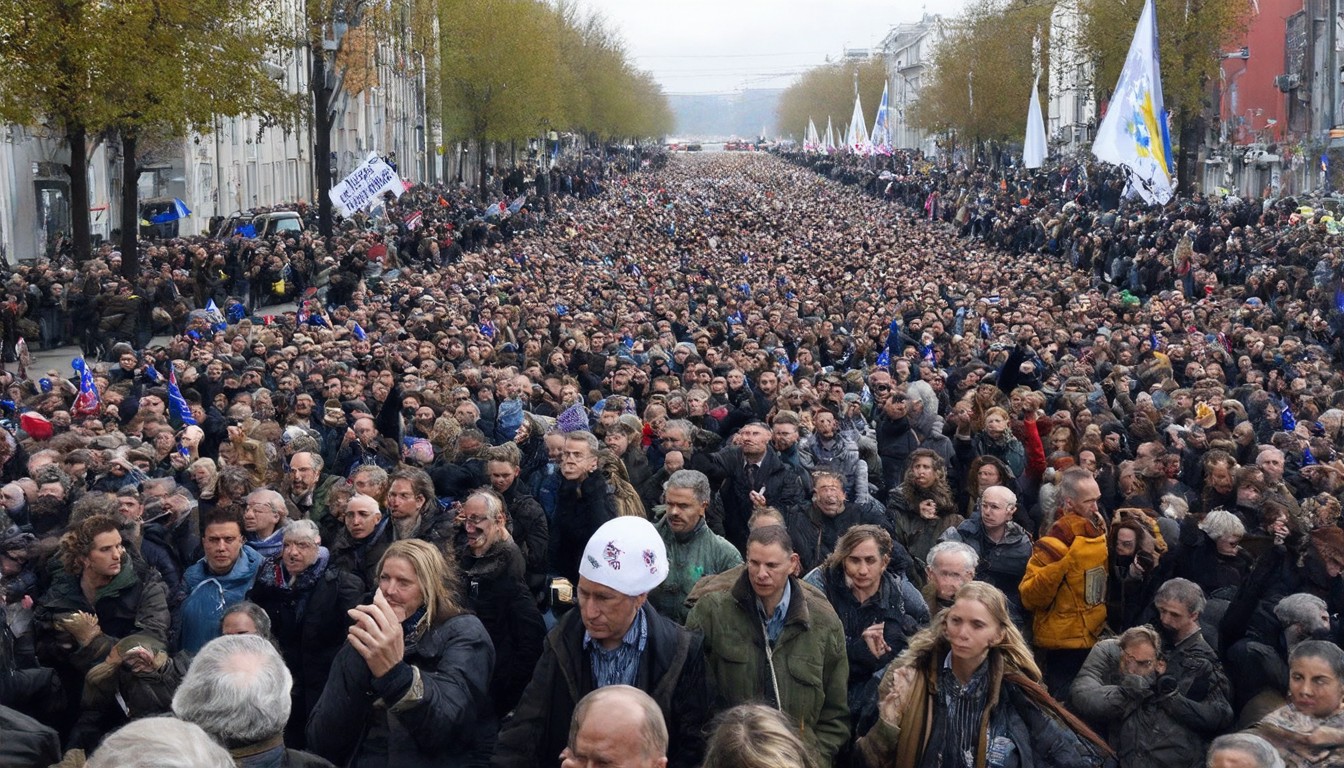
As tensions rise in Georgia, a country bordered by Russia, the question of whether the West will support anti-Putin protesters or abandon them to Moscow’s wrath becomes increasingly pressing. The Georgian capital, Tbilisi, has become a focal point for activists seeking to challenge the Kremlin’s influence in the region. These activists, many of whom are part of a growing movement in Russia’s near-abroad, are looking to the European Union (EU) and NATO for a lifeline, hoping that their admission into these Western alliances will provide both political legitimacy and practical support.
The protesters, who have been organizing rallies and demonstrations in recent weeks, are driven by a shared desire for greater political freedom and a stronger commitment to democratic values. They see the EU and NATO as symbols of resistance against Russian aggression, and they believe that membership in these organizations could help protect their cause. However, the path to joining these alliances is fraught with challenges, as both the EU and NATO have their own strict criteria and timelines for expansion.
The EU, in particular, has been cautious in its approach to Georgia, citing concerns over corruption and the need for further reforms. While the EU has expressed support for Georgia’s aspirations, it has also emphasized the importance of addressing internal issues before any serious discussion about membership can take place. This has led some activists to feel that the EU is hesitant to take a strong stand against Russia, fearing retaliation or the destabilization of the region.
NATO, on the other hand, has a more limited role in Georgia, primarily focusing on security cooperation and training. While NATO has been supportive of Georgia’s right to self-defense, it has not made any concrete promises of membership. This has left some activists feeling that NATO is more interested in maintaining a strategic presence in the region rather than actively supporting their cause.
The situation in Georgia is further complicated by the geopolitical dynamics of the area. Russia has long viewed Georgia as part of its sphere of influence, and Moscow has been known to use a range of tactics, from economic pressure to direct intervention, to maintain control over its near-abroad. This has led many activists to worry that if the West does not act decisively, they may be left to face Russian repression alone.
Despite these challenges, the activists remain hopeful, believing that the EU and NATO have a moral obligation to support their struggle for democracy. They argue that by standing up to Russian aggression, the West can send a powerful message to other authoritarian regimes and demonstrate its commitment to upholding international norms.
However, the question of whether the West will follow through with concrete support remains unanswered. Some analysts suggest that the EU and NATO may be more interested in maintaining a delicate balance of power in the region rather than taking a firm stand against Russia. Others argue that the West’s hesitation could embolden Moscow, leading to further destabilization in the area.
In the meantime, the activists in Georgia continue to rally, their voices growing louder in the face of mounting pressure from Moscow. As they await a response from the West, the question of whether the EU and NATO will ultimately betray or save these protesters hangs in the balance. The outcome of this struggle could have far-reaching implications not only for Georgia but also for the broader geopolitical landscape of Europe and beyond.









