
Will Lebanon implode?
Israel is inflaming sectarian tensions
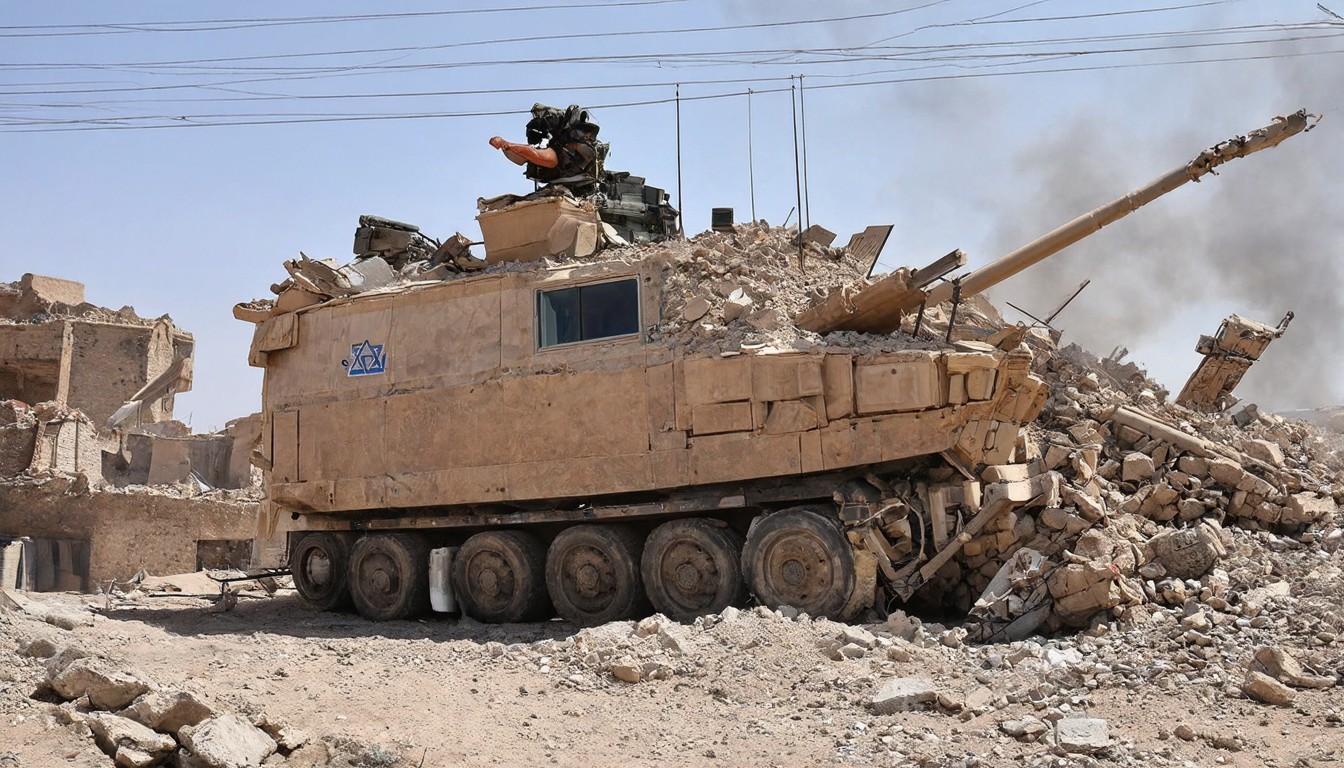
As tensions rise in Lebanon, the country teeters on the brink of a potential implosion, with sectarian divisions threatening to tear the nation apart. The ongoing conflict between Israel and Hezbollah has already displaced over a million civilians, primarily Shia Muslims, leaving them homeless and vulnerable. This situation has deepened the existing political and demographic fragility of Lebanon, a nation that has long balanced on a tightrope of religious and ethnic diversity.
In the Christian town of Zahlé, perched on the eastern slope of Mount Lebanon, Michel Masaad gazes at the Bekaa Valley below, where bombs fall daily. The once-peaceful town now bears witness to the devastation wrought by the war, and Masaad's restaurant on the town's main street is a stark reminder of the uncertainty that hangs over Lebanon. He paints a bleak picture of the future, warning that the conflict will not end with the cessation of hostilities in Iran. Instead, it will metamorphose into a full-blown civil war, as the displaced population cannot return to their destroyed homes.
Lebanon, a country roughly the size of Wales, has long been a mosaic of religious and ethnic groups. Sunni and Shia Muslims, Druze, and Christians from twelve different denominations coexist within its borders, sharing space, resources, and power. This diversity has been both a strength and a weakness for the nation, as it has historically led to delicate balances of power and frequent political crises.
The demographic landscape of Lebanon has been in flux since its inception in 1943. The influx of Palestinian refugees following Israel's founding in 1948 was a significant factor in the outbreak of Lebanon's own civil war in 1975. Since then, the country has faced further demographic challenges, most notably the arrival of over a million Syrian refugees during the Syrian civil war, many of whom remain in Lebanon today.
The decision by Israeli officials to issue sweeping evacuation orders, encompassing most of southern Lebanon and Beirut's southern suburbs, has forced one-fifth of Lebanon's population to flee their homes. While these orders are presented as a means to protect civilian life in Israel's campaign against Hezbollah, they have inadvertently deepened the political tensions within Lebanon. Moving such a large number of people is not merely a logistical challenge; it is a political one as well, as it threatens the delicate demographic balance that has long underpinned Lebanese society.
Lebanon's reluctance to conduct a census since 1932 is a testament to the nation's fear of what the truth might reveal. The demographic assumptions upon which much of Lebanese society is built could be proven wrong, leading to further instability and conflict. The current crisis, fueled by Israel's actions and the ongoing conflict with Hezbollah, has exposed the vulnerabilities in this fragile system, raising the specter of a potential implosion.
As the war drags on, the prospect of a civil war looms large. The displacement of so many Shia Muslims, who are already a marginalized group within Lebanese society, threatens to exacerbate existing tensions and create a powder keg of sectarian violence. The future of Lebanon hangs in the balance, with its very existence as a cohesive nation at stake. The challenges posed by this conflict are not just military or political, but also demographic, as the nation's delicate balance of power and identity is tested like never before.









