Why the “Magic Microbe” Mindset May be Holding Biologicals Back
Biologicals are booming in agriculture. Investment is pouring into the sector and hundreds of companies are developing microbial products designed to improve crop performance, protect plants and support soil health. […] The post Why the “Magic Microbe” Mindset May be Holding Biologicals Back appeared first on Seed World .
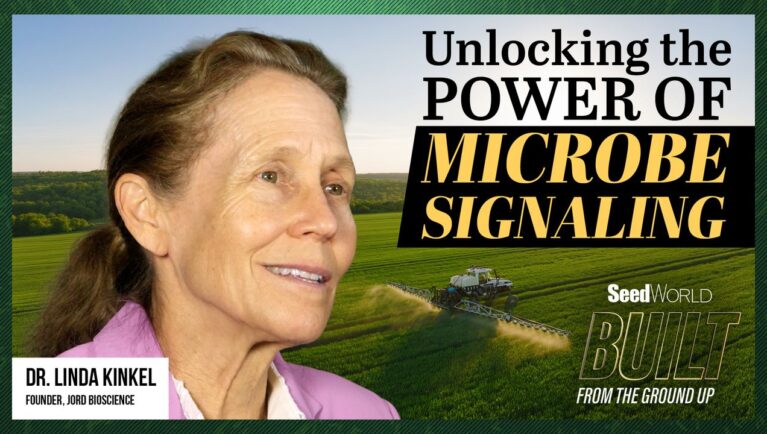
Biologicals are booming in agriculture. Investment is pouring into the sector and hundreds of companies are developing microbial products designed to improve crop performance, protect plants, and support soil health. Yet despite the excitement, one major question remains: why aren’t biologicals consistently delivering their full potential in the field? In an interview with Seed World, Linda Kinkel, founder of Jord BioScience and a leading researcher in plant-microbe interactions, argues the problem lies in how the industry thinks about microbes in the first place.
For years, many biological products have been built around a simple idea: find a powerful microbe, grow it at scale, then apply it to crops. But according to Kinkel, this “magic microbe” approach overlooks a fundamental biological reality. Microbes rarely function alone. In natural systems, they operate within complex communities, communicating with each other and forming partnerships that help them survive, colonize plant roots, and perform key functions for crops. When those relationships are ignored, Kinkel says, microbial products can struggle to establish themselves in the field — leading to inconsistent performance that has challenged parts of the biologicals sector.
After decades researching plant-beneficial microbes in academia, Kinkel reached a turning point: if these discoveries were going to make a real difference in agriculture, they needed to move beyond the lab. That realization led to the launch of Jord BioScience.
Kinkel explains that the current focus on individual microbes, rather than microbial communities, stems from a misunderstanding of how microbes interact in nature. Traditional agricultural practices often rely on single-agent solutions, such as pesticides or fertilizers, which can lead to resistance and environmental harm. Similarly, the biologicals industry has adopted a similar mindset, focusing on isolating and scaling individual microbes rather than understanding their ecological roles.
However, microbial communities are dynamic and interdependent. They adapt to environmental conditions and interact with each other in ways that can enhance their collective effectiveness. For example, some microbes may produce compounds that stimulate plant growth, while others may protect against pathogens. By working together, these microbes can create a synergistic effect that is far greater than the sum of their individual contributions.
The “magic microbe” mindset has led to a lack of emphasis on understanding the interactions between different microbes and their environment. This has resulted in products that may work well in controlled laboratory settings but fail to perform consistently in real-world agricultural conditions.
Kinkel argues that the industry needs to shift its focus from individual microbes to microbial communities. This requires a deeper understanding of the complex interactions between different microbial species and their roles in plant health and soil fertility. By developing products that support the establishment and persistence of these communities, the industry can create more effective and sustainable solutions for farmers.
Moreover, Kinkel emphasizes that microbes should not be treated like conventional chemicals. Unlike synthetic fertilizers or pesticides, microbial products are living organisms that can evolve and adapt over time. This means that their effectiveness can change in response to environmental factors, such as temperature, moisture, and soil composition. Understanding these dynamics is crucial for developing products that can thrive in diverse agricultural settings.
The shift towards a microbial community-based approach also has implications for the development and testing of new products. Traditional methods often focus on measuring the impact of individual microbes, rather than the collective effects of microbial communities. To address this, Kinkel advocates for the development of new testing protocols that account for the complexity of these interactions.
In conclusion, the “magic microbe” mindset may be holding the biologicals sector back by overlooking the importance of microbial communities and their ecological roles. By adopting a more holistic approach to microbial research and development, the industry can create products that are more effective, sustainable, and adaptable to the diverse challenges faced by modern agriculture. As the demand for biological solutions continues to grow, it is crucial for the industry to rethink its foundational assumptions and embrace a new way of understanding and harnessing the power of microbes.