
? Why I changed my mind about Apple
AI’s most important hardware company?
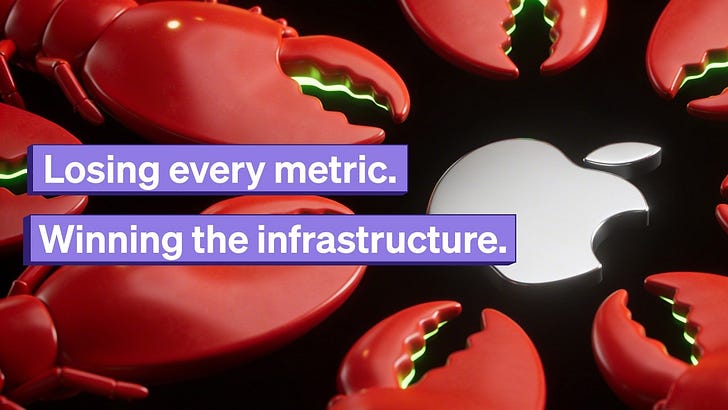
I used to firmly believe that Apple was not a significant player in the world of AI. After all, the company had been slow to invest heavily in AI research and development, and its flagship AI product, Siri, had not seen major improvements in years. I was part of a group of analysts and observers who thought that Apple was lagging behind its competitors in the AI race. But then something changed.
It started with my daily interactions with AI tools like ChatGPT and Claude. As I experimented with different models and switched between them, I realized that I was doing so on an Apple device. The hardware, specifically the Mac Mini, remained consistent throughout these experiments. This observation didn't immediately shake my preconceived notions about Apple's role in AI, but it planted a seed of curiosity.
The seed grew into a full-blown reevaluation of my stance when OpenClaw, a powerful AI tool, arrived on the scene. OpenClaw agents quickly became indispensable to me, and I needed a dedicated machine to run them. I purchased a new Mac Mini, naming it Arnold, to handle the workload. The demand for Mac Minis surged as more users recognized the potential of running AI tools on Apple hardware.
The impact was evident in retail stores like Best Buy, where shelves emptied as customers rushed to buy Mac Minis. Delivery times extended from a few days to several weeks, highlighting the sudden surge in demand. Even the Mac Studio, another popular Apple device, experienced longer wait times.
Jensen Huang, the CEO of NVIDIA, further fueled the discussion when he referred to OpenClaw as "the new computer." While he was not directly referring to the Mac Mini, it was clear that Apple's hardware was playing a crucial role in the AI ecosystem.
What I had initially overlooked was the importance of Apple's hardware in supporting AI development and deployment. Apple's devices, with their efficient and reliable performance, had become the backbone for many AI enthusiasts and professionals. The company's focus on hardware excellence had inadvertently positioned it as a key player in the AI landscape.
In the end, my change of heart was not about Apple's research or applied AI efforts but about the critical role its hardware played in the daily lives of AI users. It's a reminder that the intersection of hardware and software can have profound implications, and sometimes, the most impactful contributions come from the most unexpected places.









