
? Why I changed my mind about Apple
AI’s most important hardware company?
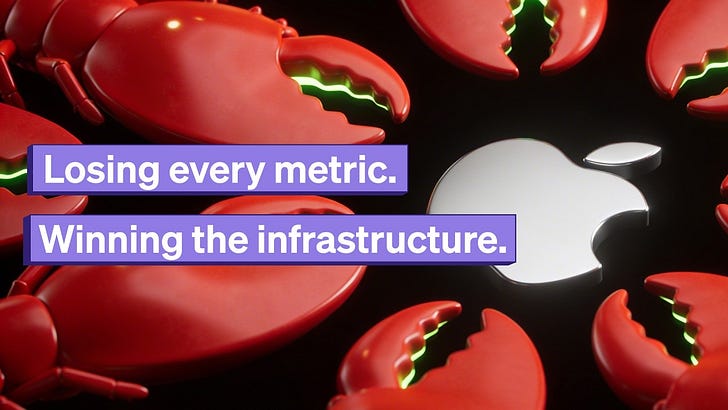
I used to be skeptical about Apple's role in the AI revolution. After all, the company has been slow to invest heavily in AI research and infrastructure. Unlike Google or Microsoft, Apple hasn't poured billions into data centers or made grand announcements about groundbreaking AI advancements. Siri, the virtual assistant that came with iPhones, seemed stagnant, and many users turned it off. Analysts like John Gruber and Ben Thompson agreed that Apple was lagging behind in the AI race.
But my perspective changed as I witnessed firsthand how deeply integrated Apple hardware was into the daily operations of AI tools. Every time I used ChatGPT or Claude, I was doing so on an Apple device. The AI models evolved constantly, but the devices that powered them remained consistent. This realization became stark when OpenClaw, a powerful AI assistant, arrived on the scene.
OpenClaw's impact was immediate. I started running agents on my home Mac Mini, which quickly became overloaded. The audio system and CCTV cameras began to malfunction due to the heavy demand on the machine. To accommodate the growing needs of the AI, I purchased a new Mac Mini specifically for the agent, naming it Arnold.
As OpenClaw gained popularity, the demand for Apple hardware surged. Delivery times for new Mac Minis stretched from a few days to seven to eight weeks when configured with 64 gigabytes of RAM. Similarly, the Mac Studio, which previously took two or three weeks to arrive, now had a six to eight-week wait. Best Buy shelves emptied as customers rushed to buy the devices needed to run AI tools like OpenClaw.
Jensen Huang, the CEO of NVIDIA, even referred to OpenClaw as "the new computer." While he was not directly referring to the Mac Mini, it became the de facto machine for running the AI assistant in the short term. The situation at Best Buy stores became a focal point for this shift, with employees trying to understand why so many customers were buying Mac Minis.
In the end, my skepticism about Apple's role in AI dissolved. The company's hardware, though not specifically designed for AI, became the backbone of AI tools and applications. The seamless integration of Apple devices into the daily lives of AI users highlighted the importance of reliable and efficient hardware in the rapidly evolving AI landscape. As AI continues to transform various industries, Apple's hardware may not be the focus of AI research, but it is undeniably central to the practical implementation and use of AI technologies.









