
Why GPS fails in cities. And how it was brilliantly fixed
Our everyday GPS struggles in “urban canyons,” where skyscrapers bounce satellite signals, confusing even advanced navigation systems. NTNU scientists created SmartNav, combining satellite corrections, wave analysis, and Google’s 3D building data for remarkable precision. Their method achieved accuracy within 10 centimeters during testing. The breakthrough could make reliable urban navigation accessible and affordable worldwide.
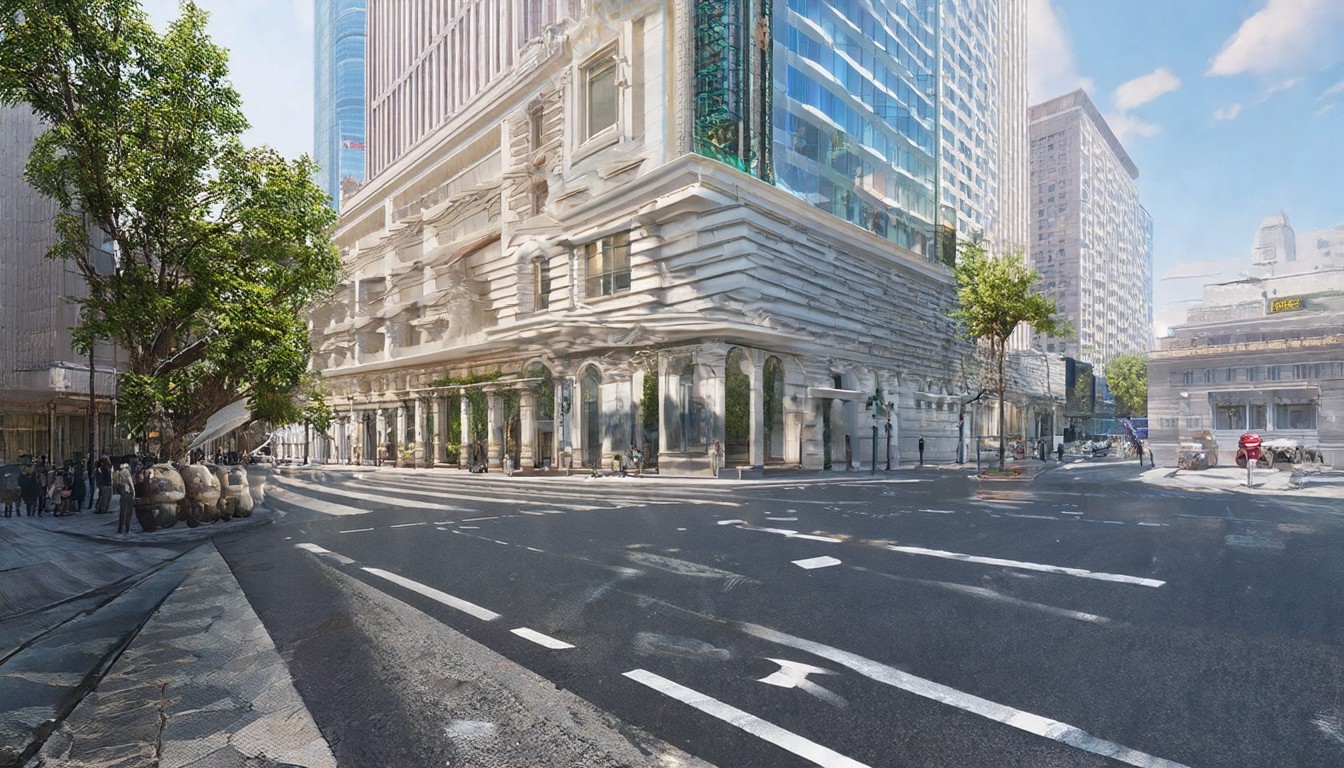
In the heart of bustling cities, where towering skyscrapers and dense buildings create a maze of steel and glass, GPS systems often struggle to provide accurate navigation. This phenomenon, known as the “urban canyon” effect, arises when satellite signals bounce off tall structures, causing confusion even for the most advanced navigation systems. For years, this issue has plagued drivers, delivery services, and emergency responders, leading to delays and safety concerns. However, a groundbreaking solution has emerged from the Norwegian University of Science and Technology (NTNU), offering a potential fix for this pervasive problem.
NTNU scientists have developed a revolutionary navigation system called SmartNav, which combines satellite corrections, wave analysis, and Google’s 3D building data to achieve remarkable precision. This innovative approach addresses the challenges posed by urban canyons by leveraging a combination of cutting-edge technology and detailed spatial data. By analyzing how satellite signals interact with the built environment, SmartNav can accurately determine a user’s location even in the most challenging urban settings.
At the core of SmartNav’s success is its ability to correct for the distortions caused by skyscrapers and other tall structures. Traditional GPS systems rely on signals from satellites in orbit, but these signals can be disrupted by the dense architecture of cities. SmartNav mitigates this issue by incorporating satellite corrections that account for the reflections and refractions of signals caused by buildings. This correction process is further enhanced by wave analysis, which models the propagation of signals through the urban environment, allowing the system to predict and adjust for signal distortions in real-time.
Another critical component of SmartNav is its integration of Google’s 3D building data. This detailed spatial information provides a highly accurate representation of urban landscapes, including the height, shape, and layout of buildings. By using this data, SmartNav can better understand how signals are affected by the surrounding environment and make more precise adjustments. This level of detail is particularly important in cities with complex architectural designs, where traditional GPS systems often struggle to provide accurate location data.
The results of SmartNav’s testing are impressive. During recent trials, the system achieved an accuracy of within 10 centimeters, a level of precision previously unattainable in urban environments. This breakthrough not only improves the reliability of navigation in cities but also has the potential to unlock new applications for location-based services. From optimizing delivery routes to enhancing emergency response times, SmartNav could revolutionize how we navigate and interact with our urban spaces.
Moreover, the accessibility and affordability of SmartNav could transform global urban navigation. By leveraging existing infrastructure and integrating with widely available data sources like Google’s 3D building models, the technology could be implemented in cities around the world without requiring significant upgrades to existing GPS systems. This makes SmartNav a promising solution for both developed and developing nations, where reliable navigation is crucial for economic growth and safety.
In conclusion, the challenges posed by urban canyons have long been a barrier to accurate GPS navigation in cities. However, NTNU’s SmartNav offers a brilliant solution by combining satellite corrections, wave analysis, and detailed spatial data to achieve unprecedented precision. With the potential to improve safety, efficiency, and accessibility in urban environments, SmartNav represents a significant leap forward in the field of navigation technology. As cities continue to grow and evolve, solutions like SmartNav will be essential in ensuring that we can navigate these complex landscapes with confidence and accuracy.









