
Where do thunderstorms form?
Soil moisture and wind patterns are important, reveals new study The post Where do thunderstorms form? appeared first on Physics World .
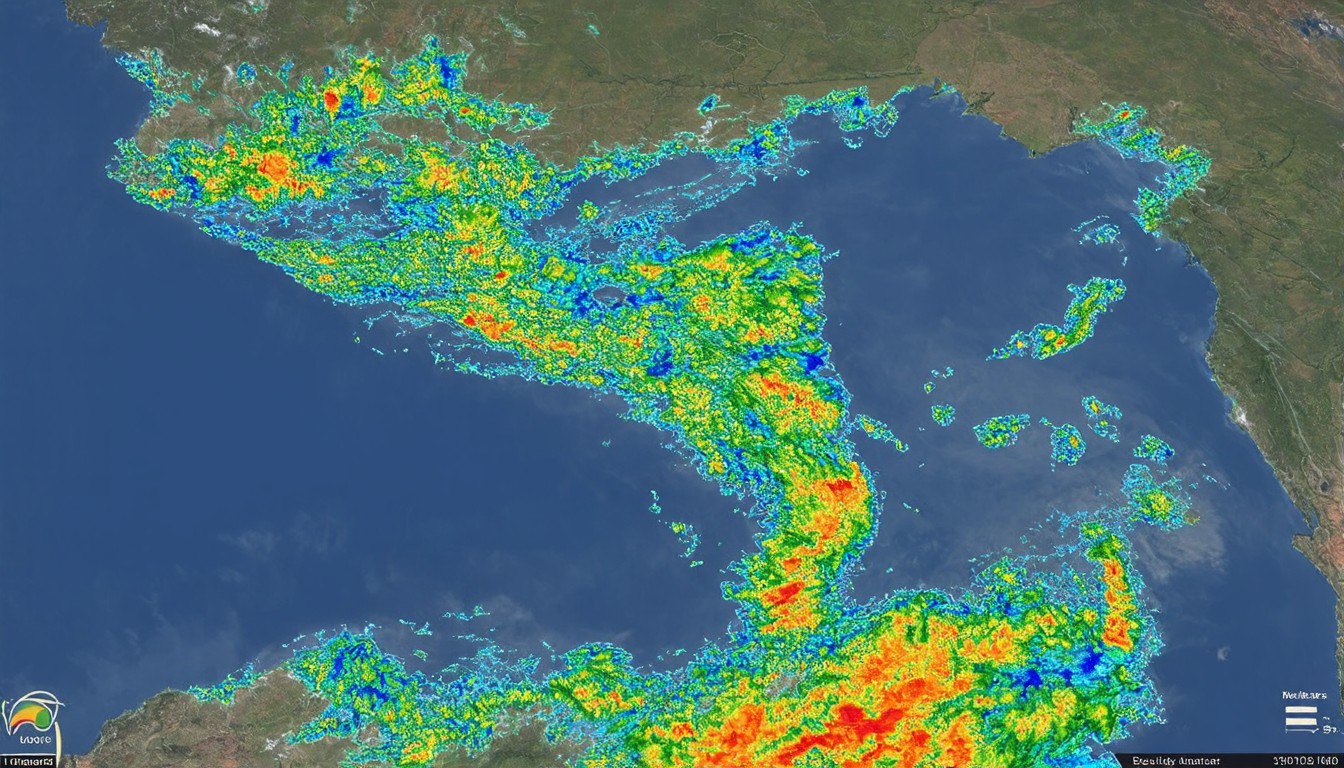
Thunderstorms, those powerful and often dangerous weather events, have long been a subject of fascination and study for meteorologists and climatologists alike. While their rapid development and intense nature are well-documented, predicting their exact origins and development patterns has remained a challenge. A recent study by researchers at the UK Centre for Ecology and Hydrology (UKCEH) sheds new light on the factors that influence where thunderstorms form and how they evolve. This groundbreaking research, led by meteorologist Christopher Taylor, highlights the critical role of soil moisture and wind patterns in the lowest few kilometres of the atmosphere.
The team's findings reveal that the amount of moisture present in the soil, as well as its distribution, combined with wind patterns, can significantly impact the initiation and development of thunderstorms. This discovery has the potential to revolutionize early warning systems for these increasingly frequent and intense weather events, which are becoming more dangerous as the climate warms.
Thunderstorms can develop rapidly on hot afternoons, sometimes within just 30 minutes, as clouds build up and intensify. However, predicting their exact origins has historically been difficult. The research by Taylor and his colleagues has identified that patches of dry soil, ranging from 10 to 50 kilometres in size, can interact with wind fields and influence the formation and growth of convective storm clouds, known as cumulonimbus.
Taylor explains that while it was already known that vertical wind shear – differences in wind speed and direction with height – and land surface heating gradients are critical factors for severe storm development, these elements were typically studied separately. The team's breakthrough came from combining these two aspects. They discovered that convective clouds grow rapidly when winds steering them at heights of 3-4 kilometres above the ground oppose local surface-generated winds near the ground. This combination effectively increases the supply of moist, buoyant air into the cloud, accelerating the updrafts responsible for lightning and heavy rain.
The study challenges the long-held belief that thunderstorm initiation over flat terrain is essentially random. Instead, it demonstrates that under specific conditions – such as those found across sub-Saharan Africa – storm initiations are favoured in particular locations, determined by a combination of soil and wind conditions on a given day.
This research not only deepens our understanding of thunderstorm dynamics but also has practical implications for the development of more accurate early warning systems. As thunderstorms become more frequent and intense due to climate change, the ability to predict their formation with greater precision could save lives and mitigate the damage caused by these powerful weather events.
In conclusion, the UKCEH study, led by Christopher Taylor, has provided valuable insights into the complex interplay between soil moisture, wind patterns, and thunderstorm development. By understanding these factors, meteorologists and climatologists can work towards improving our capacity to predict and prepare for these increasingly challenging weather phenomena.








