When ‘Good Touch, Bad Touch’ Lessons Felt Incomplete, This Mom Built a Safety Curriculum for 60000 Students
There’s something undeniably magical about children — their laughter, boundless curiosity, and the way their innocent questions leave adults speechless. Yet, behind many of those bright smiles lies an uncomfortable truth we try to avoid: children often lack the language, tools, or safety they need to express their emotions or protect themselves from harm. For Dr Kanika Sharma (43), this realisation struck during an ordinary conversation with her four-year-old son. When she asked him what he had learned at school, he replied casually, “Good touch, bad touch,” and ran off to play. The brief exchange left her uneasy. What had he been taught? Was it enough? Did it provide him with the skills to navigate real-world situations? That moment stayed with Kanika, prompting deeper reflection — and ultimately shaping a groundbreaking initiative in child safety and mental well-being. By 2021, her concern for her son and every child had evolved into ‘Hapchi’ — a structured life-skills and safety education system that today reaches thousands of children across India. “Hapchi means ‘happy children’,” Kanika tells The Better India . “At its core, our mission is simple: to make children happy and safe.” A personal journey, a greater purpose Kanika’s journey to founding Hapchi began long before she ever imagined herself as an entrepreneur. Growing up in a conservative family in Faridabad, her life had a predetermined path: she would become a doctor, as her father wished. Dutifully, she pursued medicine, eventually transitioning into healthcare management, where she spent six years building
There's something undeniably magical about children—their laughter, boundless curiosity, and the way their innocent questions leave adults speechless. Yet, behind many of those bright smiles lies an uncomfortable truth we try to avoid: children often lack the language, tools, or safety they need to express their emotions or protect themselves from harm. For Dr. Kanika Sharma (43), this realization struck during an ordinary conversation with her four-year-old son. When she asked him what he had learned at school, he replied casually, “Good touch, bad touch,” and ran off to play. The brief exchange left her uneasy. What had he been taught? Was it enough? Did it provide him with the skills to navigate real-world situations? That moment stayed with Kanika, prompting deeper reflection—and ultimately shaping a groundbreaking initiative in child safety and mental well-being.
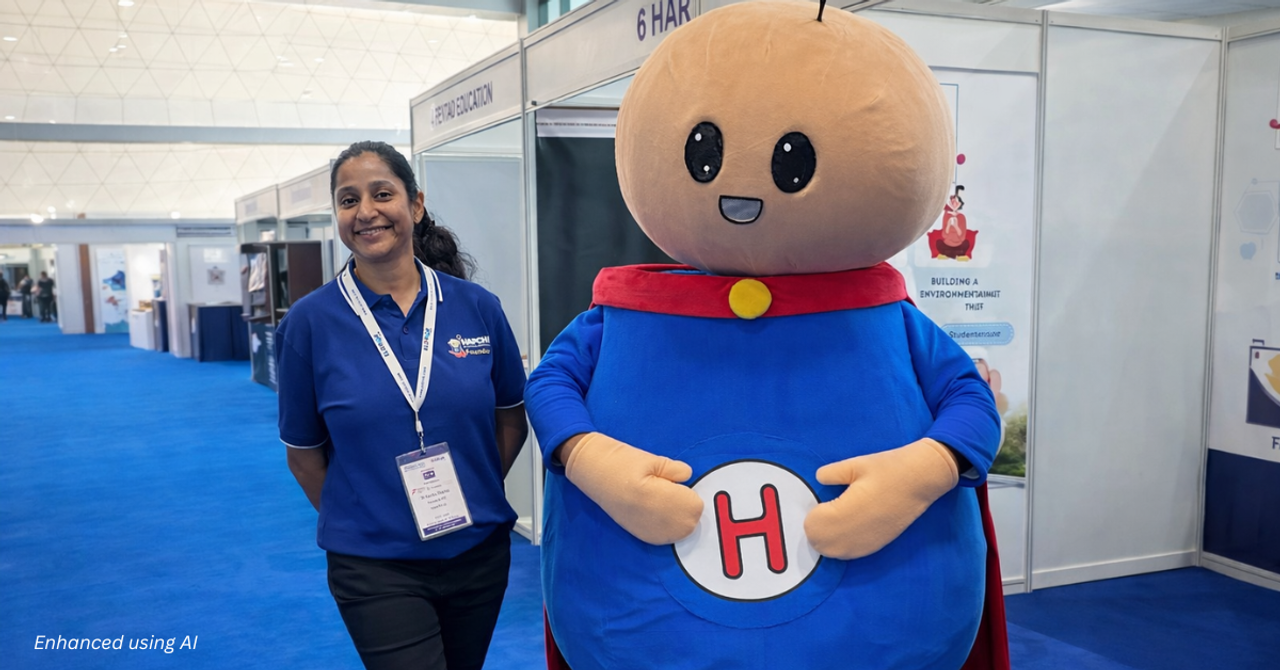
By 2021, her concern for her son and every child had evolved into ‘Hapchi’—a structured life-skills and safety education system that today reaches thousands of children across India. “Hapchi means ‘happy children,’” Kanika tells The Better India. “At its core, our mission is simple: to make children happy and safe.”
A personal journey, a greater purpose
Kanika’s journey to founding Hapchi began long before she ever imagined herself as an entrepreneur. Growing up in a conservative family in Faridabad, her life had a predetermined path: she would become a doctor, as her father wished. Dutifully, she pursued medicine, eventually transitioning into healthcare management, where she spent six years building a successful career.
But a shift occurred when Kanika became a mother. Having grown up in a joint family of nearly 30 relatives, she had always been involved in raising children, but the experience of motherhood deepened her commitment to their well-being. The “good touch, bad touch” conversation with her son sparked a realization: the traditional approach to teaching children about safety was incomplete. She wanted to provide children with more than just a list of rules; she wanted them to develop the confidence and skills to protect themselves in real-world situations.
In HapSafe sessions, children aren’t just told what is unsafe—they are taught how to respond, reflect, and seek support. The program is designed to empower children with the tools they need to make informed decisions and communicate effectively. It covers topics like emotional intelligence, digital safety, and body autonomy, ensuring that children understand the nuances of personal boundaries and the importance of consent.
Hapchi’s curriculum is built on the principle that children should be active participants in their learning. Instead of passive lectures, Hapchi uses interactive activities, role-playing, and storytelling to engage children and reinforce the lessons. This approach not only makes the content more relatable but also encourages children to think critically and apply what they’ve learned in practical scenarios.
The impact of Hapchi extends beyond individual children. By empowering children with the skills to protect themselves, the program also fosters a culture of safety within families and communities. Parents and caregivers are encouraged to support their children’s learning and reinforce the lessons at home. This collaborative effort helps create an environment where children feel safe to express themselves and seek help when needed.
Hapchi’s success is a testament to the power of a single mother’s determination to make a difference. Kanika’s journey from a career in healthcare management to a pioneer in child safety education is inspiring. Her initiative not only addresses the gaps in traditional safety education but also paves the way for a future where children are better equipped to navigate the complexities of the world around them.
As Hapchi continues to grow, its reach expands, touching the lives of tens of thousands of children across India. For Kanika, the journey is far from over. Her mission remains clear: to ensure that every child in India has the tools they need to be happy and safe. And as she looks to the future, she dreams of expanding Hapchi’s reach beyond India’s borders, bringing her innovative approach to child safety education to children around the world.