
What's on the far side of the Moon?
Artemis II's looping path has carried the crew around the far side of the Moon.
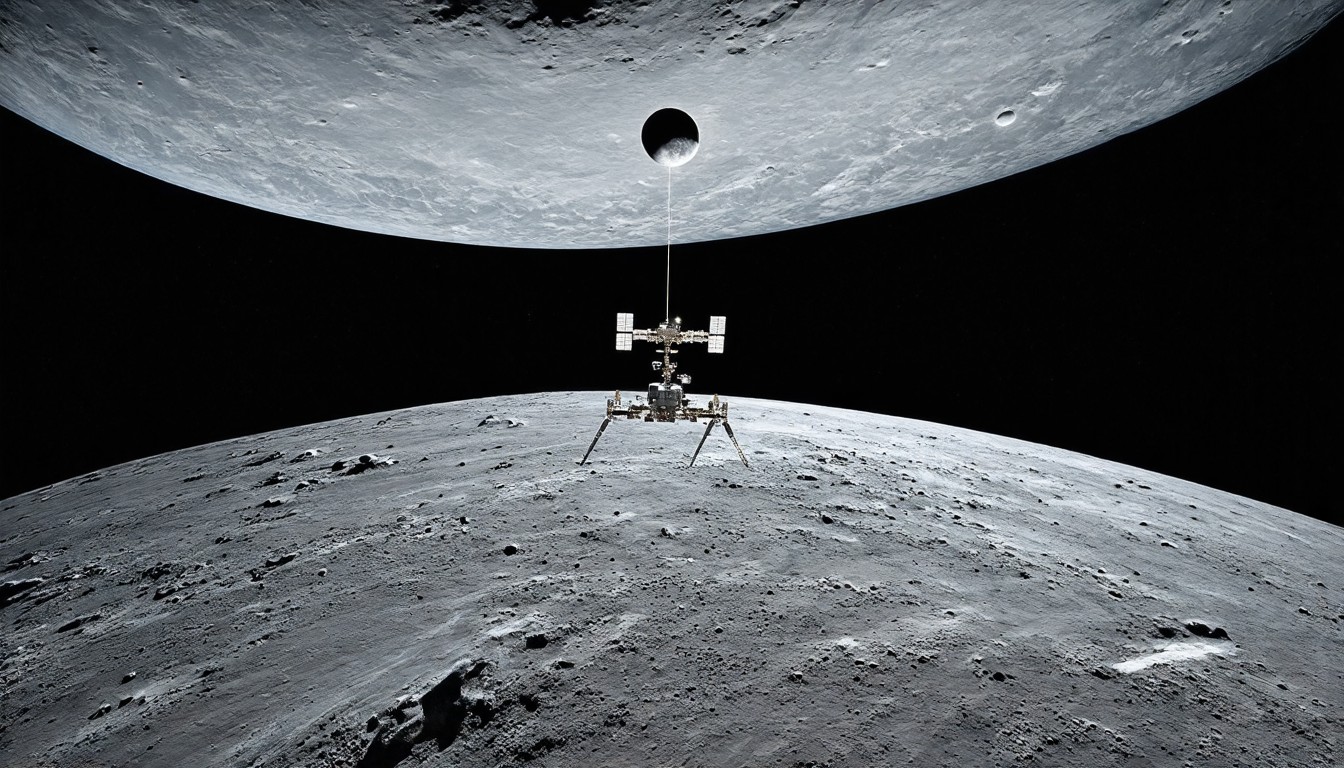
The far side of the Moon, a mysterious and often overlooked region, has recently become the focus of attention as NASA's Artemis II mission carried its crew on a looping path around this hidden hemisphere. This journey marks a significant milestone in space exploration, offering unprecedented insights into the lunar environment and paving the way for future missions.
The far side of the Moon is perpetually shrouded in darkness from Earth's perspective, as it is always facing away from our planet. This side of the Moon has been a subject of intrigue for scientists and space enthusiasts alike, as it harbors unique geological features and potential resources that could be crucial for future lunar exploration and colonization.
Artemis II's mission, a critical step in NASA's Artemis program, aimed to test the spacecraft's capabilities and the crew's ability to perform complex maneuvers in lunar orbit. As the spacecraft looped around the far side, the crew had the opportunity to observe and document the lunar surface in unprecedented detail. High-resolution cameras captured images of the rugged terrain, revealing a landscape marked by ancient craters, towering mountains, and vast plains.
One of the most striking features observed during this mission was the presence of permanently shadowed regions on the far side. These areas, located in the depths of large craters, are shielded from direct sunlight and maintain a relatively stable temperature. This makes them ideal locations for the potential establishment of lunar bases, as they offer protection from radiation and the extreme temperature fluctuations experienced on the sunlit side of the Moon.
The Artemis II mission also provided valuable data on the Moon's gravitational field, which plays a crucial role in maintaining lunar orbit. By studying the subtle variations in the Moon's gravity, scientists hope to refine their understanding of the lunar interior and its formation history. This knowledge is essential for planning future missions, as it can help identify the most suitable landing sites and guide the development of propulsion systems for deep space exploration.
In addition to scientific discoveries, the Artemis II mission underscores the importance of human presence in space. The crew's ability to navigate the complexities of lunar orbit and adapt to the challenges of space travel serves as a testament to human ingenuity and resilience. As the crew completed their loop around the far side, they became the first humans to witness the breathtaking beauty of this hidden world, inspiring a new generation of explorers and scientists.
Looking ahead, the insights gained from Artemis II will inform the planning of subsequent missions, such as Artemis III, which aims to land astronauts on the lunar surface. These future missions will build on the groundwork laid by Artemis II, with the ultimate goal of establishing a sustainable presence on the Moon and using it as a stepping stone for exploration beyond our solar system.
In conclusion, the Artemis II mission's journey around the far side of the Moon has opened a new chapter in space exploration. By revealing the secrets of this enigmatic region, the mission has provided invaluable data for scientists and demonstrated the capabilities of human spacecraft. As we continue to push the boundaries of our knowledge and ambition, the far side of the Moon serves as a reminder of the vast frontiers that still await discovery.









