What NASA is looking for in the coming days as Artemis II loops around the moon
NASA Administrator Jared Isaacman outlined the most critical moments he expects in the coming days as Artemis II astronauts continue their journey around the far side of the moon.
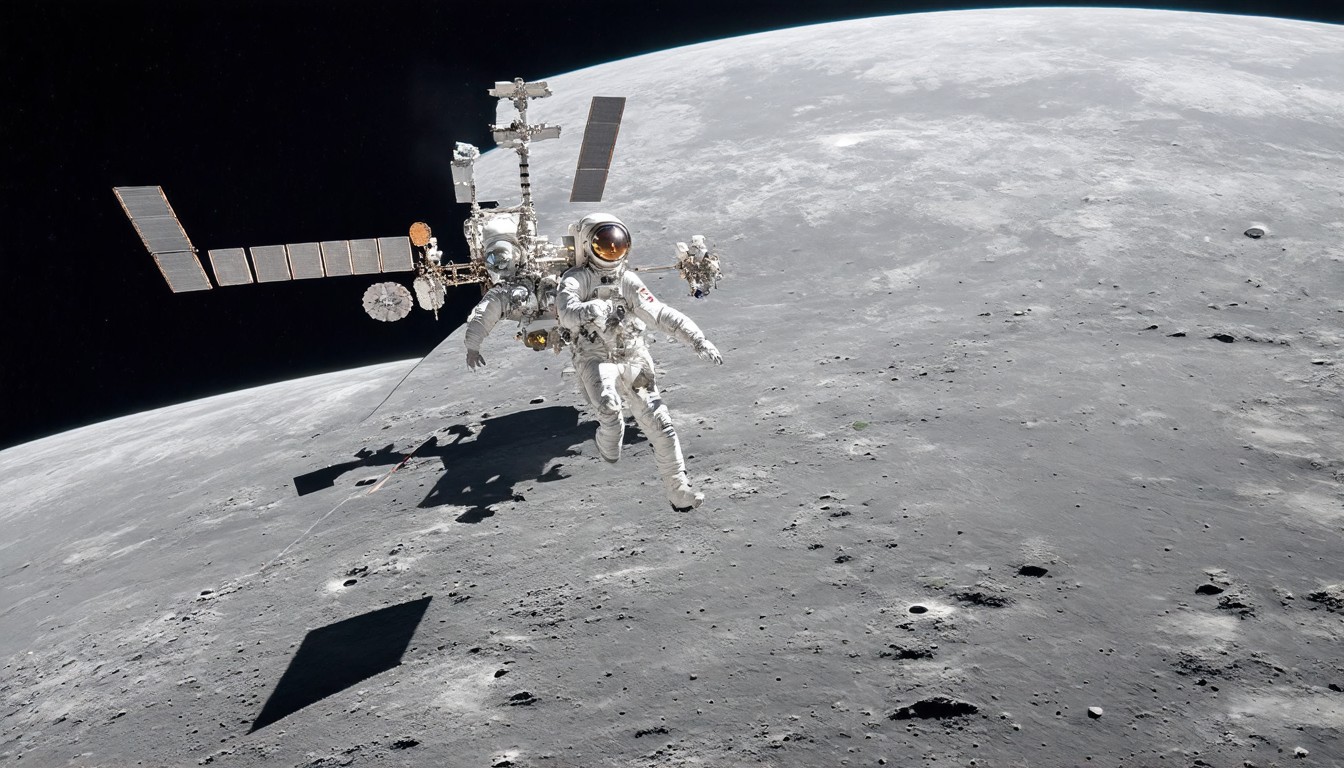
NASA Administrator Jared Isaacman has outlined the most critical moments to watch for in the coming days as the Artemis II mission continues its journey around the far side of the moon. This mission, a significant step in NASA's Artemis program, aims to revisit the lunar surface and eventually establish a sustainable presence on the moon, paving the way for future human exploration of Mars.
As the spacecraft loops around the moon, several key events are expected to unfold. First and foremost, the team is closely monitoring the spacecraft's trajectory to ensure it remains on course. The Artemis II spacecraft, designed to carry astronauts on a lunar orbit, is currently on a path that will take it around the far side of the moon, providing a unique opportunity to study the lunar environment and test the spacecraft's systems in real-world conditions.
One of the most critical moments in the coming days will be the close approach to the moon's far side. This part of the mission will allow scientists to gather data on the moon's gravitational field and its interaction with the spacecraft. By studying these interactions, researchers hope to better understand the moon's structure and composition, which could provide insights into its geological history and potential resources.
Additionally, the Artemis II mission is testing several advanced technologies that will be crucial for future lunar exploration. These include the Orion spacecraft's propulsion systems, life support systems, and communication equipment. As the spacecraft navigates the challenging environment of lunar orbit, engineers are closely watching for any anomalies or issues that may arise. Successful completion of these tests will be essential for the success of future Artemis missions, including the planned Artemis III, which aims to land astronauts on the moon's surface.
Another critical aspect of the mission is the astronauts' health and well-being. The crew is experiencing the unique challenges of space travel, including microgravity and isolation. NASA is closely monitoring the astronauts' physical and mental health to ensure they remain in optimal condition throughout the mission. This data will be invaluable for planning future long-duration space missions, particularly those that will involve extended stays on the moon or travel to Mars.
Moreover, the Artemis II mission is also a demonstration of international cooperation. The mission involves collaboration between NASA and several international partners, including the European Space Agency (ESA) and the Canadian Space Agency. This partnership is a testament to the global commitment to advancing space exploration and scientific discovery.
As the mission progresses, NASA will be closely working with mission control to manage any potential risks or challenges. The team is prepared to make adjustments as needed to ensure the mission's success and the safety of the astronauts.
In the coming days, the focus will remain on maintaining the spacecraft's trajectory, testing mission systems, and gathering scientific data. The Artemis II mission represents a pivotal moment in space exploration, and the critical moments outlined by Administrator Isaacman will be closely watched by scientists, engineers, and space enthusiasts around the world. The successful completion of this mission will serve as a foundation for future endeavors, including the establishment of a sustainable lunar presence and the eventual journey to Mars.