Home ScienceWhat Is Entropy? A Measure of Just How Little We R...
Science⭐ Featured

What Is Entropy? A Measure of Just How Little We Really Know.

Exactly 200 years ago, a French engineer introduced an idea that would quantify the universe’s inexorable slide into decay. But entropy, as it’s currently understood, is less a fact about the world than a reflection of our growing ignorance. Embracing that truth is leading to a rethink of everything from rational decision-making to the limits of machines. The post What Is Entropy? A Measure of Just How Little We Really Know. first appeared on Quanta Magazine

7 April 2026 at 08:31 am
1 views
What Is Entropy? A Measure of Just How Little We Really Know.

Exactly 200 years ago, a French engineer named Sadi Carnot introduced a concept that would revolutionize our understanding of the universe's behavior. This idea, now known as entropy, was initially a tool to understand the efficiency of steam engines. However, over time, entropy has evolved into a profound measure of the universe's inexorable slide toward decay. But what makes entropy particularly intriguing is that it is less a fact about the world itself than a reflection of our growing ignorance. Embracing this truth has led to a rethinking of various fields, from rational decision-making to the limits of artificial intelligence and machine learning.

The concept of entropy is deeply rooted in the second law of thermodynamics, which states that the total entropy of an isolated system can never decrease over time. This means that, in any natural process, the system will tend to move toward a state of greater disorder or randomness. For instance, when ice melts into water, the entropy of the system increases because the water molecules become more disordered. Similarly, when a hot cup of coffee cools down to room temperature, heat is transferred from the coffee to the surrounding air, increasing the overall entropy of the environment.

However, the connection between entropy and our knowledge is far from straightforward. In thermodynamics, entropy is a physical quantity that quantifies the amount of thermal energy in a system that cannot be used to do work. But in information theory, developed by Claude Shannon in the 1940s, entropy represents the average amount of information contained in each message received. This duality reveals that entropy is not just a measure of disorder but also a measure of uncertainty or missing information.

This realization has profound implications for various fields. In physics, the connection between entropy and information has led to the development of the holographic principle, which suggests that all the information contained in a volume of space can be represented on a lower-dimensional boundary to that space. This idea has been instrumental in attempts to reconcile quantum mechanics with general relativity, particularly in the context of black holes.

In computer science and artificial intelligence, entropy plays a crucial role in understanding the limits of machine learning. The concept of entropy is used to quantify the impurity or the uncertainty in a dataset, which is essential for decision-tree algorithms like random forests and gradient boosting. By minimizing entropy, these algorithms can make more accurate predictions. However, the connection between entropy and the limits of machine learning also highlights the inherent uncertainties and the growing ignorance as systems become more complex.

Moreover, the concept of entropy has found its way into economics and decision theory. The idea that entropy increases over time can be seen as a reflection of the growing uncertainty and complexity in economic systems. This has led to the development of new theories that emphasize the role of information and uncertainty in shaping economic outcomes.

In the realm of biology, entropy is closely tied to the concept of free energy, which is essential for living organisms to maintain order and stability. Cells constantly work to reduce local entropy by importing ordered molecules and expelling waste, but the overall entropy of the universe still increases. This balance between order and disorder is fundamental to life as we know it.

The interplay between entropy and our knowledge also has philosophical implications. The second law of thermodynamics, which states that entropy always increases, has been interpreted as a metaphor for the inevitable march of time and the decline of civilizations. This perspective raises questions about the nature of progress, the role of entropy in human history, and the possibility of creating self-sustaining systems that can counteract the universal trend toward disorder.

In conclusion, entropy is a multifaceted concept that transcends its initial role as a tool for understanding steam engines. It has become a cornerstone of modern physics, information theory, and even fields like economics and biology. The realization that entropy is a measure of our growing ignorance has led to a deeper understanding of the limits and possibilities of human knowledge and technology. As we continue to explore the universe and push the boundaries of what is possible, entropy remains a guiding force that challenges us to reconcile our quest for order with the inherent disorder of the cosmos.

📰 Related News
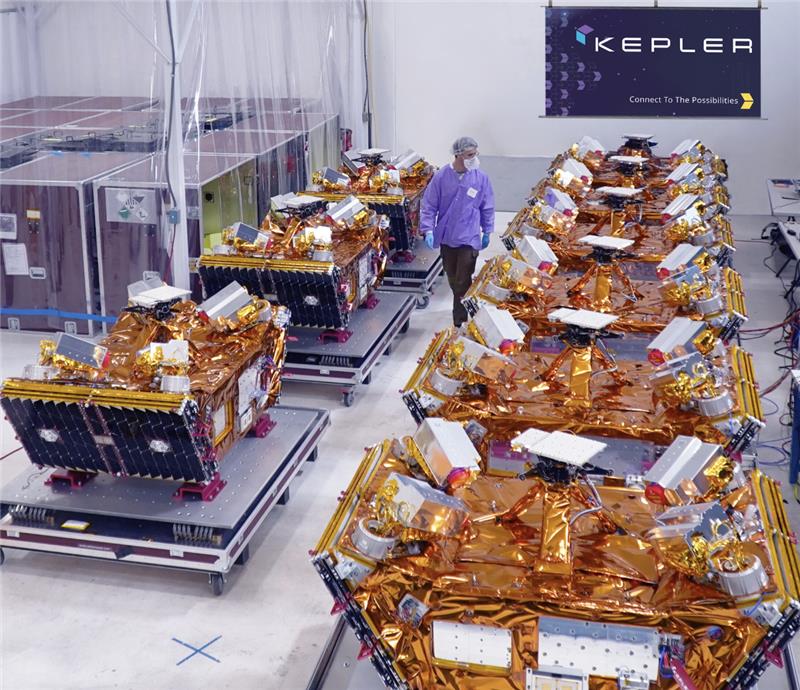
The largest orbital compute cluster is open for business | TechCrunch
Kepler Communications is flying 40 GPUs in Earth orbit. And its latest customer is Sophia Space.
14 Apr
‘Mideast conflict poses risks to Philippines growth’
The Philippine economy is expected to grow at a faster pace of 5.3 percent this year from last year’s 4.4 percent but the ongoing Middle East conflict is seen to pose risks, according to the Association of Southeast Asian Nations Plus 3 Macroeconomic Research Office.
7 Apr
AFBI welcomes DUP representatives to its research farm at Hillsborough
The Agri-Food and Biosciences Institute (AFBI) welcomed a number of DUP representatives to its research farm at Hillsborough on Friday.
7 Apr
A simple way to get more value from metrics
We spent one day 1 building a system that immediately found a mid 7 figure optimization (which ended up shipping). In the first year, we shipped mid 8 figures per year worth of cost savings as a result. The key feature this system introduces is the ability to query metrics data across all hosts and all services and over any period of time (since inception), so we've called it LongTermMetrics (LTM) internally since I like boring, descriptive, names. This got started when I was looking for a starter project that would both help me understand the Twitter infra stack and also have some easily quantifiable value. Andy Wilcox suggested looking at JVM survivor space utilization for some large services. If you're not familiar with what survivor space is, you can think of it as a configurable, fixed-size buffer, in the JVM (at least if you use the GC algorithm that's default at Twitter). At the time, if you looked at a random large services, you'd usually find that either: The buffer was too small, resulting in poor performance, sometimes catastrophically poor when under high load. The buffer was too large, resulting in wasted memory, i.e., wasted money. But instead of looking at random services, there's no fundamental reason that we shouldn't be able to query all services and get a list of which services have room for improvement in their configuration, sorted by performance degradation or cost savings. And if we write that query for JVM survivor space, this also
7 Apr
Accelerating Mathematical and Scientific Discovery with Gemini Deep Think
Research papers point to the growing impact of Deep Think across fields
7 Apr
Gemini 3 Deep Think: Advancing science, research and engineering
Our most specialized reasoning mode is now updated to solve modern science, research and engineering challenges.
7 Apr
Context Engineering for Coding Agents
The number of options we have to configure and enrich a coding agent’s context has exploded over the past few months. Claude Code is leading the charge with innovations in this space, but other coding assistants are quickly following suit. Powerful context engineering is becoming a huge part of the developer experience of these tools. Birgitta Böckeler explains the current state of context configuration features, using Claude Code as an example. more…
7 Apr
What does less protein and nitrogen mean for methane?
Does feeding less protein to cows over a longer period not only reduce nitrogen losses, but also affect methane emissions? Researchers at Wageningen University & Research (WUR) investigated this in a multi-year study with dairy cows, funded by the Vereniging Diervoederonderzoek Nederland (VDN), the Dutch Ministry of Agriculture, Fisheries, Food Security and Nature (LVVN), and […] The post What does less protein and nitrogen mean for methane? appeared first on Agriland.ie .
7 Apr
Second’s Bark Boasts New era of Bitcoin Payments, drawing in former Blockstream developers
Bitcoin Magazine Second’s Bark Boasts New era of Bitcoin Payments, drawing in former Blockstream developers Second, the Bitcoin development lab founded by ex-Blockstream executives including CEO Steven Roose and CTO Erik De Smedt, has unveiled Bark — its custom Ark protocol implementation promising self-custodial payments that are faster and cheaper than Lightning channels. This post Second’s Bark Boasts New era of Bitcoin Payments, drawing in former Blockstream developers first appeared on Bitcoin Magazine and is written by Juan Galt .
7 Apr
'Morale boost': Nasa carries out Moon mission during tough year for science
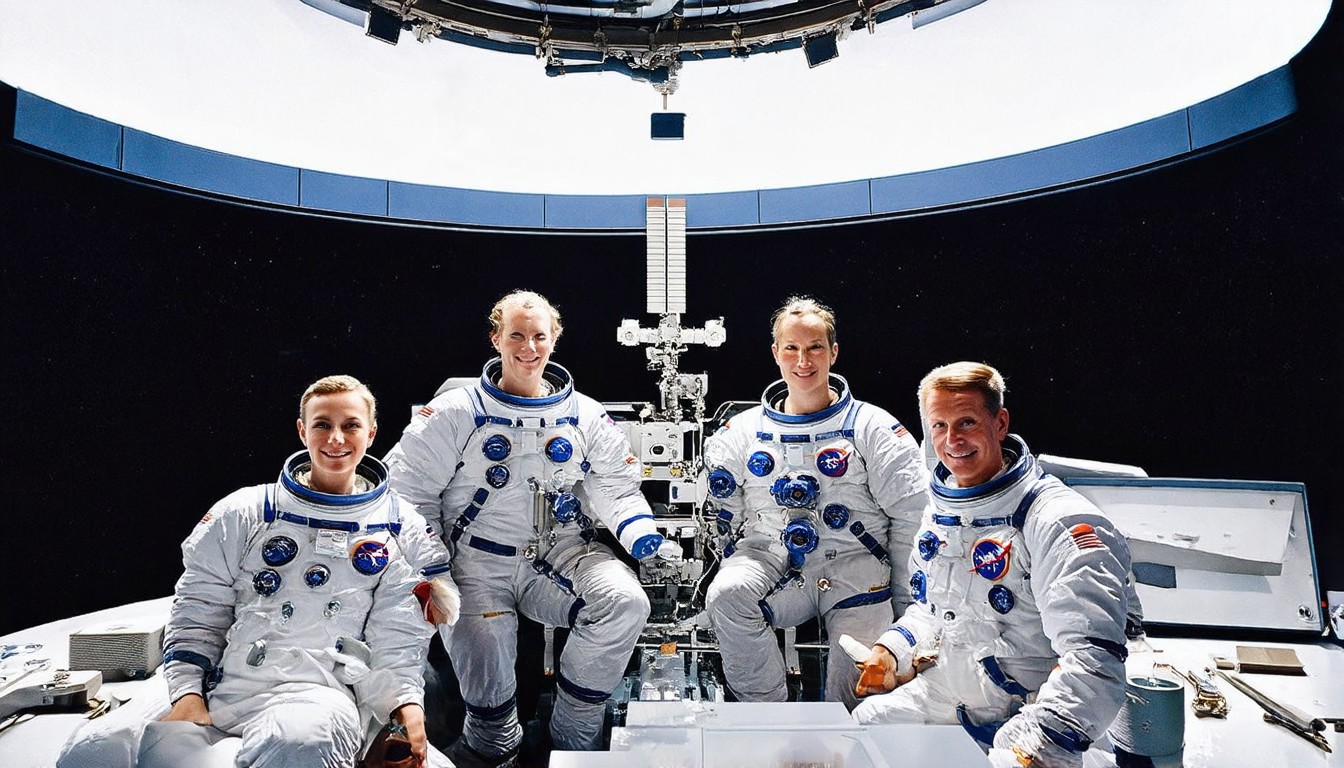
HOUSTON — As the four Artemis astronauts approached a high point of their lunar mission -- getting slung around the far side of the Moon -- National Aeronautics and Space Administration (Nasa) staffers crowded into Houston's famed mission control room Monday for a team photo.
7 Apr