What falling wage growth says about where the U.S. economy is heading
Americans are getting smaller pay raises as tariffs and higher gas prices threaten to make everything more expensive.
In recent years, the United States has experienced a slowdown in wage growth, a trend that has raised concerns about the future direction of the economy. As tariffs and higher gas prices push up the cost of goods and services, many Americans are seeing smaller pay raises than they once expected. This shift is prompting a reevaluation of the economic landscape and the factors driving it.
The decline in wage growth can be traced back to several interconnected factors. One of the most significant is the rise in tariffs imposed by the U.S. government. These tariffs, designed to protect domestic industries from foreign competition, have led to increased production costs for businesses. In turn, companies have passed these higher costs onto consumers in the form of higher prices. This has created a vicious cycle where the cost of living rises, but wage growth lags behind, resulting in a reduced purchasing power for many workers.
Another contributing factor is the global supply chain disruptions caused by the COVID-19 pandemic. The pandemic forced many businesses to shut down temporarily, leading to widespread job losses and reduced economic activity. As the world attempted to recover, there was a shortage of raw materials and labor, causing production delays and further increasing costs. This situation has put pressure on businesses to reduce their workforce or slow down operations, which in turn has limited opportunities for wage growth.
In addition to tariffs and supply chain issues, higher gas prices have also played a role in dampening wage growth. The cost of gasoline has risen significantly in recent years, affecting both businesses and consumers. For businesses, higher transportation and production costs have led to increased prices for goods and services. For consumers, the higher cost of gasoline has reduced disposable income, making it more difficult to save or invest. This has created a ripple effect that has slowed down overall economic growth and limited wage increases.
The impact of falling wage growth is not felt equally across all sectors of the economy. Some industries, such as healthcare and technology, have managed to maintain or even increase wage growth due to high demand for their services. However, many traditional industries, such as manufacturing and retail, have struggled to keep up with rising costs. This has led to a widening income inequality, with the benefits of economic growth not being distributed evenly among all workers.
The slowdown in wage growth has also had implications for consumer spending. As workers receive smaller pay raises, they are less likely to spend money on goods and services, which can lead to a decrease in overall economic activity. This can create a self-reinforcing cycle where reduced consumer spending leads to lower business profits, resulting in fewer job opportunities and even slower wage growth.
Government policies have also contributed to the challenges faced by workers in terms of wage growth. In recent years, there has been a focus on reducing taxes for the wealthy and cutting social safety net programs, which has left many workers without the support they need to secure stable employment and decent wages. This has exacerbated income inequality and made it more difficult for workers to climb the economic ladder.
Despite these challenges, there are signs that the economy is beginning to recover. As businesses rebuild and invest in new technologies, there is potential for increased productivity and job creation. Additionally, efforts to address income inequality, such as increasing the minimum wage and providing better access to education and training, could help to improve wage growth in the long term.
In conclusion, the slowdown in wage growth in the United States is a complex issue with multiple underlying causes. Tariffs, higher gas prices, and global supply chain disruptions have all contributed to the challenges faced by workers in terms of securing decent wages. However, there are also opportunities for improvement, as the economy continues to adapt and evolve. By addressing the root causes of wage stagnation and implementing policies that promote economic equality, the United States can work towards a future where wage growth supports the needs of all workers.
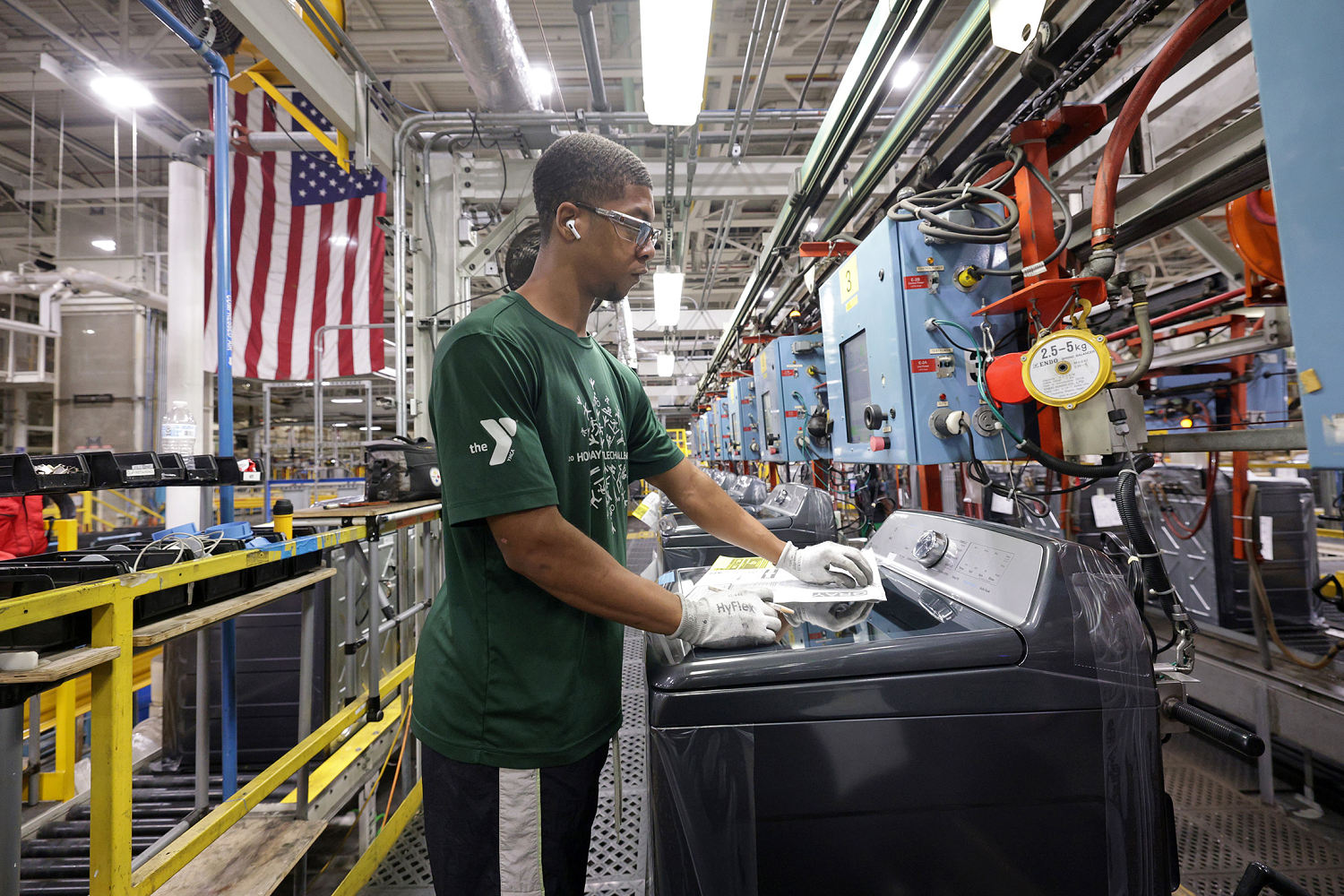
The image provided, showing a plant employee working at GE Appliances in Louisville, Kentucky, serves as a poignant reminder of the struggles faced by many workers in the manufacturing sector. As companies grapple with rising costs and global competition, the future of these workers and their livelihoods hangs in the balance. The challenges they face are not unique to the manufacturing industry, but are representative of the broader economic challenges facing the United States.
As the country navigates this complex economic landscape, it is crucial to recognize the interconnected nature of the issues at play. By understanding the factors driving wage growth and implementing targeted policies to address them, the United States can work towards a more equitable and prosperous future for all its citizens.