What does law say on tenure of Prime Minister?
India has developed a convention limiting a third presidential term, but the Constitution places no such restriction on the Prime Minister’s tenure. With Prime Minister Narendra Modi completing 8,931 days in office, this asymmetry invites closer scrutiny.
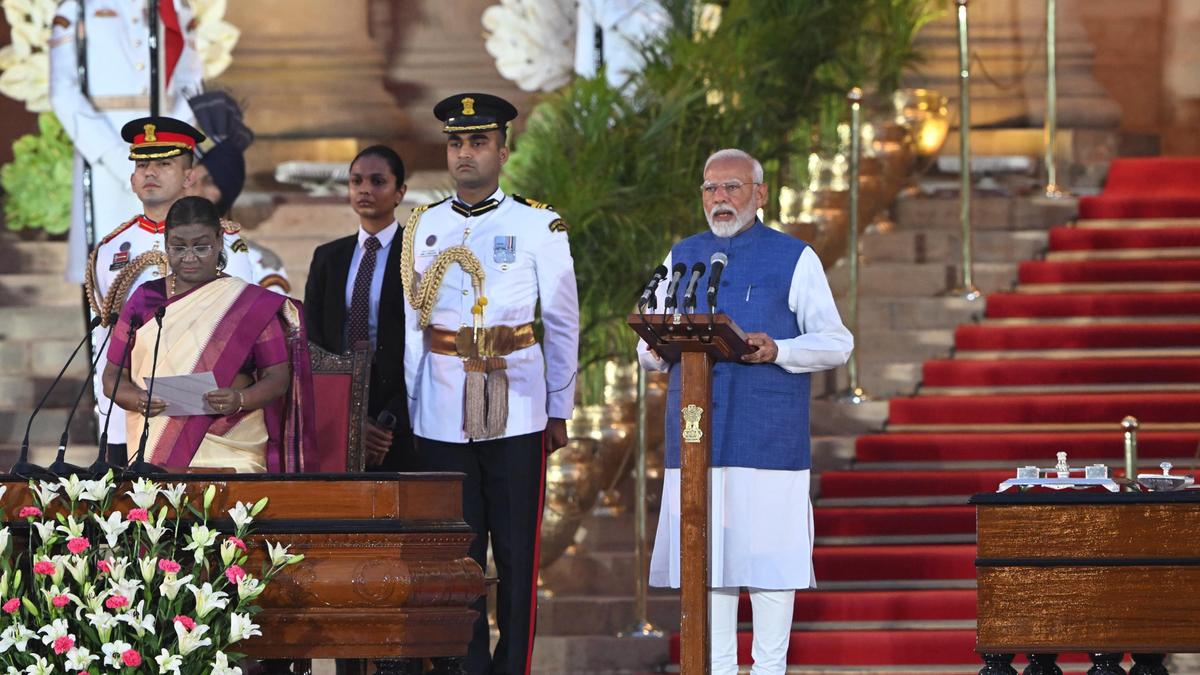
India's political landscape has long been characterized by a dynamic interplay between the executive and legislative branches, with the Prime Minister's tenure often serving as a focal point of public and political discourse. While the Constitution of India provides a clear framework for the election and removal of the Prime Minister, it does not impose any explicit limits on the number of terms a Prime Minister can serve. This contrasts with the presidential term limits that have been established through convention, even though they are not constitutionally mandated.
The President of India, who is the head of state, is typically limited to two terms of five years each. This convention, though not enshrined in the Constitution, has been adhered to since the country's independence in 1947. However, the Prime Minister, who is the head of government, does not face such restrictions. This asymmetry has become particularly relevant in recent years, as Prime Minister Narendra Modi marks his tenure with 8,931 days in office.
The absence of term limits for the Prime Minister in the Constitution has led to a unique situation where the leader of the ruling party can, in theory, serve indefinitely. This is in stark contrast to the presidential term limits, which have been seen as a safeguard against the concentration of power. The constitutional asymmetry has invited scrutiny from political analysts, legal experts, and the general public, who are increasingly questioning the implications of this lack of restriction.
One of the key arguments in favor of term limits for the Prime Minister is the potential for stagnation in governance. Prolonged tenure can sometimes lead to complacency, reduced accountability, and a lack of fresh perspectives in policy-making. Critics argue that term limits can encourage a healthy turnover of leadership, fostering innovation and adaptability in government.
On the other hand, opponents of term limits for the Prime Minister contend that such restrictions could undermine the stability of the government. They argue that the Prime Minister's position is inherently tied to the confidence and support of the Parliament, and that imposing term limits could interfere with this delicate balance. Furthermore, they point out that the Prime Minister's tenure is not merely a matter of personal longevity but is also a reflection of the political will of the majority.
The case of Prime Minister Modi serves as a stark reminder of this constitutional asymmetry. His tenure, which began in 2014, has seen significant political and economic reforms, as well as challenges such as the COVID-19 pandemic and geopolitical tensions. As he continues to lead the country, the question of whether term limits are necessary for the Prime Minister has gained renewed relevance.
Some legal experts have suggested that while the Constitution does not explicitly limit the Prime Minister's tenure, it does provide a mechanism for their removal. The Prime Minister can be dismissed by a vote of no-confidence in the Parliament, which could be seen as a form of accountability. However, this process is not always straightforward, as it requires a majority of members in the Parliament to vote against the Prime Minister.
In conclusion, the constitutional asymmetry between the President and the Prime Minister in terms of term limits has become a point of contention in India's political discourse. While the President is limited to two terms, the Prime Minister's tenure is not constitutionally restricted. This has led to debates about the potential benefits and drawbacks of introducing term limits for the Prime Minister, as well as the broader implications for the stability and effectiveness of governance in India. As the country continues to evolve politically, this issue is likely to remain a topic of interest and discussion among policymakers, legal scholars, and citizens alike.