Home HealthWhat AAFC Research Station Closures Could Mean for...
Health⭐ Featured

What AAFC Research Station Closures Could Mean for Canadian Seed Innovation

The impact won’t show up tomorrow, but five to 10 years from now, farmers may feel it in lost yield gains and weak disease packages The post What AAFC Research Station Closures Could Mean for Canadian Seed Innovation appeared first on Seed World .
6 April 2026 at 04:12 pm
1 views
What AAFC Research Station Closures Could Mean for Canadian Seed Innovation

The recent closures of Agriculture and Agro-Food Canada (AAFC) research stations have raised concerns about the future of Canadian seed innovation. While the impact may not be immediately apparent, experts predict that farmers could feel the effects in lost yield gains, weaker disease packages, and a slower pipeline for new varieties over the next five to ten years.

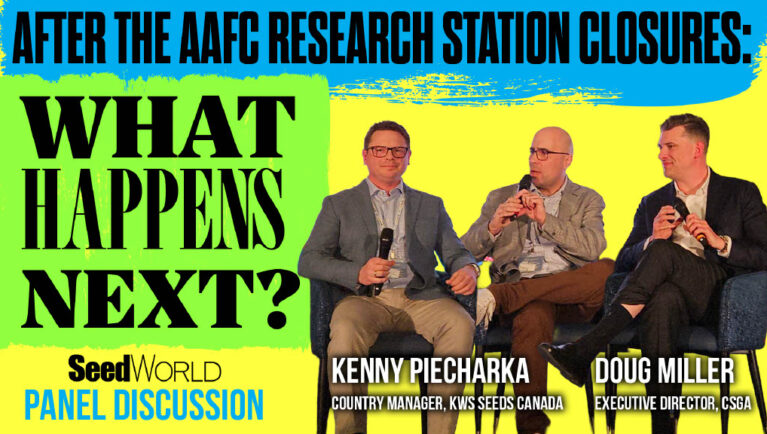
A fireside chat held at the CrossRoads Crop Conference in Edmonton, Alberta, on January 27 highlighted the importance of seed innovation in agriculture. Hosted by Alberta Seed Guide editor Marc Zienkiewicz, the discussion featured Doug Miller, executive director of the Canadian Seed Growers’ Association (CSGA), and Kenny Piecharka, country manager for KWS Seeds Canada in Lethbridge. The panel emphasized that while innovation in agriculture is often linked to new equipment and digital tools, the most fundamental input on most farms remains seed.

Miller explained that CSGA, with its 120-year history, serves as Canada’s national seed crop certification authority, overseeing a single national certification program and setting standards for around 70 crop kinds. He described seed certification as a “trust layer,” ensuring farmers can make informed decisions by maintaining transparent standards around quality and identity. Miller also discussed ongoing modernization efforts, such as the potential integration of digital tags on certified seed. Instead of relying on traditional handwritten or dot-matrix printed tags, the future may include QR codes that provide farmers with access to critical information like variety details and certificates of analysis.

The panelists also addressed the uncertainty surrounding Canada’s public research capacity. As the AAFC faces budget constraints and the closure of several research stations, there is growing concern about the long-term impact on seed innovation. With fewer resources dedicated to research and development, the pace of new variety development may slow, ultimately affecting farmers’ access to improved seeds.

In light of these challenges, the panelists urged farmers to stay informed about the latest advancements in seed technology and certification practices. By understanding the role of seed certification and the potential benefits of digital innovations, farmers can better navigate the shifting landscape of seed innovation in Canada.

While the immediate effects of the AAFC research station closures may not be evident, the long-term consequences for Canadian seed innovation could be significant. As the country’s agricultural sector relies heavily on the development of new and improved seeds, the future of seed innovation will be closely watched by farmers, seed growers, and industry experts alike. The recent discussions at the CrossRoads Crop Conference serve as a reminder of the importance of investing in research and development to ensure the continued success of Canada’s agricultural industry.

Source: Seed World
📰 Related News
The Rise and Sudden Fall of OpenAI’s Sora
OpenAI’s abrupt decision to shut down its AI video generation app, Sora, just 103 days after launch has sparked widespread debate about the company’s strategic direction and financial health. Despite a $1 billion partnership with Disney and a viral debut that…
13 Apr
St. Luke’s stays on track with massive expansion
St. Luke’s Medical Center continues to absorb higher costs brought about by the ongoing Middle East crisis as much as it can, with the company staying on track with massive investments for expansion and technology upgrades.
7 Apr
Granulated Lime vs. Bulk Lime: What’s the Difference?
Understanding the type of lime required for your soil can significantly impact your crop yield and overall soil health.
7 Apr
Can surgery used to treat fluid accumulation also help with Alzheimer’s? A Singapore trial is exploring this possibility
Early results from a small clinical trial at Changi General Hospital suggest the technique could lead to improvements in memory, mood and cognition.
7 Apr
Famers hear how to ‘Look after your health and your herd’ at latest meeting of Grassland Club
The members of Fermanagh Grassland Club were in for a treat in March when eminent qualified doctor and vet, Professor Patrick Wall, Dublin, was the speaker at their meeting in the Killyhevlin Hotel, Enniskillen.
7 Apr
ICMSA: HSA rules on telescopic telehandlers ‘way over the top’
The vast majority of farmers are completely unaware that training is now required under Health and Safety Authority (HSA) telescopic telehandlers rules, according to farm organisation. Pat O’Brien, chairperson of the farm business committee for the Irish Creamery Milk Suppliers Association (ICMSA) has criticised requirements for training from the Health and Safety Authority (HSA). Under […] The post ICMSA: HSA rules on telescopic telehandlers ‘way over the top’ appeared first on Agriland.ie .
7 Apr
ICSA: ‘Additional support’ needed for bluetongue vaccination
Bluetongue vaccination must be supported as “an additional measure” and not at the expense of core animal health actions, the Irish Cattle and Sheep Farmers’ Association (ICSA) has warned. Last month the Minister for Agriculture, Food and the Marine, Martin Heydon said that vaccination against bluetongue virus would be included as an “option” for farmers […] The post ICSA: ‘Additional support’ needed for bluetongue vaccination appeared first on Agriland.ie .
7 Apr
AWS Weekly Roundup: Amazon Connect Health, Bedrock AgentCore Policy, GameDay Europe, and more (March 9, 2026)
Fiti AWS Student Community Kenya! Last week was an incredible whirlwind: a round of meetups, hands-on workshops, and career discussions across Kenya that culminated with the AWS Student Community Day at Meru University of Science and Technology, with keynotes from my colleagues Veliswa and Tiffany, and sessions on everything from GitOps to cloud-native engineering, and […]
7 Apr
Farm accident survivor welcomes requirements for use of telehandlers
A farm accident survivor originally from Co. Sligo has welcomed the stringent requirements outlined by the Health & Safety Authority for the use of telehandlers, sometimes called teleporters. It follows comments made earlier this week by the Irish Creamery Milk Suppliers’ Association (ICMSA) claiming that the requirements were “over the top”. Such commentary has been […] The post Farm accident survivor welcomes requirements for use of telehandlers appeared first on Agriland.ie .
7 Apr
Sabah bans export and import of some local freshwater fish, including koi, after virus outbreak
Mr Jamawi said such actions violated biosecurity principles and caused infections among native species.
7 Apr