West Asia conflict hits coffee prices; Karnataka growers hold back produce
Planters say prices, which remained stable and favourable during the harvesting season from December 2025 to February 2026, began to fall soon after the conflict escalated in March.
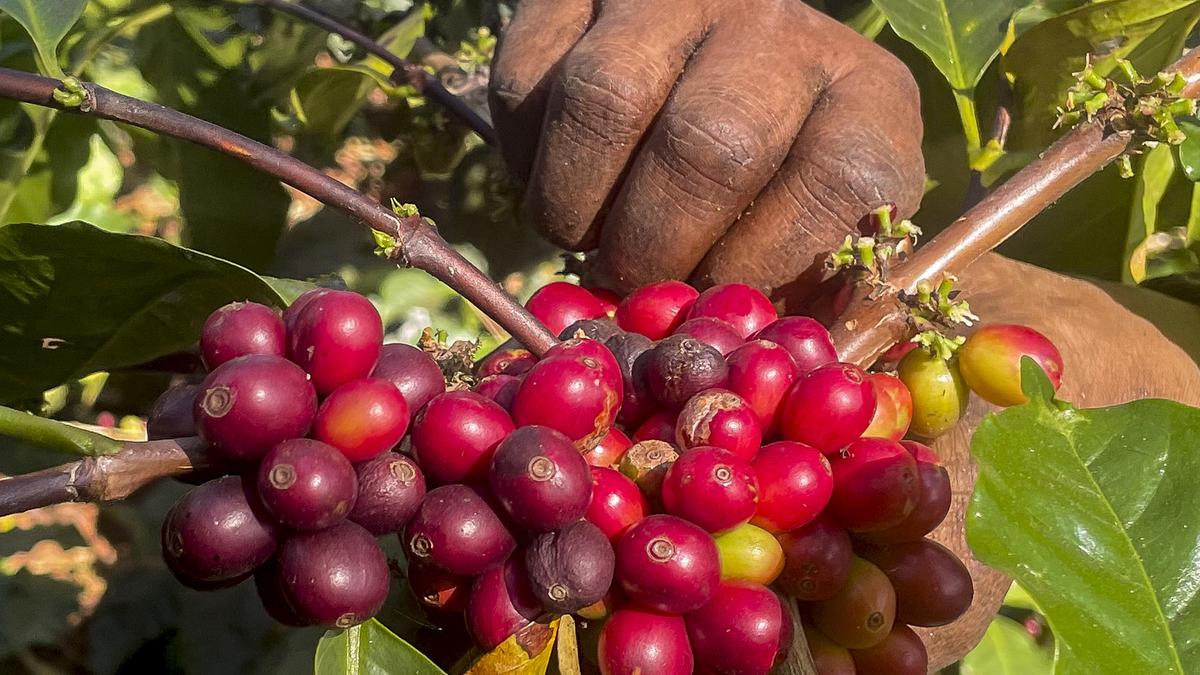
The escalating conflict in West Asia has sent ripples through global coffee markets, causing prices to plummet. Karnataka, a major coffee-producing region in India, has been particularly affected as growers hold back their produce in response to the sudden drop in prices.
During the harvesting season from December 2025 to February 2026, coffee prices remained stable and favorable for growers. This period saw a bountiful harvest, with Karnataka contributing significantly to the global supply. However, the situation changed dramatically in March when tensions in West Asia escalated, disrupting trade routes and causing uncertainty in the market.
The conflict in West Asia has disrupted the usual flow of coffee from major exporting countries, leading to a reduction in supply. Simultaneously, the unrest has caused a decrease in demand, as global consumers become more cautious about purchasing goods from conflict-affected regions. This dual impact has resulted in a sharp decline in coffee prices, leaving growers in Karnataka and other regions grappling with financial challenges.
Karnataka growers, who have traditionally relied on stable coffee prices, are now hesitant to sell their produce at the lower rates. Many have chosen to hold back their coffee, hoping for a rebound in prices. This decision has led to a temporary surplus in storage, as growers wait for more favorable conditions.
The situation in Karnataka is not unique. Other coffee-producing regions around the world are also feeling the effects of the West Asia conflict. For instance, growers in Latin American countries, such as Colombia and Brazil, have also reported a drop in prices due to the disrupted global supply chain.
Experts have warned that the conflict in West Asia could have long-term implications for the coffee industry. If the situation does not stabilize soon, it may lead to a permanent shift in global coffee prices, affecting the livelihoods of millions of small-scale farmers.
Governments and international organizations are closely monitoring the situation, looking for ways to mitigate the impact on coffee producers. Some are exploring alternative trade routes to bypass the conflict-affected areas, while others are considering financial support for growers to help them weather the price fluctuations.
In the meantime, coffee consumers may see higher prices at their local stores, as the disruption in supply affects the global market. This highlights the interconnectedness of global economies and the potential for regional conflicts to have far-reaching consequences.
As the situation in West Asia continues to evolve, the coffee industry and the millions of growers who depend on it are left to navigate uncertain waters. The ability of these producers to adapt and withstand the challenges posed by the conflict will be crucial in determining the future trajectory of the coffee market.