'We want a voice in our land' - the people evicted to build Nigeria's capital
People evicted to build Nigeria's capital accuse the government of failing to fulfill its promises to them.
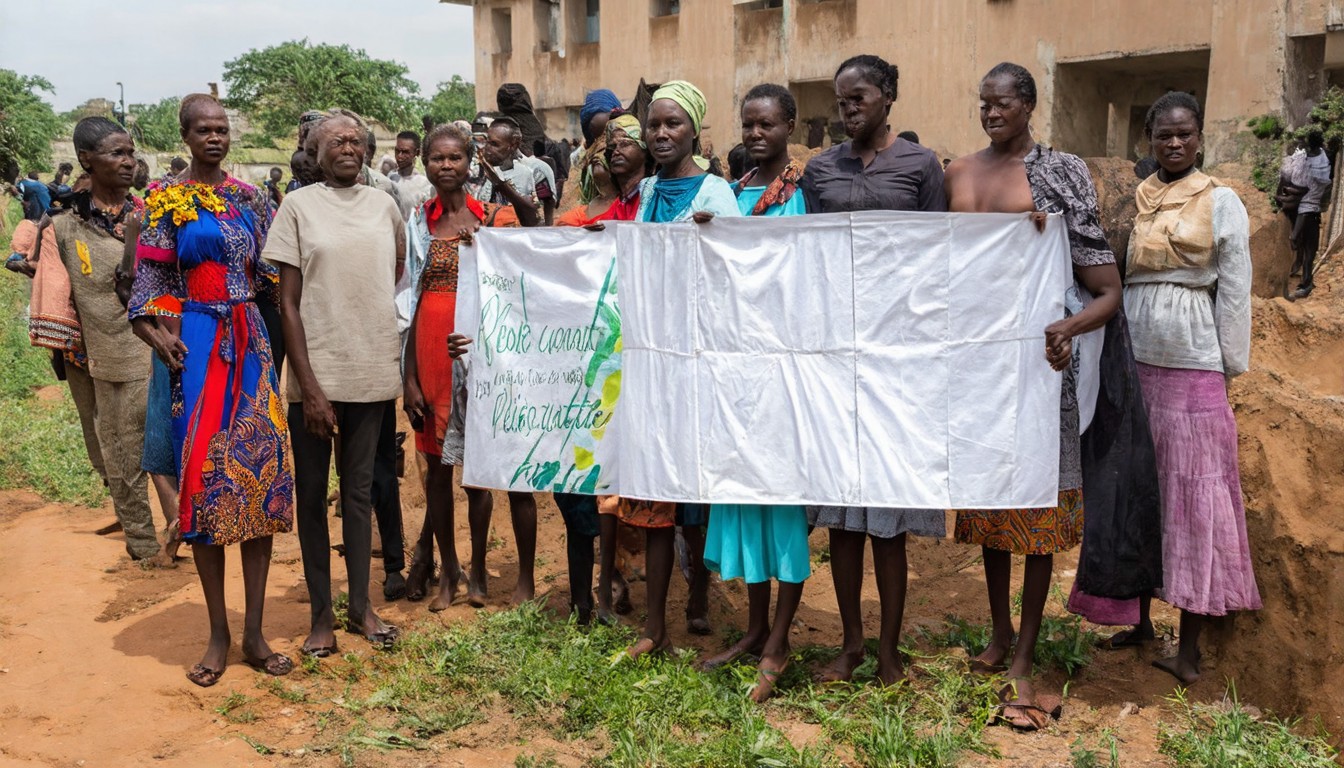
In the heart of Nigeria, where the bustling city of Abuja now stands, there was once a quiet community. The people of this area, who had lived there for generations, were uprooted in the late 1970s when the Nigerian government decided to relocate the nation's capital from Lagos to a more central location. The vision was grand: a new capital city designed to symbolize unity and progress. However, for the thousands of individuals and families who were evicted from their homes, the reality has been far from ideal.
The government's plan to build a new capital was announced in 1976, and the relocation process began in earnest in the following years. The area chosen for the new capital, known as the Federal Capital Territory (FCT), was home to several communities, including those of the Gwari people, who had lived there for centuries. The government promised that these communities would be compensated fairly and resettled in new homes, but many have since accused the authorities of breaking these promises.
"We were told that we would be treated fairly," says Comfort Nwosu, a resident of one of the evicted communities. "But instead, we were forced to leave our land without proper compensation, and the new homes we were promised have never materialized." Nwosu's words echo the sentiments of countless others who have been displaced by the construction of Abuja.
The evictions were not without resistance. Some communities fought legal battles to retain their land, while others organized protests and petitions to demand justice. However, the government's response has often been dismissive, with officials citing the importance of the project for national development as a reason to prioritize it over the concerns of the affected individuals.
The lack of meaningful compensation has left many evicted residents in a precarious situation. Many have struggled to rebuild their lives, forced to live in makeshift settlements or in overcrowded areas of Abuja itself. Others have turned to informal work, such as street vending or construction labor, to make ends meet. "We were promised a better life," says John Okafor, a former farmer from one of the evicted communities. "But instead, we've been left with nothing but memories of our lost land."
The government's failure to address the grievances of the evicted communities has sparked calls for accountability. Activists and human rights organizations have highlighted the need for a comprehensive review of the relocation process and the implementation of fair compensation schemes. In recent years, there have been some efforts to address these issues, with the government announcing plans to provide housing and other support to those affected.
However, many of those who were evicted remain skeptical. They argue that the government's promises have been made before, without meaningful action following through. "We want a voice in our land," says Nwosu. "We deserve to be heard, and we deserve justice for what was taken from us."
The story of the people evicted to build Nigeria's capital is a poignant reminder of the human cost of nation-building projects. While Abuja has become a symbol of Nigeria's aspirations for progress and development, the sacrifices made by those who were displaced have not been adequately acknowledged or compensated. As the city continues to grow and evolve, it is crucial that the government listens to the voices of those who were left behind and works to right the wrongs of the past. Only then can the capital truly embody the values of unity and justice that it was intended to represent.