
'We are at the edge of a battlefield': BBC reports near Strait of Hormuz
The BBC's Orla Guerin travels to the edge of the critical waterway that Iran has put a stranglehold on.
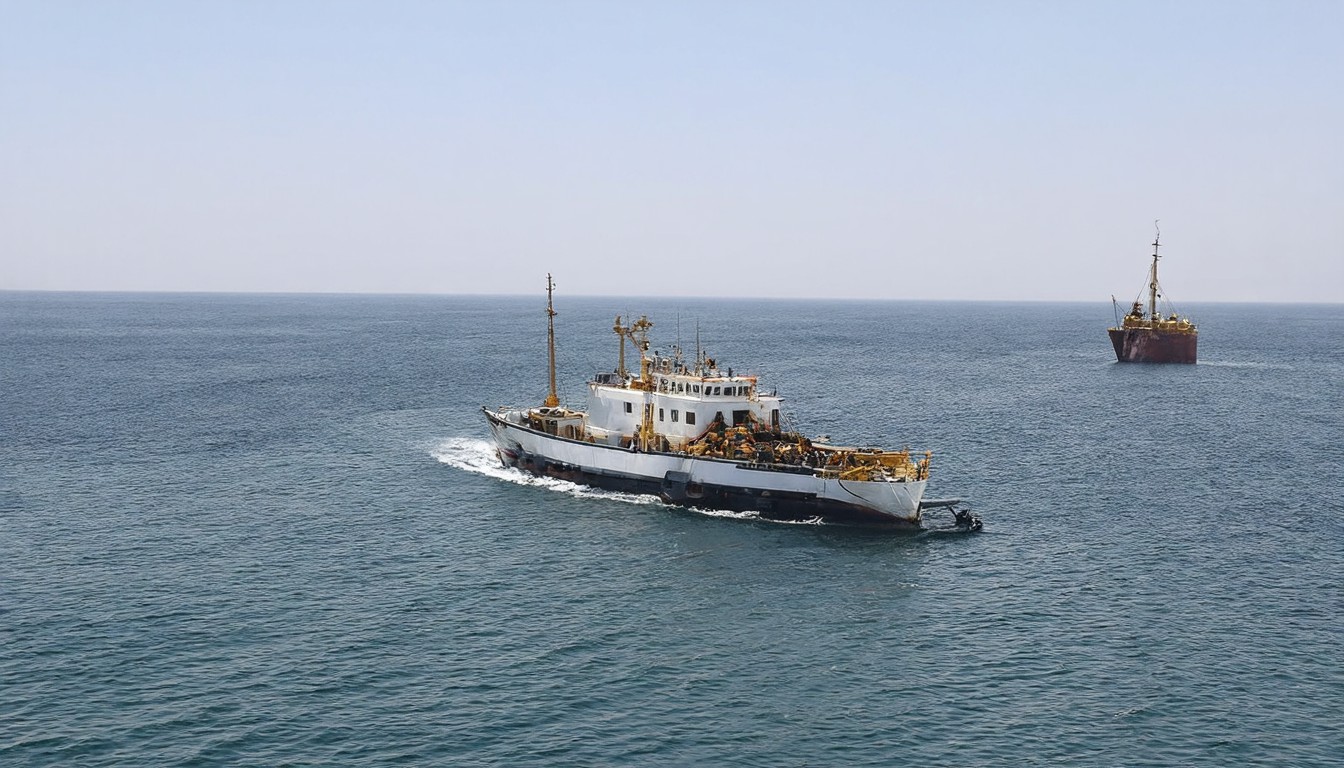
In the tense waters of the Strait of Hormuz, the BBC's Orla Guerin finds herself at the edge of a potential battlefield. This narrow, 56-kilometer-long strait, located between the Persian Gulf and the Gulf of Oman, is a crucial chokepoint for global oil supplies, with nearly 30% of the world's oil and a third of its liquefied natural gas passing through it daily. The strait's strategic importance has made it a focal point of geopolitical tensions, particularly in recent years as Iran has increasingly asserted its control over the region.
Guerin's journey to the strait comes amid heightened fears of conflict between Iran and other regional powers, with tensions escalating over Iran's nuclear program and its support for groups like Hezbollah in Syria. The strait has long been a flashpoint, with past incidents including the 1987 tanker war between Iran and Iraq and the 2019 attack on two Saudi tankers, which Saudi Arabia blamed on Iran-backed militias. Now, as the world watches with growing concern, the BBC reporter delves into the complexities of this volatile area.
Iran's control over the strait is not just a matter of naval dominance; it is also a demonstration of its influence in the region. The country has fortified its presence with missile batteries, drones, and naval vessels, all aimed at deterring any potential threats. This has led to concerns among oil-exporting nations, particularly the United States and Saudi Arabia, which rely heavily on the strait for their oil exports. The U.S. has maintained a significant naval presence in the region, with the Fifth Fleet operating in the Persian Gulf, a move seen by Iran as a direct challenge to its sovereignty.
As Guerin reports from the edge of this critical waterway, the stakes could not be higher. Any disruption to the strait's shipping lanes could lead to a sharp spike in oil prices, impacting global economies. Moreover, a direct military confrontation could have far-reaching consequences, potentially destabilizing the entire Middle East and beyond. The international community is closely monitoring the situation, with diplomatic efforts underway to de-escalate tensions.
Despite the mounting pressure, both Iran and its adversaries have so far avoided direct conflict. However, the situation remains precarious, with each side ready to respond swiftly to any perceived threat. The BBC's coverage from the strait serves as a stark reminder of the fragile balance of power in the region and the potential for conflict to erupt at any moment.
In this environment of heightened tensions, the role of diplomacy cannot be overstated. International organizations, including the United Nations, are working to mediate and find a peaceful resolution to the ongoing disputes. Meanwhile, the global community is also grappling with the need to diversify its energy sources and supply routes to reduce reliance on the Strait of Hormuz.
As Orla Guerin reports from the edge of this strategic chokepoint, the world watches with bated breath, hoping for a path forward that avoids the brink of conflict. The Strait of Hormuz, once a vital artery for global trade, now stands as a symbol of the geopolitical challenges facing the modern world. The stakes are high, and the potential for a major confrontation looms large, as all eyes remain fixed on this narrow stretch of water that could ignite a global crisis.









