
Watch the Titanic and Lusitania Sink in Real Time: One Fast, One Slow
Asked to name famous shipwrecks at a bar trivia night, a fair few participants might think immediately of Pearl Harbor, whether or not they can recall that it was the USS Arizona bombed there. More firmly within living memory sits the SS Andrea Doria, though she’s hardly the cultural reference she used to be. The […]
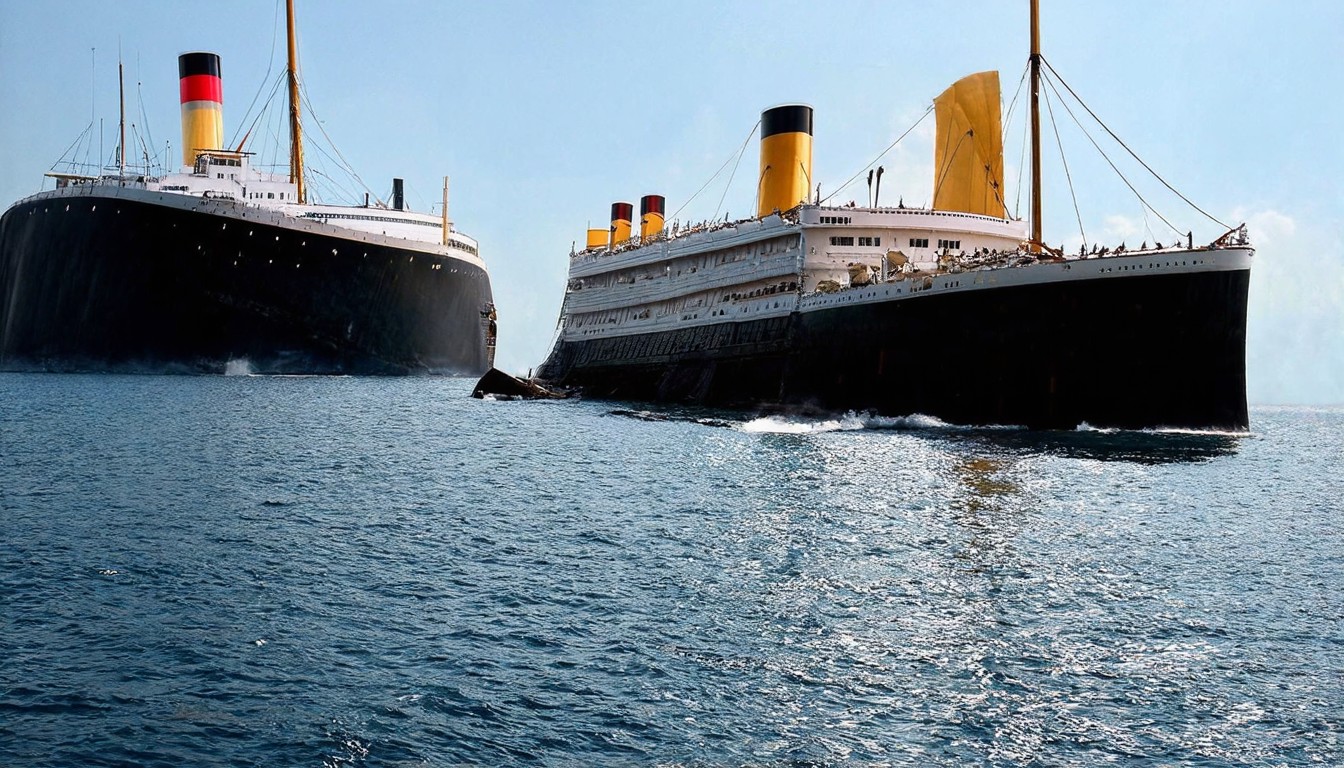
Asked to name famous shipwrecks at a bar trivia night, a fair few participants might think immediately of Pearl Harbor, whether or not they can recall that it was the USS Arizona bombed there. More firmly within living memory sits the SS Andrea Doria, though she’s hardly the cultural reference she used to be. The wreck of the SS Edmund Fitzgerald passed its fiftieth anniversary just last year, which gave a boost to its remembrance, if mostly by Gordon Lightfoot fans. There is, of course, the Endurance, though the ship herself has always been overshadowed by the efforts of her captain to get the whole crew home alive. The schooner Hesperus does come to mind as a particularly unfortunate vessel, perhaps all the more so because she didn’t actually exist. Nearly everyone at the bar is, of course, going to put down the RMS Titanic first. Even before she received the James Cameron treatment, that “unsinkable” ocean liner was easily the most famous shipwreck of the twentieth century, and quite possibly of all history. But second place has to go to the RMS Lusitania, which went under just three years after the Titanic.
As close as the year 1915 may sound to 1912, developments in Europe had rearranged the world in the meantime. The Titanic met her end by colliding with an iceberg, and about two and a half hours later, as you can see in the real-time sinking video at the top of the post, it was on the bottom of the North Atlantic. When the Lusitania was torpedoed by a German U-boat, by contrast, she went down in just eighteen minutes. You can witness those minutes re-created in the animated video from Oceanliner Designs just above.
Though the Great War was raging, the ship hadn’t yet been commissioned as an armed merchant cruiser, but was conducting her usual transatlantic passenger service while — as the German side insisted and the British at first denied — carrying war materials on the side. She’d been traveling due east for six days when the U-20, commanded by Walther Schwieger, spotted her. The Lusitania’s crew and passengers were unaware of the heightened tensions and the submarine warfare that had begun in 1917. The U-boat fired a warning shot, but the ship continued on its course. Schwieger then fired a torpedo, which struck the Lusitania’s port side, causing a massive explosion.
The sinking of the Lusitania was a pivotal moment in World War I, as it led to increased support for the United States entering the war. The disaster resulted in the deaths of 1,198 people, including 128 Americans, which outraged public opinion in the United States. President Woodrow Wilson used the sinking as a justification for asking Congress to declare war on Germany in 1917.
In contrast, the Titanic’s sinking in 1912 remains one of the most iconic maritime disasters in history. The ship was considered “unsinkable” due to its advanced safety features, including its famous watertight compartments. However, on its maiden voyage from Southampton to New York City, the Titanic struck an iceberg in the North Atlantic Ocean. The collision caused the ship to sink rapidly, with only lifeboats for about half of the passengers and crew. The tragedy resulted in the deaths of more than 1,500 people, making it one of the deadliest peacetime maritime disasters in history.
While both the Titanic and Lusitania hold significant places in maritime history, their sinking experiences could not be more different. The Titanic’s demise was a slow, tragic descent into the icy depths, while the Lusitania’s end was a swift and violent explosion. Both disasters have left lasting legacies, with the Titanic becoming a cultural icon and the Lusitania playing a role in shaping the course of World War I. Today, viewers can experience these tragic events in real time through the vivid depictions of their sinking, offering a poignant glimpse into the past.








