Was Iranian Crude Vessel Meant For India Sent To China? Centre Clarifies
Ping Shun had earlier indicated through its transponders and AIS that it was en route to the Vadinar offshore terminal, with an expected arrival on April 4.
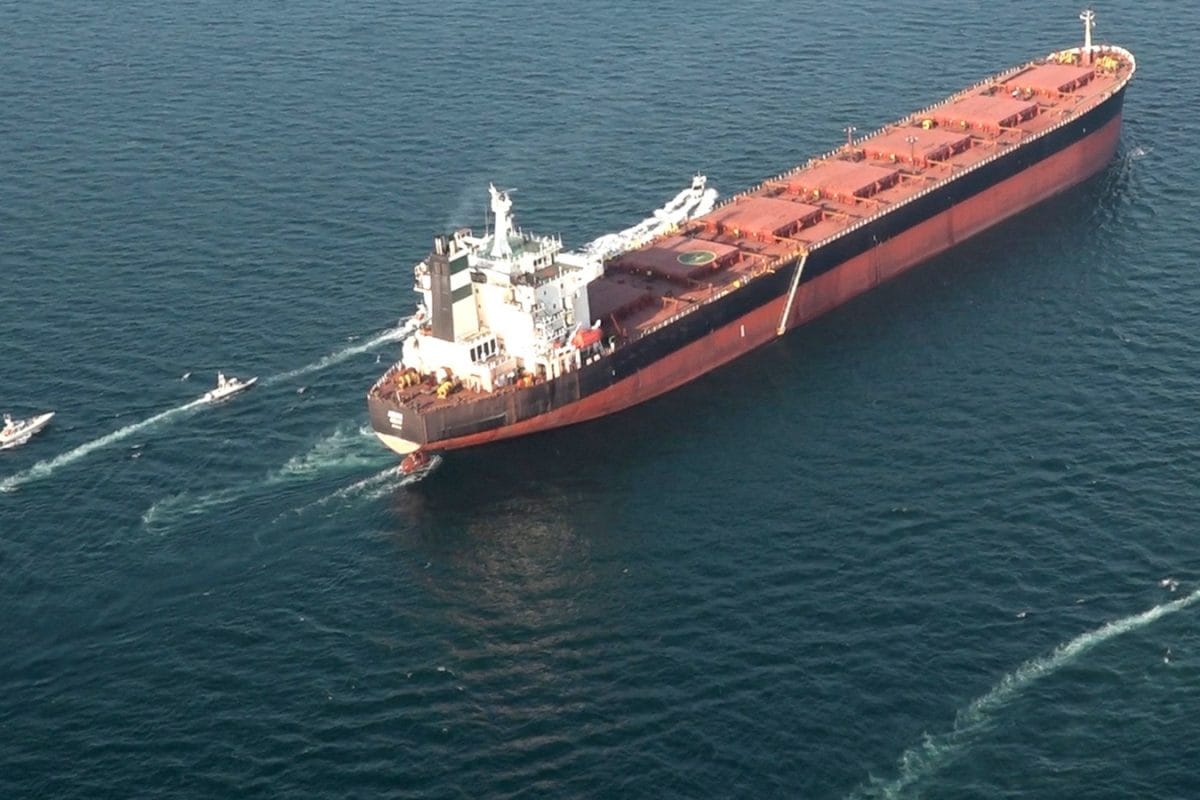
In a recent development that has raised questions about international trade routes and maritime navigation, the Iranian crude oil vessel Ping Shun, initially reported to be heading to India's Vadinar offshore terminal, was unexpectedly redirected to China. The sudden change in the ship's destination has sparked curiosity and prompted the Indian government to seek clarification from both Iranian and Chinese authorities.
The Ping Shun, a vessel registered in Hong Kong, had been tracked by maritime monitoring systems, including Automatic Identification System (AIS) and transponders, indicating that it was on course for Vadinar, a major oil-loading port in Gujarat, India. The expected arrival date was April 4, and Indian officials had anticipated the shipment as part of a regular oil supply contract. However, as the vessel approached the Indian Ocean, it began to deviate from its original trajectory, eventually heading towards Chinese ports.
The Indian Ministry of External Affairs has expressed concern over this development, stating that it was not informed about the change in the vessel's destination. Officials have requested an explanation from both the Iranian and Chinese governments, as well as the ship's owners, to understand the reasons behind the redirection. The Indian government has also emphasized the importance of transparency and communication in international trade, particularly in the context of strategic energy supplies.
Iranian officials have responded to the inquiries by stating that the decision to redirect the Ping Shun to China was a commercial one, made by the ship's owners and operators. They have clarified that the Iranian government had no involvement in the decision and that it was purely a matter of business strategy. The Iranians have assured India that the redirection of the Ping Shun does not affect the ongoing oil supply contracts between the two countries.
Chinese authorities have been less forthcoming in their responses, stating that they do not have the authority to comment on private commercial transactions involving foreign vessels. They have reiterated that China welcomes all legitimate trade and investment, and that the country's ports are open to any vessel that wishes to dock there.
The redirection of the Ping Shun has raised questions about the dynamics of international oil trade and the role of intermediaries in the supply chain. Experts have noted that such incidents are not uncommon, as shipowners often seek to maximize profits by exploiting price differences in different markets. They have also pointed out that the use of flag-of-convenience arrangements, such as the Hong Kong-registered Ping Shun, can make it difficult to trace the ultimate ownership and decision-making processes of vessels involved in global trade.
Indian officials have expressed disappointment at the lack of communication and transparency in this matter, as it has led to uncertainty in the energy supply chain. They have called for greater cooperation and information sharing among trading partners to prevent such incidents from occurring in the future. The Indian government has also emphasized the need for stronger contracts and agreements that include clauses addressing such situations, to ensure the stability of energy supplies.
The redirection of the Ping Shun to China has also raised geopolitical concerns, as it could be seen as a strategic move by Iran to strengthen its ties with China, particularly in the context of ongoing tensions with the United States and its allies. Indian officials have expressed concern that such actions could disrupt the regional balance of power and affect India's strategic interests.
In response to these concerns, Iranian officials have reiterated their commitment to maintaining strong relations with India and have assured that their oil exports to India will continue as per the existing contracts. They have also emphasized that Iran's primary focus remains on expanding its trade with India, rather than seeking alternative markets.
The incident involving the Ping Shun has highlighted the complexities of global trade and the challenges faced by countries in ensuring the stability and predictability of their energy supplies. It serves as a reminder of the need for better coordination and communication among trading partners, as well as the importance of diversifying supply chains to mitigate risks and uncertainties.
As the Indian government awaits further clarification from its counterparts in Iran and China, the case of the Ping Shun underscores the evolving landscape of international trade and the need for adaptive strategies to navigate the ever-changing global economic environment. The incident also serves as a cautionary tale about the potential pitfalls of relying on opaque and fragmented supply chains, and the importance of fostering transparent and cooperative relationships among trading nations.
In the coming weeks, it is expected that more details will emerge regarding the redirection of the Ping Shun, and the Indian government will continue to seek answers to the questions raised by this unexpected development. The outcome of this incident could have implications not only for India-Iran-China relations but also for the broader dynamics of global oil trade and maritime navigation.
As the world watches the unfolding saga of the Ping Shun, it serves as a stark reminder of the intricate web of interdependencies that bind nations together in the global economy. The ability to navigate these complexities effectively will be crucial in ensuring the stability and prosperity of all involved. The Indian government's efforts to clarify the situation and secure the future of its oil supplies are a testament to its commitment to safeguarding national interests and promoting transparent trade practices on the world stage.
In conclusion, the redirection of the Iranian crude oil vessel Ping Shun from India to China has sparked a series of questions and concerns about international trade, maritime navigation, and geopolitical relations. The incident has highlighted the need for greater transparency and cooperation among trading partners, as well as the importance of diversifying supply chains to ensure the stability of energy supplies. As the Indian government seeks clarification and the global community observes the unfolding narrative, the case of the Ping Shun serves as a cautionary tale and a call to action for all stakeholders in the global trade network. The resolution of this issue will undoubtedly have far-reaching implications for the future of India-Iran-China relations and the broader dynamics of global oil trade.