
Von der Leyen clinches Australia trade deal
The European Commission clinched a trade deal with Canberra on Tuesday, liberalising flows of goods while keeping quotas on sensitive EU farm products and leaving Australia’s luxury car tax largely intact.
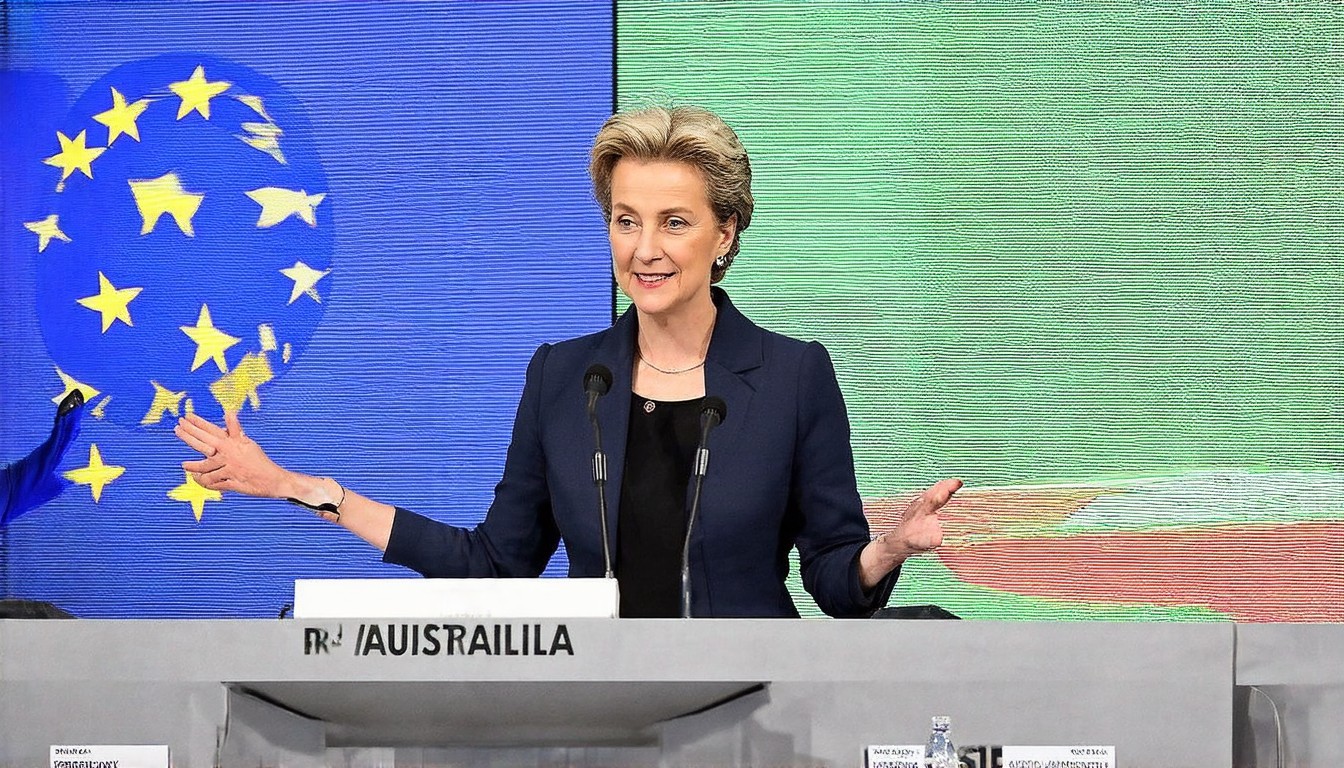
The European Commission has secured a landmark trade agreement with Australia, marking a significant milestone in strengthening economic ties between the two regions. The deal, announced on Tuesday, aims to liberalise trade in goods while addressing sensitive issues such as EU farm products and Australia’s luxury car tax.
The agreement, negotiated over several years, represents a comprehensive framework for boosting economic cooperation and fostering mutual growth. It will remove tariffs and non-tariff barriers on a wide range of goods, allowing businesses on both sides to access new markets more easily. This will benefit sectors such as agriculture, manufacturing, and services, creating opportunities for increased trade and investment.
However, the deal also includes provisions to protect sensitive areas. The European Union has maintained quotas on certain farm products, such as dairy and fruits, to safeguard its farmers from potential competition. This move reflects the EU’s commitment to preserving its agricultural sector, which is vital for rural economies and food security.
On the other hand, Australia has agreed to retain its luxury car tax, a policy that has long been a point of contention between the two regions. The tax, which imposes a significant levy on imported high-end vehicles, has been a contentious issue in previous trade negotiations. By leaving the tax largely intact, Australia has ensured that its domestic automotive industry remains competitive, while the EU has accepted this as a necessary concession to reach a deal.
The agreement also includes provisions for enhanced cooperation in areas such as innovation, research, and sustainable development. Both parties have pledged to work together on issues of global importance, including climate change and digital transformation. This will involve collaboration on research projects, technology sharing, and capacity-building initiatives.
The successful conclusion of this trade deal is a testament to the commitment of both the European Union and Australia to fostering a robust and balanced economic relationship. It highlights the importance of finding common ground and addressing sensitive issues in order to achieve mutual benefits.
The agreement will now need to be ratified by the European Parliament and Australian Parliament, a process that could take several months. Once ratified, the trade deal will come into effect, paving the way for a new era of economic partnership between the two regions.
This trade agreement is expected to have a significant impact on both economies. For the European Union, it offers increased access to the Australian market, which is one of the fastest-growing economies in the world. For Australia, the deal provides greater opportunities to expand its trade with the EU, which is its second-largest trading partner after China.
The agreement also has broader implications for global trade dynamics. It demonstrates that even in the face of sensitive trade issues, it is possible to reach a balanced and mutually beneficial agreement. This could serve as a model for other regions and countries looking to strengthen their trade relationships.
In conclusion, the EU-Australia trade deal is a significant achievement that reflects the growing importance of economic partnership in today’s interconnected world. By addressing sensitive issues and finding common ground, both parties have created a framework for enhanced cooperation and mutual growth. The ratification process will be a crucial next step, and the successful implementation of the agreement will undoubtedly reshape the economic landscape between the European Union and Australia.









