
Using AI to perceive the universe in greater depth
Using AI to perceive the universe in greater depth
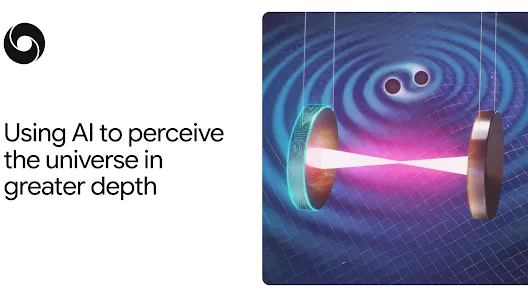
In recent years, the integration of artificial intelligence (AI) into scientific research has opened new avenues for understanding the universe. Traditional methods of observation, such as those employed by astronomers and astrophysicists, have been augmented by AI-driven tools that can process vast amounts of data with unprecedented speed and accuracy. This shift is not only transforming how we interpret celestial phenomena but also enabling the discovery of new insights into the cosmos.
One of the most significant advancements in this field is the use of AI to analyze data from telescopes and other astronomical instruments. By leveraging machine learning algorithms, scientists can sift through terabytes of data to identify patterns and anomalies that might have been overlooked by human analysts. For instance, AI has been instrumental in detecting exoplanets—planets outside our solar system—by analyzing light curves from space telescopes like NASA's Kepler and TESS missions. These algorithms can detect the subtle dips in brightness caused by a planet passing in front of its host star, a process known as the transit method.
Moreover, AI is playing a crucial role in the analysis of data from the Event Horizon Telescope (EHT), the international collaboration that captured the first-ever image of a black hole's event horizon in 2019. The EHT's data is incredibly complex, requiring sophisticated computational techniques to process and interpret. AI models have been trained to recognize the unique signatures of black holes, such as the characteristic shadow and the surrounding accretion disk, allowing researchers to better understand the extreme physics near these enigmatic objects.
Beyond black holes, AI is also aiding in the study of galaxy formation and evolution. By simulating vast cosmic volumes, AI-driven models can predict the distribution of matter and the evolution of galaxies over time. These simulations provide valuable insights into the large-scale structure of the universe and help test theoretical models of cosmic evolution. Additionally, AI is being used to analyze data from the Square Kilometre Array (SKA), a future radio telescope project that promises to revolutionize our understanding of the universe. The SKA's data will be too vast for human analysis alone, and AI will be essential in identifying and characterizing radio sources, from pulsars to distant galaxies.
AI is also transforming the field of cosmology, where it is used to analyze data from cosmic microwave background (CMB) surveys. The CMB is the afterglow of the Big Bang, and its detailed study can reveal information about the early universe's composition and structure. AI algorithms can identify patterns in the CMB data that might be indicative of new physics, such as the presence of dark matter or modifications to general relativity.
In addition to these scientific applications, AI is also being used to democratize access to astronomical data. Platforms like Google Sky and the Open Universe project allow anyone with an internet connection to explore vast datasets, powered by AI-driven tools that simplify complex information. This democratization not only empowers amateur astronomers but also fosters collaboration between professionals and the public, accelerating scientific discovery.
However, the use of AI in astronomy is not without challenges. One major concern is the potential for AI models to introduce biases into the data analysis process. Since AI algorithms are trained on existing datasets, any biases present in those datasets can be perpetuated in the models' predictions. To mitigate this, researchers are increasingly focusing on developing transparent and explainable AI systems that can be validated and verified by human experts.
Furthermore, the rapid advancement of AI technologies necessitates a continuous learning curve for astronomers and astrophysicists. Many professionals in the field are now required to develop skills in data science and machine learning to effectively collaborate with AI systems. This shift is prompting changes in educational curricula and the development of interdisciplinary research collaborations.
In conclusion, the integration of AI into the study of the universe represents a paradigm shift in scientific research. By enhancing our ability to process and interpret vast amounts of data, AI is unlocking new frontiers of discovery and enabling us to perceive the cosmos in greater depth. From detecting exoplanets to understanding the mysteries of black holes, AI is becoming an indispensable tool in the astronomer's toolkit. As the technology continues to evolve, it will be crucial for the scientific community to address the challenges posed by AI, ensuring that its potential is harnessed responsibly and effectively. The future of astronomy is undeniably bright, and AI will play a pivotal role in shaping that future.









