
US president Donald Trump warns Tehran to reopen Hormuz or face "hell"
Iran and the United States received a draft proposal late Sunday calling for a 45-day ceasefire and the reopening of the Strait of Hormuz.
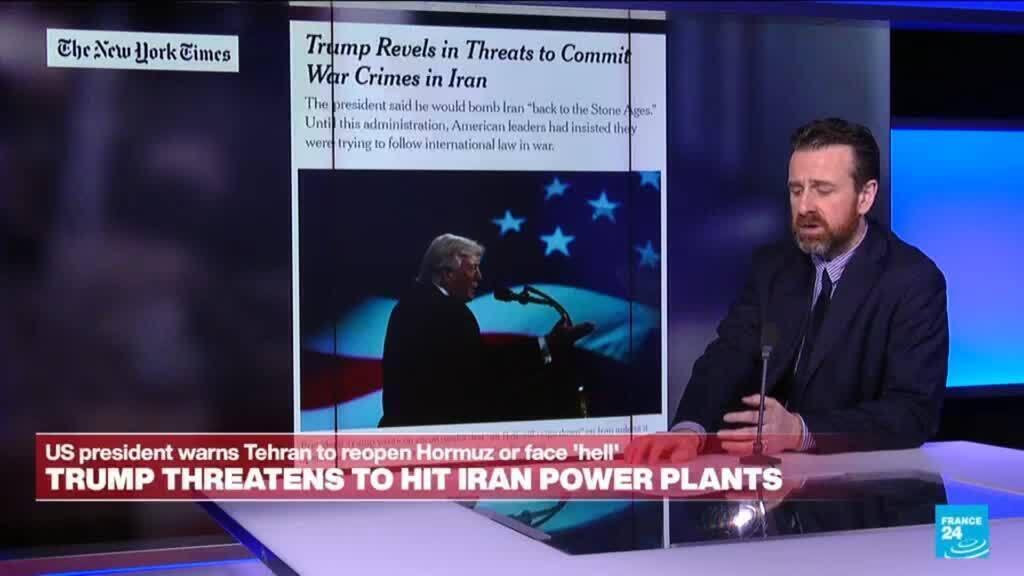
On Monday, U.S. President Donald Trump warned Iran's capital, Tehran, to reopen the strategically vital Strait of Hormuz or face severe consequences, according to a statement released by the White House. The move comes amidst a tense standoff between the two nations, following Iran's recent seizure of a U.S. oil tanker, the Maersk Tanker, in the strait.
The situation escalated further as Iran and the United States received a draft proposal late Sunday, calling for a 45-day ceasefire and the reopening of the Strait of Hormuz. The proposal, whose origin remains unclear, suggests an urgent need for de-escalation in the region. However, Trump's warning indicates that the U.S. is not willing to back down from its demands, even as diplomatic channels remain open.
In his statement, Trump emphasized that the United States would not tolerate the disruption of global oil supplies, which are heavily reliant on the Strait of Hormuz. He warned that if Iran does not comply with the demand to reopen the strait, it would face "hell." This stark language underscores the seriousness of the U.S. stance and the potential consequences for Iran if it continues to obstruct shipping in the region.
The Strait of Hormuz is a narrow waterway connecting the Persian Gulf to the Gulf of Oman, through which approximately 30% of global oil production passes. Its closure or significant disruption would have severe implications for global energy markets, potentially leading to skyrocketing oil prices and economic instability worldwide.
The recent seizure of the Maersk Tanker by Iranian forces has been a major catalyst for tensions between the two nations. The U.S. has accused Iran of acting with "hostile intent" and has imposed new sanctions on the country in response. In retaliation, Iran has threatened to retaliate against U.S. interests in the region, further escalating the situation.
The draft proposal for a ceasefire and the reopening of the Strait of Hormuz highlights the urgent need for diplomatic engagement to resolve the crisis. While the proposal's origin is unclear, it suggests that there may be third-party efforts underway to mediate between the two nations. However, the U.S. has yet to comment on the proposal, and it remains uncertain whether it will be taken seriously by both sides.
Trump's warning to Iran comes as the U.S. continues to build a coalition of support for its stance on the issue. Several Gulf Cooperation Council (GCC) nations, including Saudi Arabia and the United Arab Emirates, have expressed concern over the situation and called for the immediate release of the Maersk Tanker and the reopening of the strait.
The situation in the Strait of Hormuz has also drawn attention from international organizations, including the United Nations, which has called for de-escalation and a return to diplomatic dialogue. However, the U.S. and Iran remain locked in a standoff, with neither side showing signs of backing down.
In the coming days, it will be crucial to monitor the situation closely, as any further escalation could have far-reaching consequences for global stability. The draft proposal for a ceasefire offers a glimmer of hope for a resolution, but it remains to be seen whether the U.S. and Iran can find common ground and avoid a potential military confrontation.
As tensions continue to rise, the world watches closely, hoping for a diplomatic resolution that can prevent further destabilization in an already volatile region. The stakes are high, and the need for cautious diplomacy cannot be overstated. Only time will tell whether the U.S. and Iran can find a path forward, or if the situation will continue to spiral out of control.








