US lawmakers visiting Cuba denounce island's 'economic bombing' under energy blockade
Two U
U.S. lawmakers visiting Cuba denounce island's 'economic bombing' under energy blockade
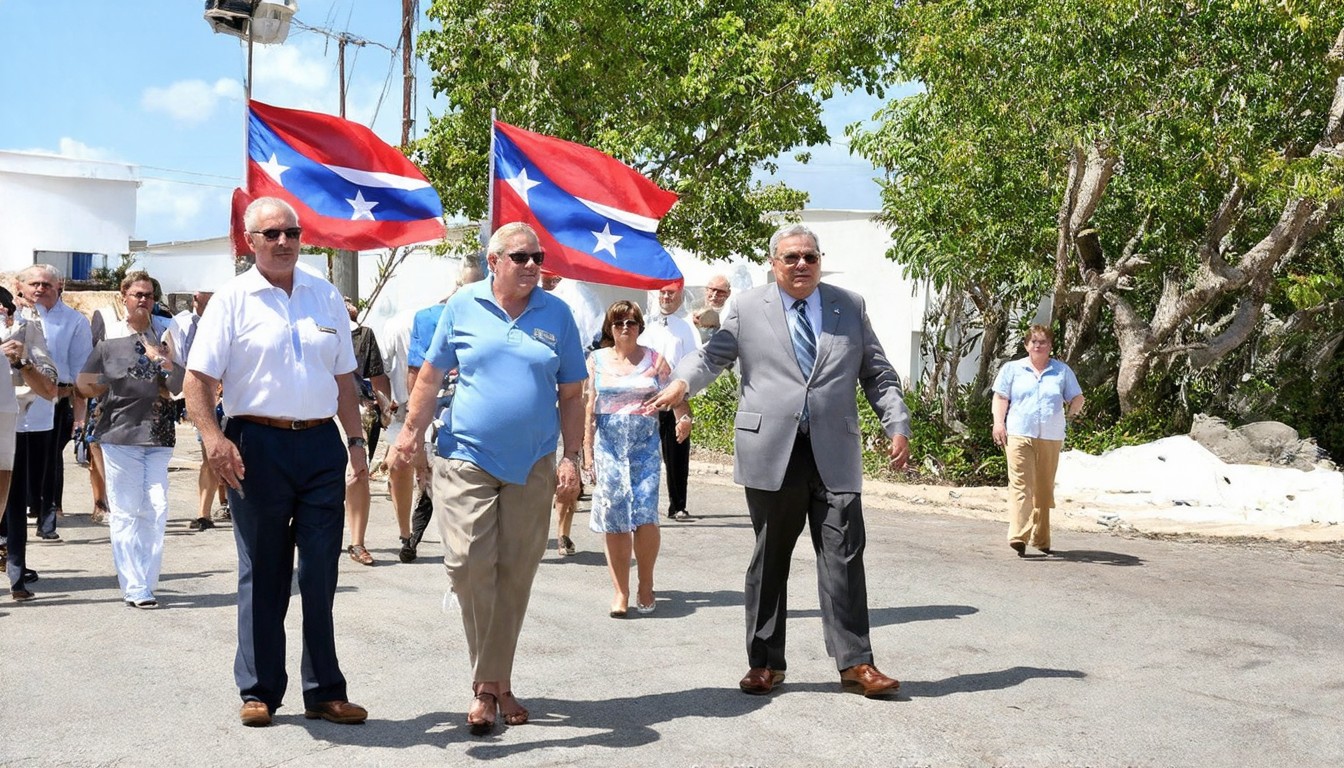
In a recent visit to Cuba, a group of U.S. lawmakers has accused the United States of waging an "economic bombing" against the island, exacerbated by the ongoing energy blockade. The delegation, which included members of Congress, visited Havana to discuss bilateral relations and the impact of U.S. policies on Cuba's economy and citizens.
The lawmakers' visit comes as tensions continue to rise between the two nations, with Cuba frequently accusing the U.S. of maintaining a blockade that restricts access to essential resources, particularly oil. The energy blockade, which has been in place since the early 1960s, has been a contentious issue, with Cuba arguing that it has severely limited its ability to develop its economy and infrastructure.
During their time in Cuba, the U.S. delegation met with government officials and civil society representatives to understand the daily challenges faced by the population. They were particularly critical of the U.S. embargo, which has been in place since 1960 and has been expanded multiple times since then. The lawmakers argued that the blockade has led to a humanitarian crisis, causing shortages of food, medicine, and other basic necessities.
"The U.S. has been bombing Cuba's economy for decades, and it's time for us to confront this reality," said one of the lawmakers. "The embargo is not just an economic policy; it's a tool of oppression that has left millions of Cubans suffering."
Cuba's government has long maintained that the U.S. blockade is a form of economic warfare, designed to weaken the island's socialist system. In response to the accusations, the U.S. has defended the embargo as a necessary measure to protect human rights and promote democracy in Cuba. However, critics argue that the blockade has had the opposite effect, deepening poverty and isolation on the island.
The lawmakers' visit has sparked debate in the U.S. about the effectiveness and morality of the embargo. Some argue that it has failed to achieve its stated goals and has instead caused human suffering. Others contend that it remains a vital tool for exerting pressure on the Cuban government to reform.
In addition to the energy blockade, the delegation also discussed other aspects of U.S.-Cuba relations, including political and human rights issues. They emphasized the need for dialogue and engagement to address the complex challenges facing both nations.
"We must find a way to engage with Cuba, not isolate it," said another lawmaker. "The embargo has only served to entrench the current regime and prevent the Cuban people from realizing their full potential."
The visit comes at a time when relations between the U.S. and Cuba are at a low ebb, with both sides accusing each other of hostility. The lawmakers' denunciation of the economic blockade is a stark reminder of the deep-seated tensions that persist between the two nations, and the urgent need for a reevaluation of U.S. policy towards Cuba.
As the debate continues, one thing is clear: the impact of the U.S. embargo on Cuba's economy and people is a matter of grave concern for many, including these visiting lawmakers. The question of whether the blockade is an effective tool for change, or a destructive force for the Cuban people, remains unanswered, but the human cost is undeniable.