
US Issues Grand Challenge: The First Fault-Tolerant Quantum Computer by 2028
Today's error-prone quantum computers are still far from practical. But a bold deadline could galvanize the field. The post US Issues Grand Challenge: The First Fault-Tolerant Quantum Computer by 2028 appeared first on SingularityHub .
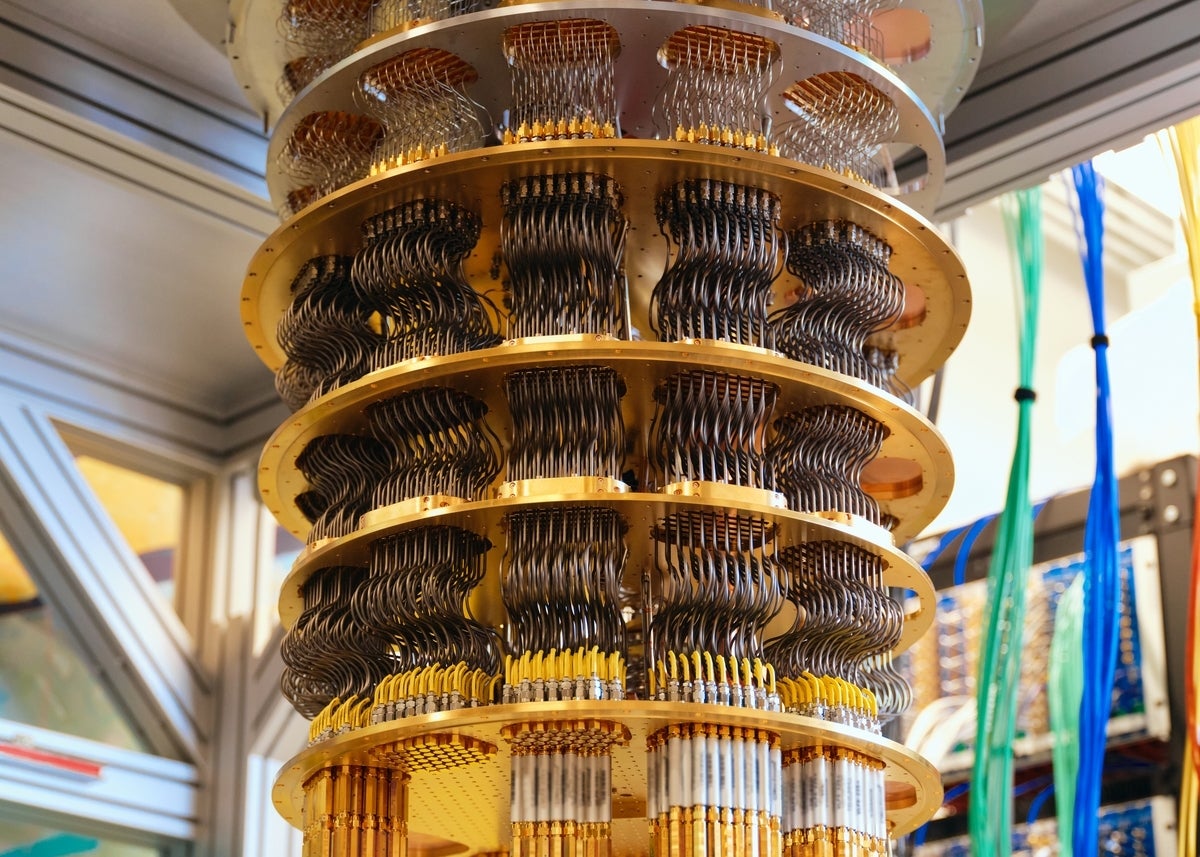
The United States Department of Energy has set an ambitious goal to develop the first fault-tolerant quantum computer by 2028, aiming to accelerate the field and bring practical quantum computing closer to reality. While current quantum computers are plagued by high error rates, making them unsuitable for real-world applications, the new initiative seeks to overcome these challenges and pave the way for scientific breakthroughs.
Today's quantum computers, though promising, are far from reliable. Their qubits, the basic units of quantum information, are highly susceptible to errors caused by environmental noise and other factors. This limits their ability to perform complex calculations accurately. To address this issue, researchers believe that fault-tolerant quantum computers are necessary. These machines would employ error-correcting algorithms to detect and correct errors in real-time, ensuring the stability of computations.
However, the path to achieving fault tolerance is not straightforward. Estimates suggest that it may take up to 1,000 physical qubits to create a single, error-corrected "logical" qubit capable of participating in meaningful calculations. Given that most existing devices have at most a few hundred physical qubits, many experts predict that practical fault-tolerant quantum computers are still years away. Some industry insiders have even suggested that the wait could extend well into the next decade.
Despite these cautious predictions, the US Department of Energy remains optimistic. Darío Gil, the undersecretary for science at the Department of Energy, recently announced the agency's intention to deliver the first generation of fault-tolerant quantum computers by 2028. This ambitious timeline aims to galvanize the quantum computing field and drive innovation. The agency does not plan to build the system itself but instead intends to collaborate with quantum computing companies to procure a ready-made solution.
The Department of Energy has outlined specific performance criteria that the future device must meet, but it has left the details of the implementation up to the companies involved. Notably, the agency has not favored any particular quantum computing design, such as superconducting qubits or trapped ions, allowing for a competitive and diverse approach to achieving the goal.
The push for a fault-tolerant quantum computer by 2028 reflects the growing global interest in quantum computing. As nations recognize the potential of this emerging technology, they are investing heavily in research and development. The US Department of Energy's initiative serves as a catalyst for the industry, encouraging companies to innovate and accelerate progress.
While skeptics question whether the 2028 deadline is realistic, the bold announcement has undeniably energized the field. By setting a clear target, the Department of Energy hopes to inspire quantum computing companies to invest in research, develop new technologies, and overcome the current limitations of error-prone qubits.
Ultimately, the success of this ambitious project will depend on the ability of the quantum computing industry to innovate rapidly and effectively. If the deadline can be met, it would represent a significant milestone in the quest for practical quantum computing, opening doors to groundbreaking scientific discoveries and transformative technological advancements. If not, the experience gained from attempting to achieve the goal may still contribute to progress, as the lessons learned could pave the way for future breakthroughs.
In any case, the US Department of Energy's Grand Challenge serves as a powerful reminder of the potential of quantum computing and the importance of collaboration and innovation in driving this field forward. As the race to build a fault-tolerant quantum computer intensifies, the world watches with bated breath, eager to see the day when quantum computing becomes a reality.









