Unprecedented Amazonian rainforests damage during the 2023–2024 droughts
Proceedings of the National Academy of Sciences, Volume 123, Issue 13, March 2026. SignificanceThe Amazonian rainforests account for around a quarter of global forest carbon stocks, and they are increasingly threatened by severe droughts, particularly the record-breaking and consecutive droughts of 2023–2024. Using long-term continuous ...
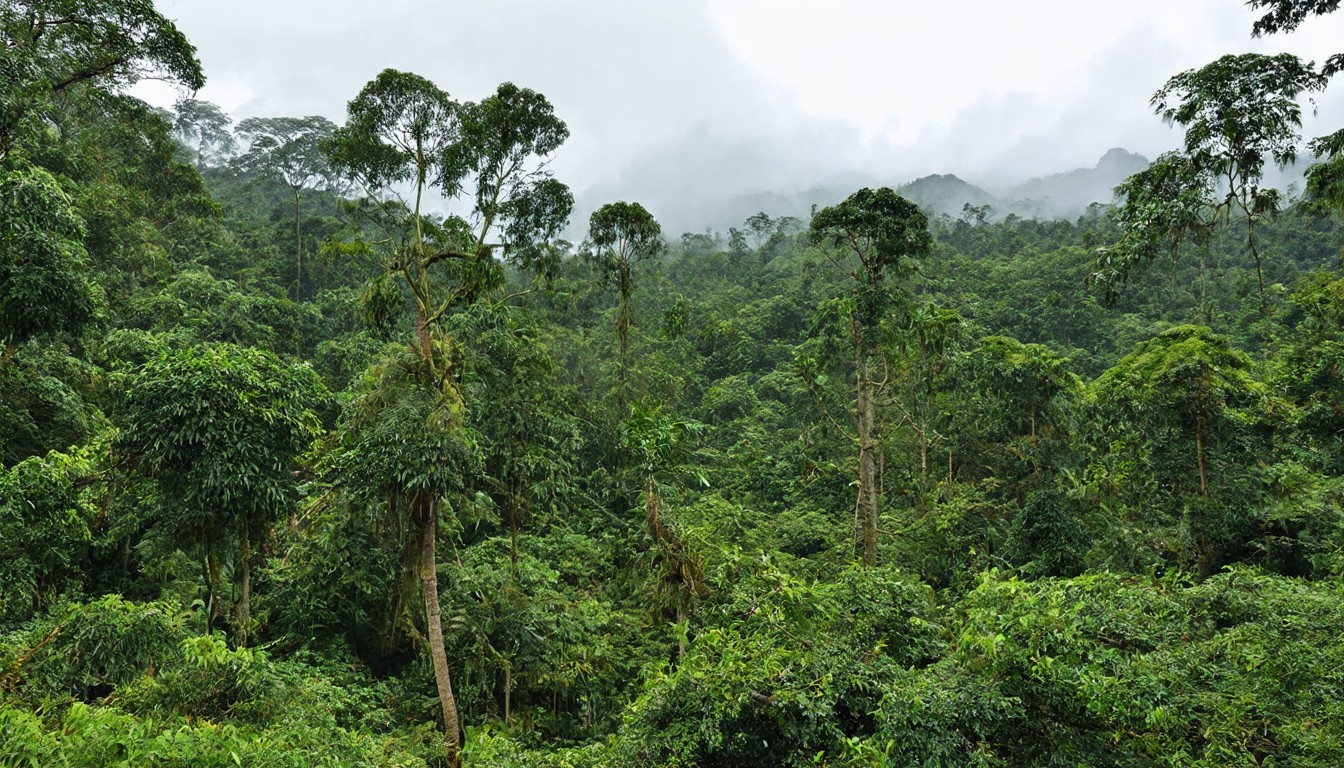
In March 2026, the Proceedings of the National Academy of Sciences published a study highlighting the unprecedented damage to the Amazonian rainforests during the 2023–2024 droughts. These droughts, which were both record-breaking and consecutive, have had a profound impact on the region's ecosystems, particularly the Amazon rainforest, which holds a quarter of the world's forest carbon stocks.
The study, conducted by a team of international scientists, emphasizes the critical vulnerability of the Amazon rainforest to severe droughts. The 2023–2024 droughts were particularly devastating due to their intensity and duration, leading to widespread deforestation, increased wildfires, and a decline in biodiversity. The researchers used long-term continuous data to analyze the effects of these droughts, revealing a stark contrast between the resilience of the rainforest under normal conditions and its vulnerability during extreme weather events.
The Amazon rainforest plays a crucial role in global carbon cycling, acting as a massive carbon sink that absorbs and stores carbon dioxide from the atmosphere. However, the study underscores that the 2023–2024 droughts have disrupted this delicate balance, leading to increased carbon emissions. The droughts caused stress on the trees, making them more susceptible to pests and diseases, which in turn accelerated the release of carbon stored in the forest biomass.
The consecutive droughts also led to a significant decline in the water cycle, affecting not only the rainforest but also the surrounding ecosystems and communities. The reduced rainfall and increased evaporation rates led to lower water levels in rivers and lakes, impacting the livelihoods of indigenous communities that rely on these water sources for their survival. Additionally, the droughts exacerbated the challenges faced by the region's wildlife, with many species facing increased extinction risks due to habitat loss and fragmentation.
The study's findings have important implications for global climate change policies. The Amazon rainforest's ability to act as a carbon sink is under threat from both natural droughts and human-induced deforestation. The researchers call for urgent action to protect the rainforest and mitigate the impacts of climate change. This includes strengthening international cooperation to combat deforestation, promoting sustainable land-use practices, and investing in research to better understand the complex interactions between droughts, deforestation, and carbon emissions.
Moreover, the study highlights the need for improved early warning systems to predict and respond to severe droughts in the Amazon region. By leveraging long-term data and advanced modeling techniques, scientists can develop more accurate forecasts, enabling timely interventions to protect the forest and its biodiversity.
In conclusion, the unprecedented damage to the Amazonian rainforests during the 2023–2024 droughts serves as a stark reminder of the region's fragility and the urgent need for global action to safeguard this critical ecosystem. The study published in the Proceedings of the National Academy of Sciences underscores the importance of interdisciplinary research and collaboration to address the complex challenges posed by climate change and deforestation. Only through concerted efforts can we ensure the long-term resilience of the Amazon rainforest and its vital role in regulating the Earth's climate.