Unlocking health insights: Estimating advanced walking metrics with smartwatches
Health & Bioscience
In recent years, the integration of technology into daily life has transformed the way we monitor and understand our health. Smartwatches, once limited to tracking basic fitness metrics like steps and heart rate, are now capable of providing advanced insights into our physical activity. Researchers and tech companies are working to unlock these health insights by developing algorithms that estimate metrics such as stride length, cadence, and even the intensity of walking. This evolution not only enhances our understanding of physical activity but also opens doors to new opportunities for personalized health interventions and preventive care.
The ability to estimate advanced walking metrics with smartwatches is a result of advancements in sensor technology and machine learning. Traditional smartwatches use accelerometers and gyroscopes to capture motion data, which is then processed to calculate basic metrics. However, these devices can also gather more nuanced information about how we move, such as the speed and rhythm of our steps. By analyzing this data, researchers have developed models that can estimate stride length, the distance covered with each step, and cadence, or the number of steps taken per minute. These metrics are particularly valuable for understanding the quality of physical activity, as they provide a more detailed picture of how we engage with exercise.
One of the key challenges in estimating advanced walking metrics is the variability in how individuals move. Stride length, for example, can vary significantly between people due to factors such as age, height, and physical condition. Machine learning algorithms are being trained on large datasets of motion data to account for these individual differences and improve the accuracy of the estimates. Researchers are also exploring the use of deep learning techniques, which can automatically identify patterns in the data and make more precise predictions.
The potential benefits of these advanced metrics are significant. By understanding how we walk, researchers can gain insights into factors that influence physical activity levels, such as the intensity and duration of our walks. This information can be used to develop more effective interventions to encourage physical activity, particularly among sedentary populations. For instance, knowing the optimal cadence or stride length for an individual might help in designing walking programs that are more engaging and sustainable.
Moreover, the ability to estimate advanced walking metrics with smartwatches has implications for public health. As the global population ages, the prevalence of conditions such as osteoporosis and arthritis is on the rise. Understanding how these conditions affect walking patterns can help healthcare providers tailor interventions to improve mobility and reduce the risk of falls. Additionally, during the COVID-19 pandemic, smartwatches have become essential tools for monitoring physical activity levels, which are crucial for maintaining mental and physical health.
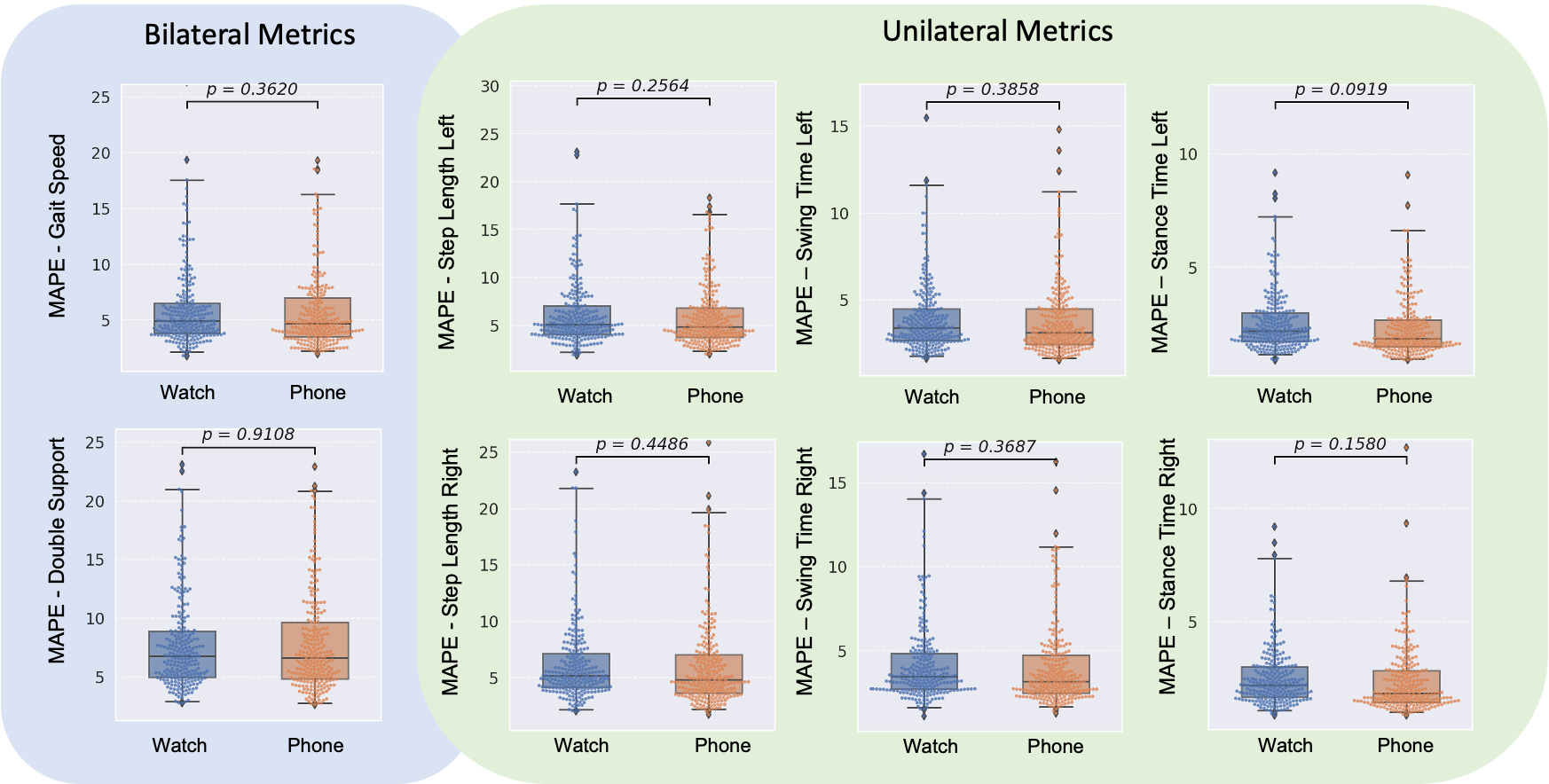
Despite the promise of these advanced metrics, there are still challenges to overcome. One major concern is the accuracy of the estimates, particularly in real-world settings where motion data can be affected by external factors such as hand position and movement irregularities. Researchers are actively working to refine these algorithms and validate their accuracy through rigorous testing. Another challenge is ensuring that the data collected by smartwatches is privacy-conscious and secure, as health information is highly sensitive.
In conclusion, the ability to estimate advanced walking metrics with smartwatches represents a significant leap forward in our understanding of physical activity. By leveraging cutting-edge technology and machine learning, researchers are unlocking insights that can inform personalized health interventions and improve public health outcomes. As these technologies continue to evolve, they hold the potential to transform the way we approach health and wellness, empowering individuals to make more informed decisions about their physical activity and overall health.