
Turkey’s NATO role under scrutiny amid new report on Hamas, Muslim Brotherhood ties
A new Foundation for Defense of Democracies report alleges Turkey under Erdogan has shifted toward Islamist movements, raising NATO alliance concerns ahead of a July summit in Ankara, Turkey.
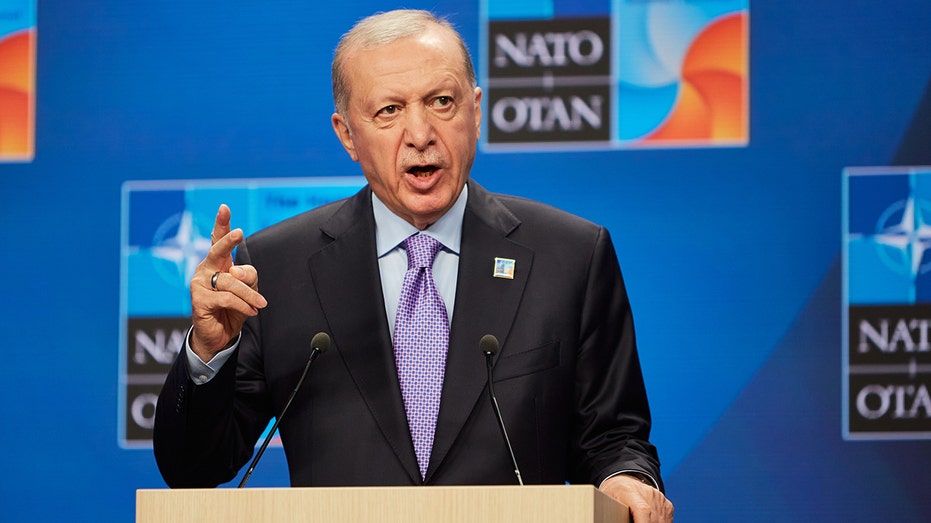
Title: Turkey’s NATO Role Under Scrutiny Amid New Report on Hamas, Muslim Brotherhood Ties
A new report by the Foundation for Defense of Democracies (FDD) has sparked renewed concerns about Turkey’s alignment within the NATO alliance, particularly as the country prepares to host a summit in Ankara later this year. The report, titled "Islamist Domination of Turkey: A Forward Base for Muslim Brotherhood-Aligned Jihadism," authored by senior fellow Sinan Ciddi, argues that under President Recep Tayyip Erdoğan, Turkey has shifted its traditional Western orientation toward deeper engagement with Islamist movements, including the Muslim Brotherhood and Hamas.
The FDD report highlights Turkey’s evolving relationship with Hamas, a U.S.-designated terrorist organization responsible for the October 7 massacre, and the Muslim Brotherhood, an Islamist movement whose affiliates have recently been designated as terrorist organizations by the United States. This shift in Turkey’s foreign policy has raised concerns among NATO allies, particularly as the country’s policies could potentially undermine the alliance’s collective security goals.
Sinan Ciddi, the report’s author, told Fox News Digital that Turkey’s alignment with Islamist groups reflects a broader transformation in how the country perceives threats. "What we have is Turkey has completely rewritten the rules of how you interpret what a jihadist terrorist entity may be," Ciddi said. "Erdoğan has reinvented what is interpreted as a terrorist entity … groups such as Hamas or al-Nusra fall into line with his pan-Islamist view of the world."
The report emphasizes Turkey’s relationship with Hamas, which has expanded its presence in the country since 2011, establishing offices and networks with the support of the Turkish government. "From 2011 onward … Hamas used this opportunity inside of Turkey with a friendly government to establish offices, engage in recruitment (and) fundraising," Ciddi explained. U.S. authorities have taken action against some of these networks, with the Treasury Department designating Hamas-linked individuals and entities operating in Turkey. Ciddi noted that this underscores longstanding concerns about Turkey’s ties to terrorist groups.
The FDD report also examines Turkey’s engagement with the Muslim Brotherhood, an Islamist movement that has been designated as a terrorist organization by the United States. The report suggests that Turkey’s support for the Muslim Brotherhood could potentially destabilize the region and pose a threat to NATO’s security interests.
As Turkey prepares to host the NATO summit in July, these concerns have intensified. The alliance’s members are expected to discuss a range of issues, including counterterrorism, cybersecurity, and the evolving global security landscape. However, the FDD report raises questions about Turkey’s role within the alliance, particularly given its alleged ties to groups designated as terrorist by the United States and other NATO members.
Critics argue that Turkey’s shift toward Islamist movements could undermine the alliance’s unity and weaken its ability to effectively address common security threats. They contend that Turkey’s policies, particularly its support for Hamas and the Muslim Brotherhood, are inconsistent with the values and goals of the NATO alliance.
In response to these concerns, Turkish officials have maintained that the country remains a reliable ally within NATO. They argue that Turkey’s engagement with Islamist movements is necessary to protect its regional interests and promote a more inclusive understanding of Islam. However, the FDD report challenges this narrative, suggesting that Turkey’s policies could have unintended consequences for the alliance as a whole.
The report’s findings have prompted calls for increased scrutiny of Turkey’s role within NATO. Some experts warn that if left unchecked, Turkey’s alignment with Islamist groups could lead to a broader destabilization of the Middle East and pose a threat to the security of NATO member states.
As the July summit approaches, the international community will be closely watching Turkey’s actions and policies. The FDD report serves as a reminder that the alliance’s future depends on the commitment of its members to shared values and the effective management of common security challenges.
In conclusion, the new FDD report has reignited concerns about Turkey’s role within NATO, particularly in light of allegations of ties to Hamas and the Muslim Brotherhood. As the country prepares to host a summit later this year, the international community is expected to scrutinize Turkey’s policies closely, ensuring that the alliance remains focused on its core mission of collective defense and security. The report underscores the need for continued dialogue and cooperation among NATO members, as well as a shared commitment to addressing the evolving threats to global security.








