
Trump’s trade war with China in focus ahead of May summit
The confrontation between the world’s two top economies includes slapping tit-for-tat tariffs.
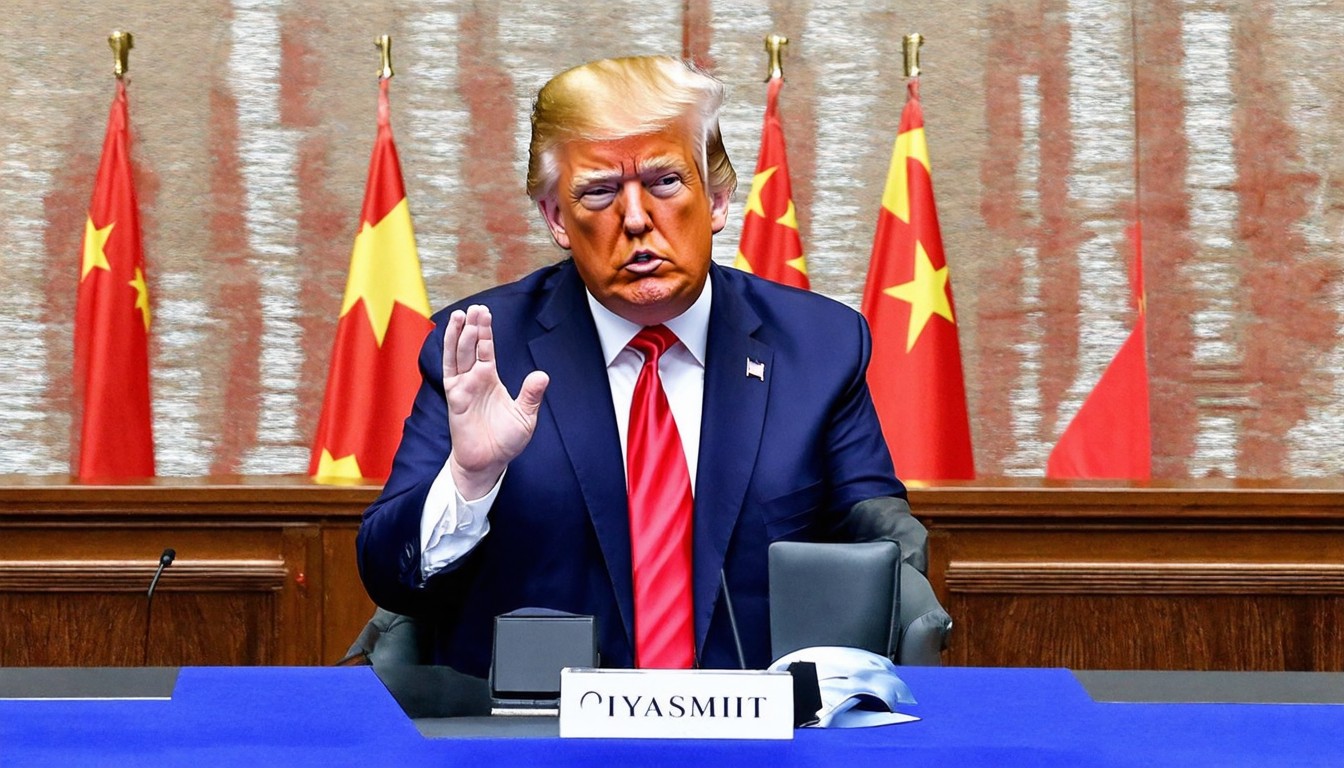
As the world prepares for the upcoming May summit, the ongoing trade war between the United States and China remains a focal point of global economic and political discourse. This tit-for-tat conflict, marked by the imposition of tariffs on each other's goods, has reshaped international trade dynamics and raised concerns about the stability of global supply chains.
The trade war began in 2018 when the Trump administration imposed tariffs on Chinese imports, citing concerns over intellectual property theft and trade imbalances. In response, China retaliated with its own tariffs, escalating the conflict and prompting a series of back-and-forth measures. These tariffs have affected a wide range of industries, from consumer electronics to agricultural products, leading to increased prices for consumers and disruptions for businesses reliant on imports and exports.
The May summit, scheduled to take place in the coming weeks, is expected to bring renewed attention to this contentious issue. Both nations are likely to engage in high-stakes negotiations, aiming to find a resolution that mitigates the economic fallout while addressing the underlying grievances. However, the path to a deal is uncertain, as past attempts to reach a truce have faced significant challenges.
One of the key issues at stake is the trade imbalance. The United States has long argued that China's trade policies contribute to a large deficit in bilateral trade, with China exporting significantly more goods to the U.S. than it imports. The Trump administration has sought to address this imbalance through tariffs and other measures, but critics argue that these actions have only exacerbated the problem, leading to a decline in global trade and increased economic uncertainty.
In addition to trade imbalances, intellectual property (IP) disputes continue to fuel the conflict. The U.S. accuses China of forcing American companies to transfer proprietary technology and intellectual property, giving Chinese firms an unfair advantage. China, in turn, argues that its policies are not unlawful and that the U.S. is using IP concerns as a pretext for protectionist trade practices.
The trade war has also had significant geopolitical implications. The U.S. has increasingly positioned itself as a champion of free trade and has sought to build alliances with countries that share its concerns about China's trade practices. This has led to a broader realignment of global alliances, with some nations choosing sides in the U.S.-China rivalry.
Despite the challenges, there are signs that both sides may be open to a negotiated settlement. Recent developments, such as the release of a U.S. citizen detained in China and a temporary suspension of tariffs on certain goods, suggest that groundwork for a deal may be in place. However, the specifics of any agreement remain uncertain, and the summit will likely see intense negotiations as both countries strive for favorable outcomes.
The outcome of the May summit could have far-reaching consequences for global economies. A successful resolution could lead to a resumption of trade growth and stabilize global markets. On the other hand, if negotiations fail to yield meaningful progress, the trade war could continue to escalate, potentially leading to further economic disruptions and geopolitical tensions.
As the world watches the unfolding drama of the U.S.-China trade war, the May summit serves as a critical moment in determining the future trajectory of global trade and economic relations. The stakes are high, and the potential impact on both nations and the international community is significant. The coming weeks will be pivotal as both sides navigate the complexities of this contentious issue, seeking a path forward that balances economic interests and geopolitical considerations.









