
Trump's threatened destruction of Iran's power plants could be considered a war crime, experts say
In his news conference on Monday, President Donald Trump threatened to blow up every bridge and power plant in Iran, a declaration so far-reaching that some experts in military law said it could constitute a war crime.
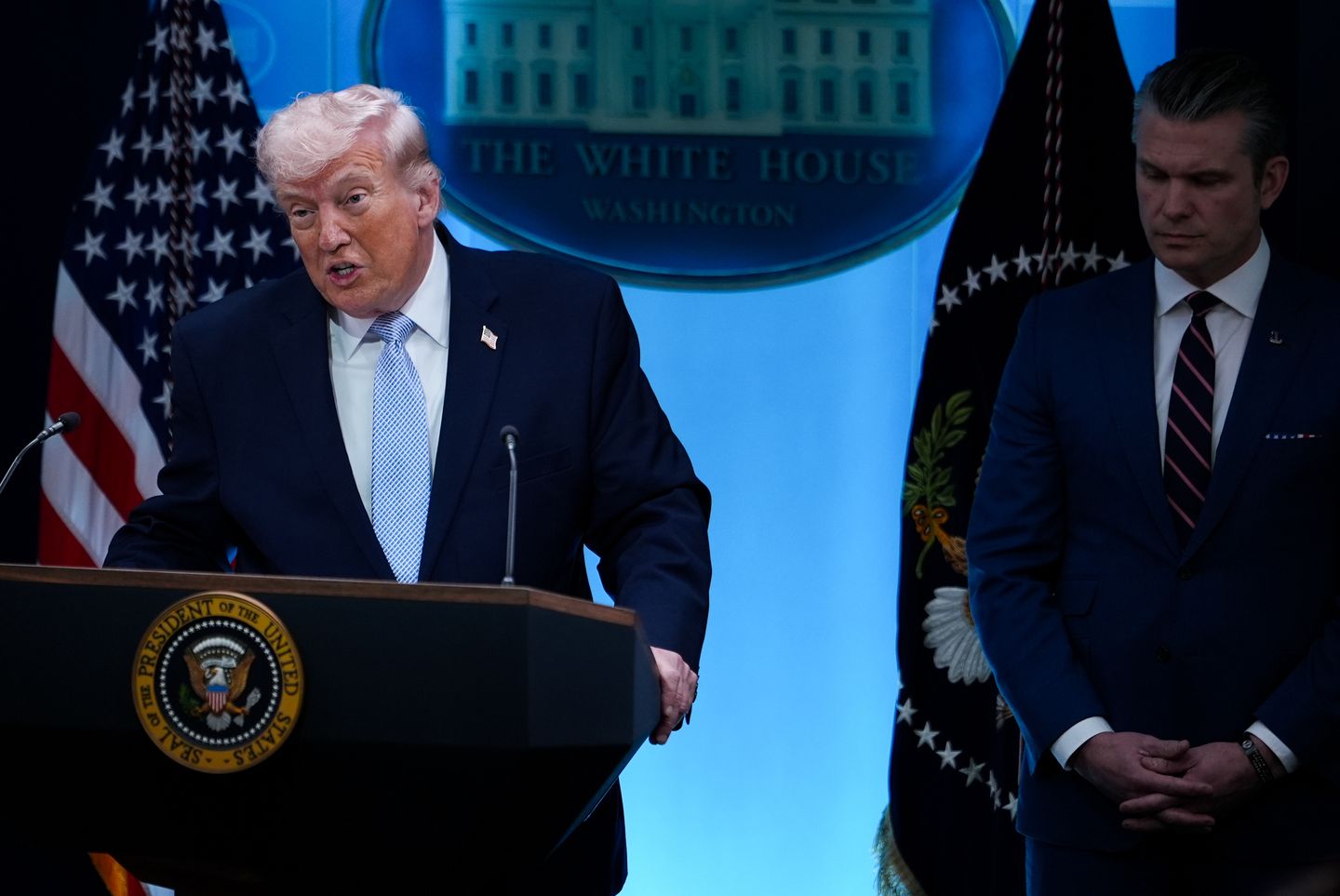
In his news conference on Monday, President Donald Trump threatened to blow up every bridge and power plant in Iran, a declaration so far-reaching that some experts in military law said it could constitute a war crime. The comments came amid heightened tensions between the United States and Iran, with both nations exchanging accusations of aggression and hostility. Trump's remarks have sparked international concern, as they raise questions about the legal and ethical implications of such actions.
Experts in international law have pointed out that targeting infrastructure such as bridges and power plants could be considered a war crime under the Geneva Conventions. These agreements, which form the foundation of international humanitarian law, prohibit attacks on civilian infrastructure that are not directly contributing to military operations. While bridges and power plants may have strategic military value, their destruction could also result in widespread civilian casualties and damage to non-combatant areas.
One key concern is the potential impact on the civilian population of Iran. Power plants are essential for providing electricity to residential and commercial areas, and their destruction could lead to a humanitarian crisis. In addition, bridges are vital for transportation and communication, and their destruction would disrupt daily life for millions of Iranians. Such actions could be seen as disproportionate and indiscriminate, violating the principles of proportionality and distinction that are central to international humanitarian law.
Moreover, the threat to destroy infrastructure raises questions about the distinction between military and civilian targets. While military law allows for the targeting of military infrastructure, the destruction of non-military targets that do not directly support military operations is generally prohibited. Experts argue that bridges and power plants, unless they are being used for military purposes, should not be targeted in this manner.
The legal implications of Trump's threat are further complicated by the fact that the United States is not currently engaged in a state of armed conflict with Iran. Under international law, the rules of engagement during armed conflict allow for more flexibility in targeting military infrastructure. However, in the absence of such a conflict, the threshold for targeting civilian infrastructure is much higher.
Critics of Trump's statement have also pointed out that such a threat could escalate tensions between the two nations and potentially lead to a full-scale conflict. The destruction of infrastructure could provoke Iran to retaliate, potentially resulting in a broader and more dangerous conflict that could have far-reaching consequences for global security.
In response to the concerns raised by military law experts, the Trump administration has not yet clarified whether the threat to destroy Iran's infrastructure was a serious statement or merely a rhetorical gesture. Some analysts suggest that the threat may have been intended to pressure Iran into negotiating more favorable terms in ongoing diplomatic efforts. However, the potential legal and humanitarian repercussions of such actions cannot be ignored.
As tensions between the United States and Iran continue to escalate, the international community must remain vigilant and ensure that all parties adhere to the principles of international humanitarian law. The threat to destroy civilian infrastructure, such as bridges and power plants, could have devastating consequences for the civilian population and could potentially constitute a war crime. It is crucial for all nations to exercise restraint and pursue diplomatic solutions to avoid further escalation of the situation.
In conclusion, President Trump's threat to destroy every bridge and power plant in Iran has raised serious concerns among military law experts, who argue that such actions could constitute a war crime. The potential humanitarian impact on the Iranian civilian population and the legal implications under international law highlight the need for caution and restraint in the current geopolitical climate. As tensions between the two nations remain high, the international community must closely monitor the situation and encourage all parties to adhere to the principles of international humanitarian law.








