Trump's $1.5 trillion military budget request faces uphill battle, Sen. Tim Kaine says
Sen. Tim Kaine, D-Va., expressed skepticism about the Trump administration's 2027 budget plan, which includes a request of $1.5 trillion from Congress to fund the Defense Department.
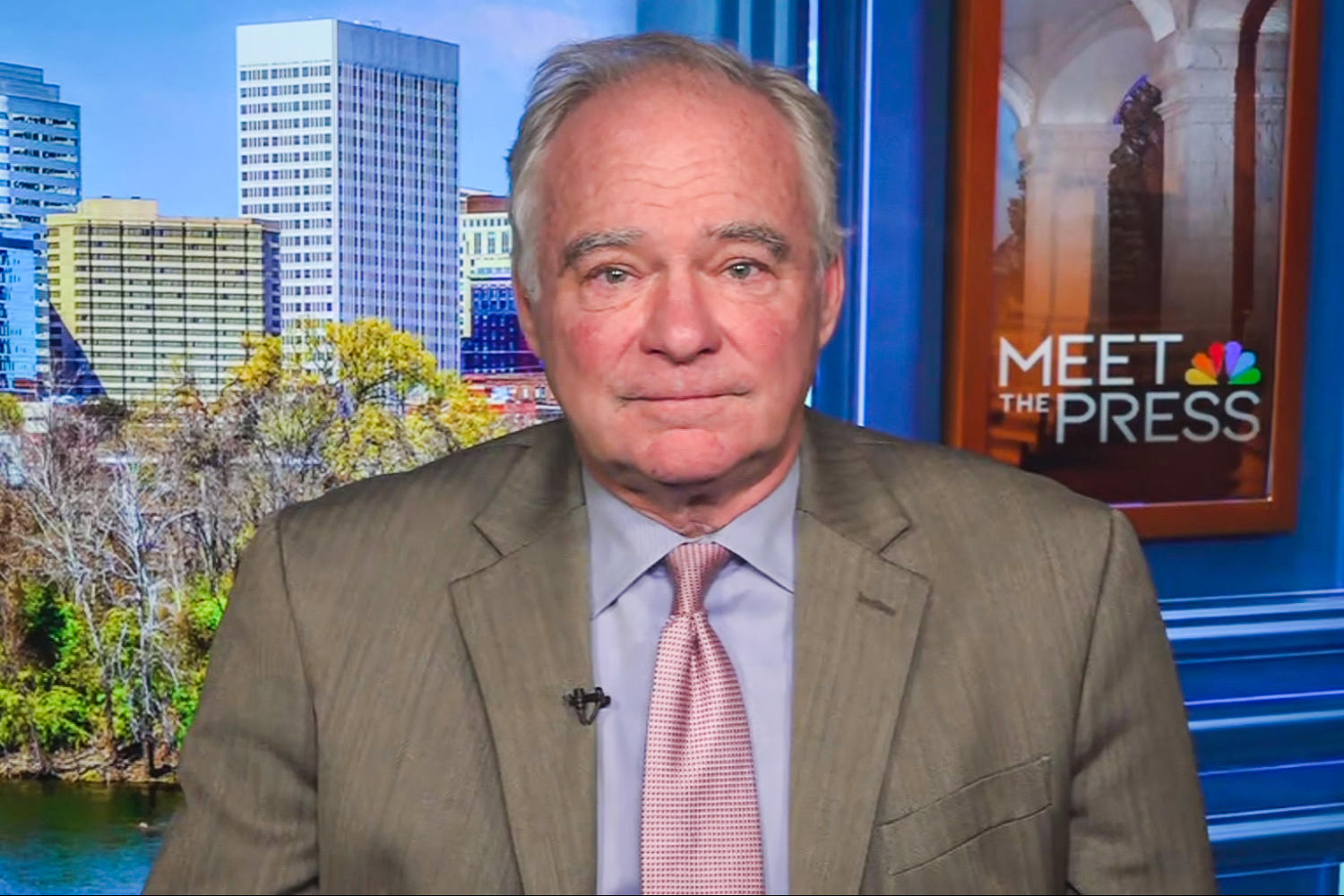
On April 5, 2026, Senator Tim Kaine, a Democrat from Virginia, appeared on NBC News' "Meet the Press" to express his skepticism regarding the Trump administration's proposed 2027 military budget. The administration has requested $1.5 trillion from Congress to fund the Defense Department, a figure that has drawn significant attention and scrutiny.
Kaine began by acknowledging the importance of national security and the need for a strong military. However, he emphasized that the proposed budget request is not only unprecedented in its size but also raises questions about its feasibility and priorities. He noted that the United States has faced budgetary challenges in the past, particularly during times of economic uncertainty, and that the current proposal could strain the federal government's resources.
The senator highlighted the fact that the Trump administration has already increased military spending in previous years, leading to a significant rise in the national debt. Kaine argued that the administration's approach to defense spending is not sustainable and could have long-term consequences for the country's economic stability. He called for a more careful and strategic evaluation of the budget request, urging lawmakers to consider alternative ways to address national security concerns without such a massive expenditure.
Kaine also questioned the specifics of the proposed budget. He pointed out that the administration has not provided sufficient details on how the $1.5 trillion would be allocated. Without a clear breakdown of priorities, it is difficult for Congress to assess whether the funds would be used effectively or if there are areas where spending could be reduced. The senator urged the administration to be more transparent about its plans, emphasizing that transparency is essential for informed decision-making.
Furthermore, Kaine raised concerns about the potential impact of such a large military budget on other critical areas of government spending. He argued that the United States faces numerous domestic challenges, including healthcare, education, infrastructure, and social welfare programs. By allocating an enormous amount of money to the military, the administration risks neglecting these essential services, which could have negative consequences for the country's citizens.
The senator also touched upon the geopolitical landscape, suggesting that the proposed budget may not be the most effective way to address current threats. He noted that the United States must work collaboratively with its allies and engage in diplomacy to maintain global stability. A unilateral approach, he argued, could lead to tensions and misunderstandings, undermining the country's position on the world stage.
Kaine's comments come as part of a broader debate about the role of the military in American society and the allocation of federal resources. Critics of the Trump administration's budget request argue that it is driven more by political considerations than a genuine commitment to national security. They point out that the administration has prioritized military spending over other important areas, often at the expense of social programs and domestic infrastructure.
In response to Kaine's skepticism, administration officials have defended the budget request, arguing that it is necessary to maintain a strong and competitive military force. They contend that the United States must be prepared to face evolving threats, including those posed by emerging powers such as China and Russia. The administration also emphasizes the importance of deterring adversaries and protecting American interests abroad.
Despite these arguments, many experts and lawmakers share Kaine's concerns. They argue that the proposed budget is not only unsustainable but also misguided, as it fails to address the root causes of global instability. Instead, they advocate for a more comprehensive approach that combines military strength with diplomatic engagement, economic development, and international cooperation.
The fate of the Trump administration's $1.5 trillion military budget request now lies with Congress. As lawmakers weigh the pros and cons of the proposal, they must consider the long-term implications of their decision. The debate will likely be contentious, with both sides presenting compelling arguments about the future of American defense policy.
In conclusion, Senator Tim Kaine's skepticism about the Trump administration's 2027 military budget request highlights the complex challenges facing the United States in the realm of national security and fiscal responsibility. As the country navigates an increasingly complex global landscape, the decision to allocate such a substantial amount of money to the military will have far-reaching consequences. The debate will continue, with lawmakers and experts alike weighing the priorities and priorities of the nation's defense strategy.