
Trump unleashes curse-filled social media rant at Iran after U.S. rescues colonel
In a profanity-laden post on Truth Social, President Trump lashed out at Iran and injected new volatility into the conflict, hours after U.S. forces carried out a high-risk rescue mission.
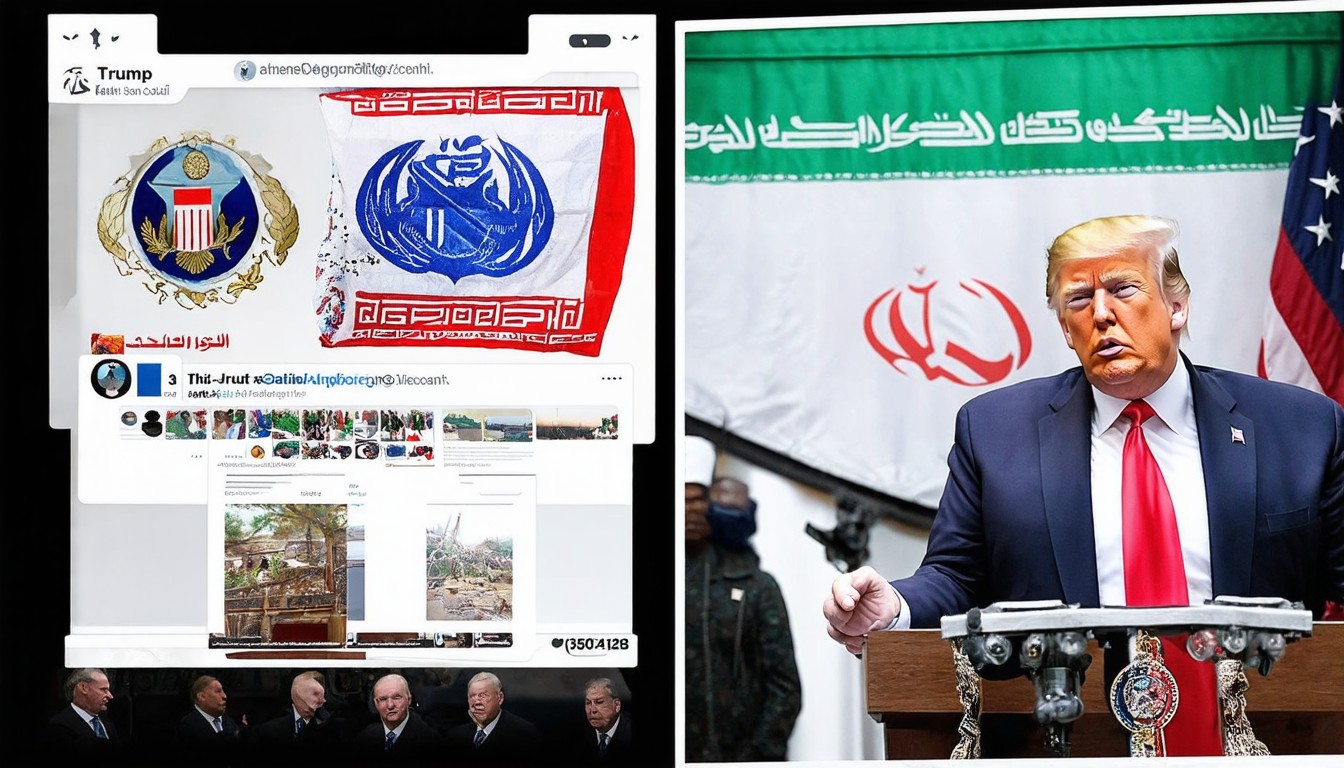
On a tense day marked by a high-stakes military operation, President Donald Trump unleashed a profanity-laden social media rant targeting Iran, further escalating tensions between the two nations. The outburst came just hours after U.S. forces successfully rescued a U.S. colonel held captive in Iran, an operation that underscored the volatile nature of the ongoing conflict.
The incident began when U.S. military personnel executed a daring rescue mission, extracting a colonel who had been detained in Iran. The operation, which involved a covert extraction, was meticulously planned and executed with precision, showcasing the capabilities of the U.S. military. The successful rescue was a significant achievement, as it highlighted the determination of the U.S. to secure the safety and freedom of its personnel, even in hostile territories.
However, the operation's aftermath was marked by heightened tensions, as President Trump took to Truth Social, his preferred social media platform, to launch a verbal assault on Iran. In a post filled with expletives, Trump accused Iran of engaging in "terrorist acts" and threatened retaliation, injecting a new level of volatility into an already fraught relationship. The language used by Trump was unprecedented in its aggression, raising concerns about the potential for further escalation in the region.
The rant came as a surprise to many observers, who had anticipated a more measured response given the delicate nature of the situation. Instead, Trump's post seemed to prioritize provocation over diplomacy, a stark contrast to the cautious approach often seen in international relations. Critics argued that such inflammatory language could inadvertently lead to unintended consequences, potentially destabilizing the region further.
The U.S. rescue mission itself was a testament to the ingenuity and bravery of the military, but it also highlighted the risks involved in operating in hostile environments. The colonel's detention had been a point of contention between the U.S. and Iran, with both sides blaming each other for the escalation. The rescue operation aimed to mitigate the situation, but Trump's subsequent social media outburst seemed to undermine any efforts towards de-escalation.
In the wake of the rescue, the U.S. administration had the opportunity to demonstrate restraint and engage in diplomatic dialogue with Iran. However, Trump's post on Truth Social appeared to reject this path, instead opting for a confrontational stance that could exacerbate tensions. This shift in tone was seen by many as counterproductive, as it failed to address the root causes of the conflict and instead focused on rhetorical threats.
The situation also raised questions about the role of social media in shaping international relations. While platforms like Truth Social have become a common avenue for political communication, their unfiltered nature can sometimes lead to inflammatory statements that may not be representative of official policy. In this case, Trump's post appeared to reflect a personal animus towards Iran, rather than a calculated diplomatic strategy.
As tensions continue to rise, the international community is watching closely, concerned about the potential for further instability in the region. The U.S. rescue mission, while a success, has been overshadowed by the inflammatory rhetoric that followed. The question now is whether both sides can find a path towards dialogue and de-escalation, or if the conflict will continue to spiral out of control.
In conclusion, President Trump's profanity-laden social media rant against Iran has added a new layer of complexity to an already volatile situation. The high-risk rescue mission, though successful, has been followed by a tone that threatens to escalate tensions further. As the world watches, the challenge lies in finding a way to move beyond rhetoric and towards meaningful diplomatic engagement, to ensure the stability and security of the region.








