
Trump, top officials share new details of rescue of U.S. airmen from Iran
President Trump and top national security officials shed new light on the daring rescues of two American airmen who were shot down over Iran last week.
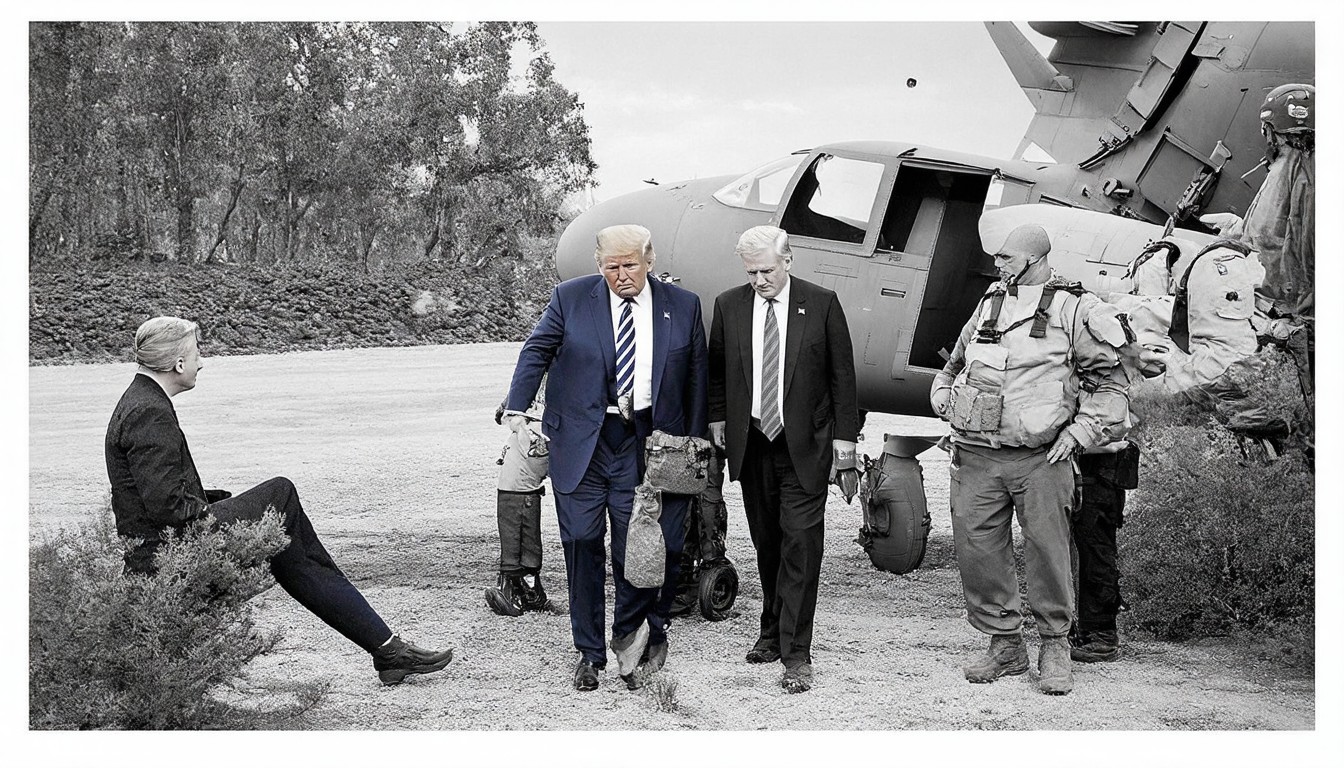
President Donald Trump and top national security officials gathered in the White House Rose Garden on Monday to share new details about the dramatic rescue of two American airmen who were shot down over Iran last week. The incident, which occurred on Friday, involved a U.S. drone surveillance mission in the disputed Strait of Hormuz, where Iranian forces allegedly fired on the aircraft, forcing it to crash in the Gulf of Oman.
During the press briefing, Trump emphasized the bravery and professionalism of the U.S. military personnel involved in the rescue operation. "This was a very difficult mission, but our team executed it flawlessly," he said. "We are grateful to the brave men and women who risked their lives to bring our airmen back safely."
The rescue operation, which took place over two days, involved a complex series of coordinated efforts by U.S. forces. According to Secretary of Defense Mark Esper, the mission began with the rapid extraction of the airmen from the crash site. U.S. Navy SEALs and Air Force personnel were dispatched to the scene, where they encountered significant challenges due to the remote location and Iranian forces' presence in the area.
"Our team had to move quickly and efficiently, as the situation was highly volatile," Esper explained. "We utilized a combination of maritime and aerial assets to ensure the airmen's safety and facilitate their evacuation."
The airmen were initially transported to a nearby U.S. naval vessel, where they received immediate medical attention. Both men were unharmed, though they had suffered minor injuries from the crash. After stabilizing the airmen's condition, U.S. forces orchestrated a helicopter extraction to a larger vessel, where they were further assessed and prepared for the journey back to the U.S.
National Security Advisor Robert O'Brien highlighted the importance of the operation's timing and execution. "We had to act swiftly to prevent any potential escalation with Iran," he said. "Our priority was to ensure the airmen's safety and return them to their families as soon as possible."
The rescue operation also underscored the critical role of intelligence in shaping the response. According to Director of National Intelligence John Ratcliffe, U.S. intelligence agencies played a pivotal role in tracking the airmen's location and predicting Iranian forces' movements. "Our intelligence capabilities allowed us to anticipate the Iranians' actions and plan accordingly," Ratcliffe stated.
The successful rescue was also a testament to the close coordination between U.S. agencies and allied nations. O'Brien acknowledged the support received from regional partners, which helped facilitate the operation's execution. "We worked closely with our allies to ensure a smooth and secure extraction," he added.
As the U.S. continues to monitor the situation in the region, Trump reiterated the administration's commitment to protecting American interests and personnel. "We will not back down in the face of aggression," he declared. "Our military is prepared to respond to any threats, and we will always prioritize the safety of our men and women in uniform."
The rescue mission has been widely praised by military experts and lawmakers, who have commended the administration's swift and effective response. Senate Armed Services Committee Chairman Jim Inhofe called the operation a "masterclass in military prowess and diplomatic acumen."
In the aftermath of the incident, tensions between the U.S. and Iran remain high. Both nations have accused each other of provoking the situation, with Iran denying any involvement in the downing of the drone. The U.S., however, has held Iran responsible and vowed to take appropriate action in response to the alleged attack.
As the details of the rescue unfold, the operation serves as a reminder of the complex challenges faced by U.S. forces in the Middle East. It also highlights the administration's determination to protect American personnel and assert U.S. interests in a region marked by geopolitical rivalry and instability.
In conclusion, the daring rescue of the two American airmen from Iran is a testament to the U.S. military's capabilities and the administration's resolve to safeguard its personnel. The operation, which involved a meticulously planned extraction effort, has been hailed as a success and has underscored the critical role of intelligence, coordination, and allied support in navigating the complexities of modern conflict. As tensions persist, the U.S. remains committed to protecting its interests and ensuring the safety of its men and women in uniform.








