
Trump, top officials share new details of rescue of U.S. airmen from Iran
President Trump and top national security officials shed new light on the daring rescues of two American airmen who were shot down over Iran last week.
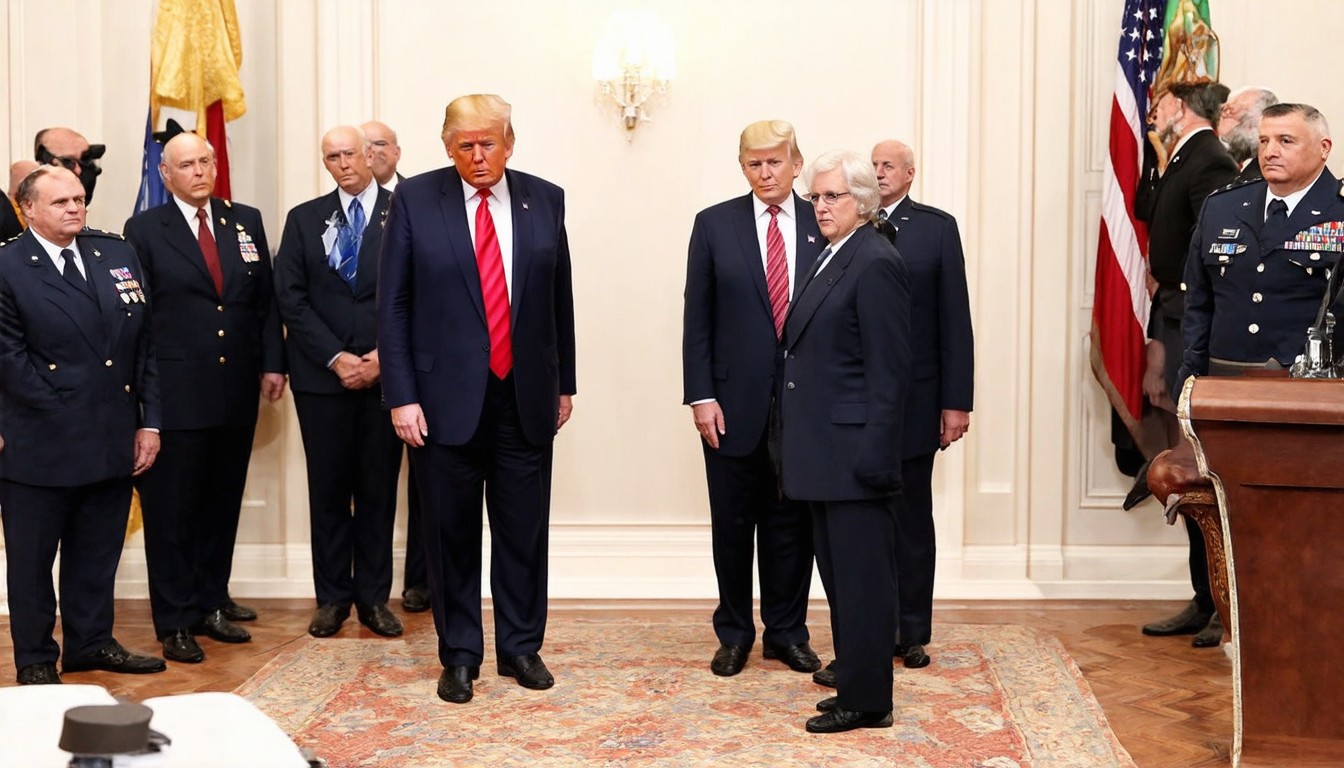
President Trump and top national security officials gathered in the White House briefing room to share new details about the dramatic rescue of two American airmen who were shot down over Iran last week. The incident, which had initially been shrouded in secrecy, has now been revealed in a series of coordinated briefings that underscore the meticulous planning and execution of the operation.
The two airmen, part of a reconnaissance mission, were downed by an Iranian missile system on September 14th, near the Strait of Hormuz. The initial reports of the incident were sparse, with officials emphasizing the need for discretion to avoid further escalation with Iran. However, the recent briefings have provided a more detailed account of the events that followed.
According to the officials, the rescue operation was initiated immediately after the airmen were confirmed to be alive and in Iranian custody. The U.S. military, working closely with intelligence agencies, began planning a covert extraction mission. The challenge was significant, as the airmen were being held in a remote location, and the operation had to be conducted without revealing the presence of U.S. forces in the region.
The officials revealed that the rescue mission involved a combination of diplomatic and military efforts. High-ranking U.S. officials engaged in secret negotiations with Iranian representatives to secure the release of the airmen. Simultaneously, a joint task force of U.S. special operations forces was deployed to the area. The task force, which included personnel from the Navy SEALs and the Air Force, was tasked with locating the airmen and extracting them under cover of darkness.
The officials described the operation as "one of the most complex and sensitive missions in recent history." The airmen were located in a heavily guarded facility, and the U.S. forces had to navigate a maze of security measures, including surveillance systems and armed guards. The operation was executed with precision, and the airmen were successfully extracted without any casualties.
President Trump highlighted the bravery and professionalism of the U.S. military personnel involved in the rescue. He emphasized that the operation was a testament to the unwavering commitment of the U.S. to protecting its service members, no matter where they are deployed. Trump also acknowledged the role of the intelligence community in gathering critical information that enabled the successful execution of the mission.
The officials provided a glimpse into the behind-the-scenes coordination that was necessary to pull off the rescue. They mentioned that communication between different branches of the U.S. government was crucial, as well as the close collaboration with allies and partners. The briefings also touched on the broader geopolitical implications of the incident, with officials stressing the need for continued vigilance in the region.
In the aftermath of the briefings, the U.S. government has reiterated its commitment to ensuring the safety and security of its personnel serving abroad. The rescue operation has been hailed as a success, but it has also underscored the ongoing tensions in the Middle East and the challenges faced by the U.S. in maintaining a global presence.
As the details of the rescue emerge, the story of the two airmen and their daring extraction serves as a reminder of the risks and sacrifices made by U.S. service members. It also highlights the complex interplay of diplomacy, intelligence, and military action that is often required to address such crises. The briefings have provided a rare window into the inner workings of the U.S. government's response to a high-stakes international incident, offering insights into the determination and resolve of the nation to protect its interests and its people.








