Trump to Discuss Government Stake in AI Firms
Former President Donald Trump has announced plans to meet with leading artificial intelligence firms to explore the possibility of the government acquiring a stake in these pivotal companies. He characterized this potential move as a unique "partnership with t
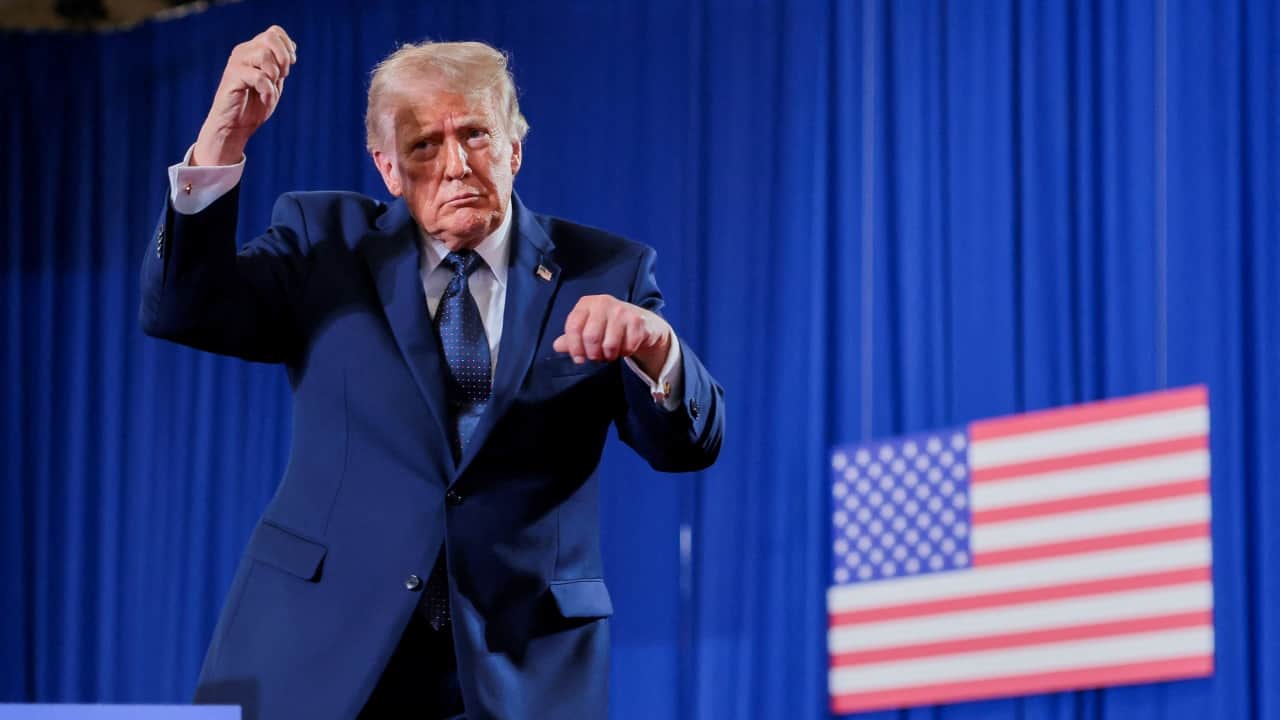
Former President Donald Trump has indicated his intention to hold discussions with key artificial intelligence (AI) firms regarding the prospect of the government acquiring a stake in their operations. This proposed engagement, according to Trump, represents a potentially "very interesting" development, where he envisions it as an "almost becomes a partnership with the American public." The statement suggests a proactive stance on the part of the government in shaping the future trajectory of a technology widely considered to be of paramount strategic importance.
The burgeoning field of artificial intelligence is rapidly transforming global economies, national security landscapes, and daily life. Its applications span from advanced computing and data analysis to defense systems and critical infrastructure. Nations worldwide are engaged in an intense race to develop and deploy cutting-edge AI capabilities, recognizing its potential to confer significant economic and geopolitical advantages. Against this backdrop, the notion of government involvement in private AI enterprises takes on added weight, reflecting a broader concern for national interests in this critical domain.
Trump's specific articulation of a "partnership with the American public" implies a vision where the benefits and perhaps even the oversight of AI development are shared more broadly. While the precise mechanisms of such a partnership remain undefined, the statement opens the door to various interpretations, from direct equity ownership to more collaborative frameworks aimed at ensuring AI serves the public good. The former president's remarks highlight a recognition of AI's societal impact and the potential need for a governmental role in guiding its evolution.
Historically, governments have often played a crucial role in fostering and, at times, directly investing in strategic industries deemed vital for national security or economic prosperity. From the development of the internet and aerospace technology to the early days of the semiconductor industry, government funding, regulation, and even direct involvement have shaped technological landscapes. This historical context provides a backdrop against which to consider the implications of a government stake in the contemporary AI sector, an industry now at the forefront of global innovation.
Proponents of government stakes in critical industries often argue that such involvement can ensure national security interests are protected, prevent the monopolization of essential technologies, and direct research and development towards areas of public benefit that might not be prioritized by purely profit-driven entities. A government stake in AI firms, theoretically, could provide a mechanism for influencing ethical guidelines, ensuring responsible deployment, and potentially sharing the economic returns of AI innovation more broadly with citizens, aligning with Trump's "partnership" concept.
However, the prospect of government ownership or significant influence in private AI companies also raises complex questions and potential challenges. Concerns might include the potential for government overreach, the stifling of innovation due to bureaucratic processes, market distortions, and the politicization of technological development. Balancing the need for national strategic control with the dynamism and rapid pace of private-sector innovation would be a delicate act, requiring careful consideration of regulatory frameworks and operational independence.
It is important to note that these discussions are, at this stage, exploratory. The proposed meetings with AI firms are intended to delve into the feasibility and specifics of such a government stake. The details of what constitutes a "stake"—whether it implies minority ownership, preferred shares, or other forms of influence—are yet to be defined. The outcome of these initial engagements will undoubtedly shape the future discourse around government-industry collaboration in the AI space.
The global AI landscape is characterized by intense competition among nations, with significant investments being poured into research, development, and deployment. Major global powers are actively pursuing strategies to secure leadership in AI, recognizing its dual-use potential for both economic growth and defense. In this competitive environment, a government's direct involvement in key AI firms could be seen as a strategic move to bolster national capabilities and ensure domestic control over critical technological advancements.
Such a proposal, if it moves forward, would likely ignite extensive debate across political, economic, and technological spheres. Stakeholders from various sectors would undoubtedly weigh in on the implications for innovation, market dynamics, national security, and civil liberties. The very idea of the government becoming a direct equity holder in cutting-edge tech companies represents a significant departure from traditional approaches and could set a new precedent.
Ultimately, the proposed meetings between Donald Trump and AI firms mark a potentially pivotal moment in the ongoing conversation about the role of government in advanced technology. The concept of a "partnership with the American public" through a government stake in AI companies suggests a future where the lines between public and private interests in critical technological domains may become increasingly intertwined, with far-reaching implications for the nation's strategic future.