
Trump threatens Tuesday strikes on Iran's power plants and bridges in profanity-laden post
President Trump threatened to hit Iranian power plants and bridges on Tuesday as he posted another ultimatum on social media Sunday morning. "Open the F*****' Strait, you crazy bastards, or you'll be living in Hell," the president wrote. Taurean Small reports
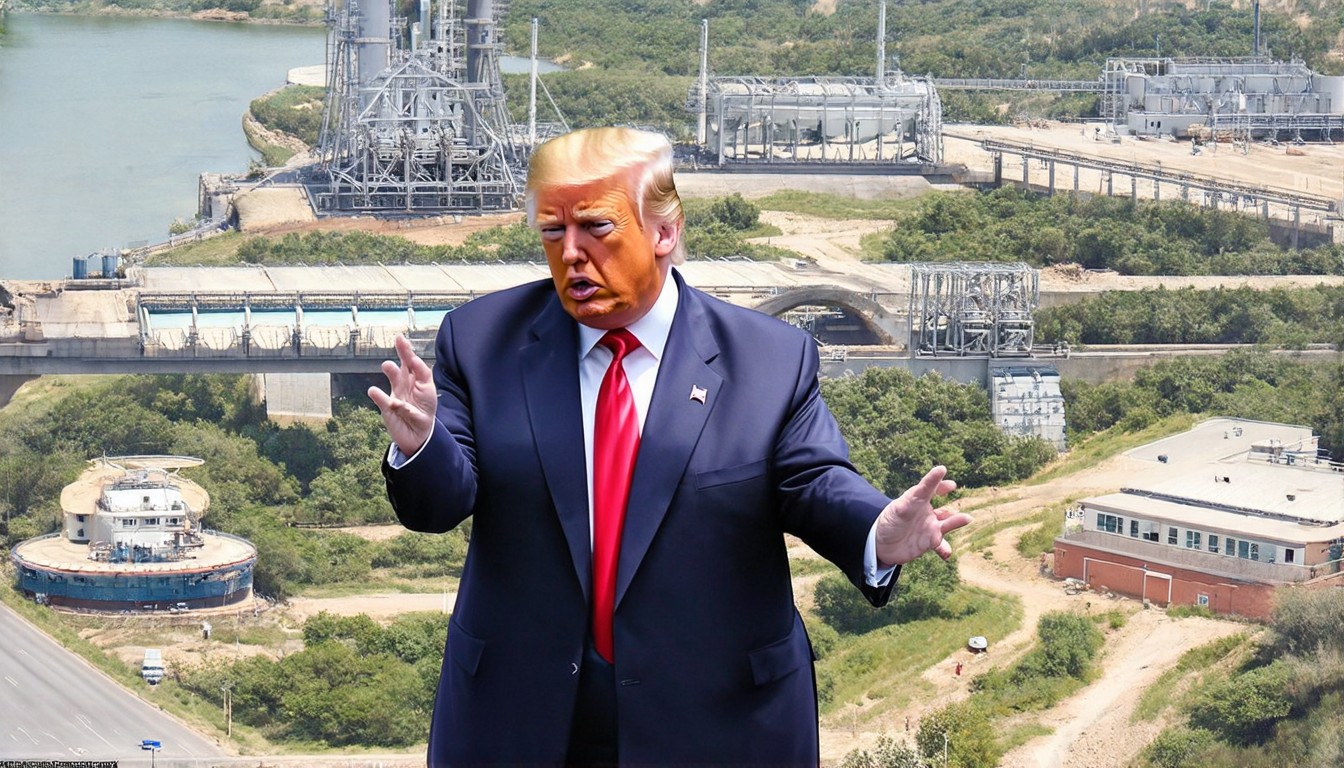
President Donald Trump has once again escalated tensions with Iran, threatening to strike its power plants and bridges on Tuesday in a profanity-laden social media post. In a tweet posted on Sunday morning, the president demanded that Iran open the Strait of Hormuz, calling the country's leaders "crazy bastards" and warning that they would "be living in Hell" if they did not comply.
The Strait of Hormuz, a narrow waterway between the Persian Gulf and the Gulf of Oman, is a critical chokepoint for global oil supplies, with approximately 30% of the world's daily crude oil production passing through it. Iran has previously threatened to block the strait in response to U.S. sanctions, which have severely impacted its economy.
Trump's latest threat comes amid a tense standoff between the two nations, following the U.S. withdrawal from the 2015 Iran nuclear deal and the imposition of new sanctions. In June, Trump warned that the U.S. would take military action if Iran attacked American interests, and in July, he tweeted that he would "blow Iran off the map" if the country retaliated against U.S. forces in the region.
The profanity-laden language in Trump's tweet has drawn criticism from some observers, who argue that it undermines the credibility of the U.S. government. However, Trump has a history of using aggressive and provocative language on social media to convey his stance on foreign policy issues.
Iranian officials have not yet responded to Trump's latest threat, but the U.S. military has increased its presence in the Middle East in recent weeks, with additional troops and aircraft being deployed to the region. The U.S. has also warned that it will respond to any attacks on American interests in Iraq, where there are significant U.S. military forces.
Experts warn that Trump's aggressive rhetoric could potentially lead to a full-scale conflict between the U.S. and Iran, which could have far-reaching consequences for global energy markets and regional stability. The situation is closely being watched by other countries, including those in the Gulf region, which are concerned about the potential impact on their own economic interests.
In addition to the power plants and bridges, Trump's threat could also refer to Iran's critical infrastructure, such as its oil refineries and pipelines. Such attacks could disrupt global oil prices and lead to shortages in regions reliant on Iranian oil.
The U.S. has previously conducted airstrikes on Iranian targets in Syria, but a direct military conflict between the two nations would be unprecedented since the 1979 Iran hostage crisis. The situation is further complicated by the involvement of other regional actors, including Iran's allies in Syria and Hezbollah, as well as U.S. allies in the Gulf states.
As tensions continue to rise, diplomatic efforts to resolve the crisis have been stalled. The European Union has attempted to salvage the nuclear deal by offering Iran incentives to comply with certain restrictions, but Trump has rejected these efforts and imposed new sanctions.
In the meantime, the U.S. has been working to build a coalition of like-minded nations to counter Iran's influence in the region. However, the effectiveness of this approach remains uncertain, given the complexities of the Middle East and the varying interests of different countries.
The latest developments in the U.S.-Iran standoff have raised concerns about the potential for a broader conflict that could destabilize the entire Middle East. As the situation evolves, it will be crucial for all parties to exercise caution and avoid actions that could further escalate tensions.
In conclusion, President Trump's threat to strike Iranian power plants and bridges on Tuesday marks another escalation in the ongoing U.S.-Iran standoff. The profanity-laden language and aggressive rhetoric have drawn criticism, but the potential consequences of a full-scale conflict are significant, with implications for global energy markets and regional stability. As tensions continue to rise, the need for diplomatic engagement and de-escalation becomes even more urgent.








