
Trump Threatens Jail if Journalists Protect Certain Iran Sources
The president indicated he would ask an unnamed media outlet to reveal the sources behind its coverage of Iran’s successful strike on a U.S. fighter jet, and of its crew.
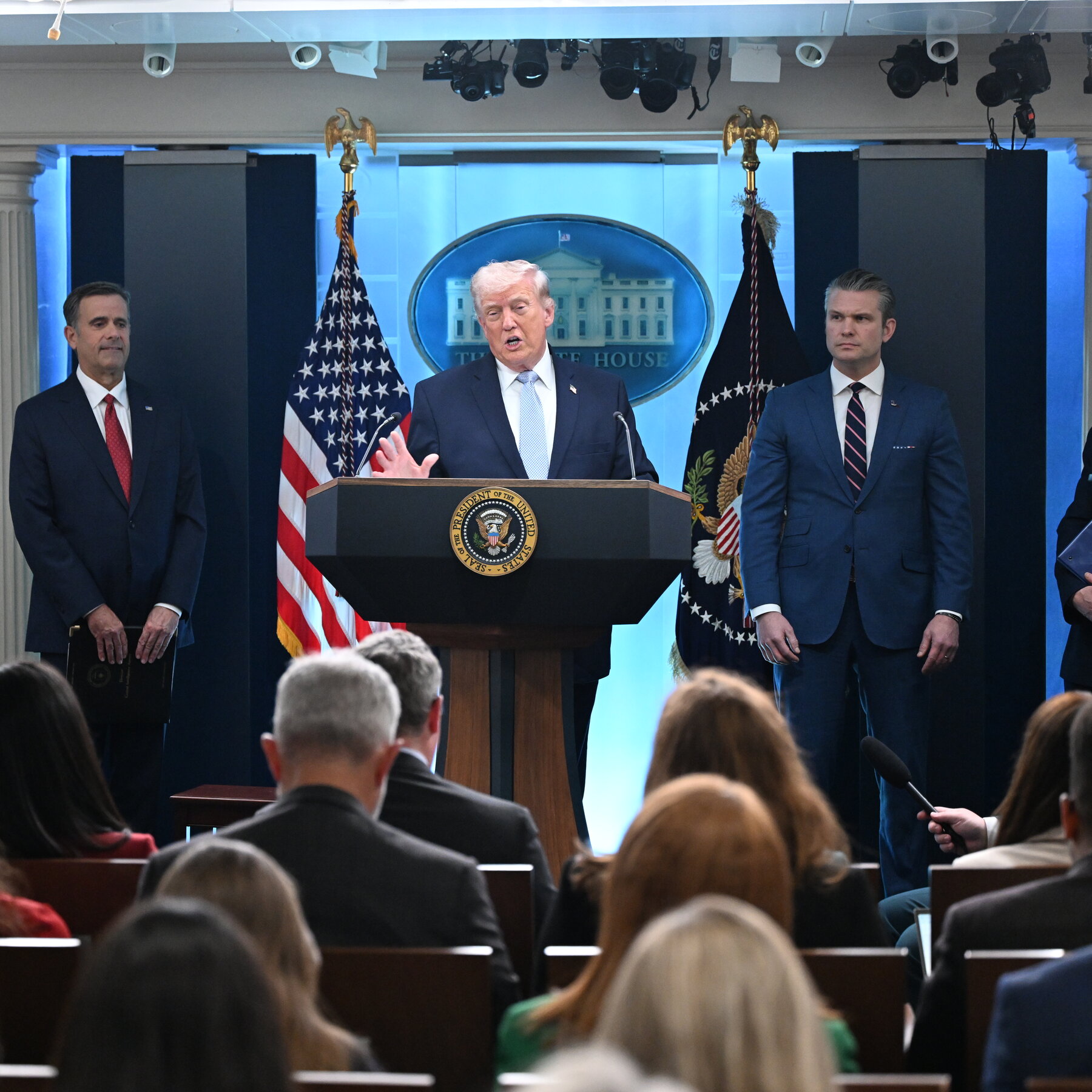
President Donald Trump threatened to take journalists to jail if they protect certain Iran sources during a news conference in Washington on Monday. The president's comments came as he demanded an unnamed media outlet to reveal the identities of the individuals behind its coverage of Iran's successful strike on a U.S. fighter jet and its crew.
Trump's remarks were made in response to a question about the media's role in reporting on sensitive national security matters. He argued that journalists should not shield sources who provide information that could jeopardize U.S. interests, particularly in the context of ongoing tensions with Iran. "If they're protecting sources that are involved in something that's really bad for our country, then they should be in jail," Trump said, his voice rising with intensity.
The president did not specify which media outlet he was targeting, but analysts believe he was referring to a major news organization that has reported extensively on the incident involving the downed U.S. jet. The strike, which occurred last week, resulted in the deaths of all four crew members and raised concerns about the safety of American personnel in the region.
Journalists and legal experts have expressed alarm at Trump's threat, arguing that it could set a dangerous precedent for press freedom in the United States. The First Amendment protects journalists' ability to keep their sources confidential, a principle that is critical for ensuring the integrity of investigative reporting. "This is a direct attack on the very foundation of journalism," said a veteran reporter from the outlet in question. "If the president can force us to reveal our sources, then we might as well pack up and go home."
The American Society of News Editors (ASNE) has also weighed in, issuing a statement that condemns Trump's threat. "The president's comments are a clear violation of the public trust and a direct challenge to the First Amendment," ASNE said. "Journalists must be able to protect their sources without fear of legal repercussions, especially when it comes to reporting on matters of national security."
Trump's threat comes at a time when the U.S. is already grappling with heightened tensions with Iran, following the downing of the fighter jet. The administration has accused Iran of orchestrating the attack, while Tehran has denied any involvement. The situation has escalated to the point where the U.S. has deployed additional troops to the Middle East, and there are fears of a full-blown conflict.
In the midst of this volatile situation, the media's role in reporting on the incident has become even more crucial. Journalists have been working tirelessly to piece together the facts and provide the public with accurate information. However, Trump's threat could have chilling effects, making it more difficult for journalists to obtain sensitive information that could shed light on the true nature of the attack.
Some critics have suggested that Trump's comments are a distraction from the administration's own failures in handling the situation. They argue that the U.S. government has not been transparent about its own actions in the region, and that the president is trying to shift blame onto the media. "This is all about deflection," said a political analyst. "The administration is struggling to explain how a U.S. jet ended up in Iranian airspace, and now they're trying to blame journalists for not revealing sources that might implicate them."
Despite the concerns, Trump remained unapologetic during the news conference. He insisted that the media has a responsibility to protect the nation's interests, even if it means revealing confidential sources. "If they're protecting people who are harming our country, then they should be held accountable," he said. "We can't let that happen."
As tensions continue to rise between the U.S. and Iran, the future of press freedom in America hangs in the balance. Trump's threat to journalists could have far-reaching consequences, not only for the outlet in question but for all media organizations that rely on the protection of confidential sources. The situation highlights the ongoing struggle between national security and the freedom of the press, a battle that will likely continue to shape the American political landscape in the years to come.









