
Trump says Strait of Hormuz is a "very big priority" amid ultimatum to Iran
President Trump's threat to destroy Iran's power plants and bridges if it doesn't make a deal to end the war by Tuesday is looming over a Pakistani ceasefire push.
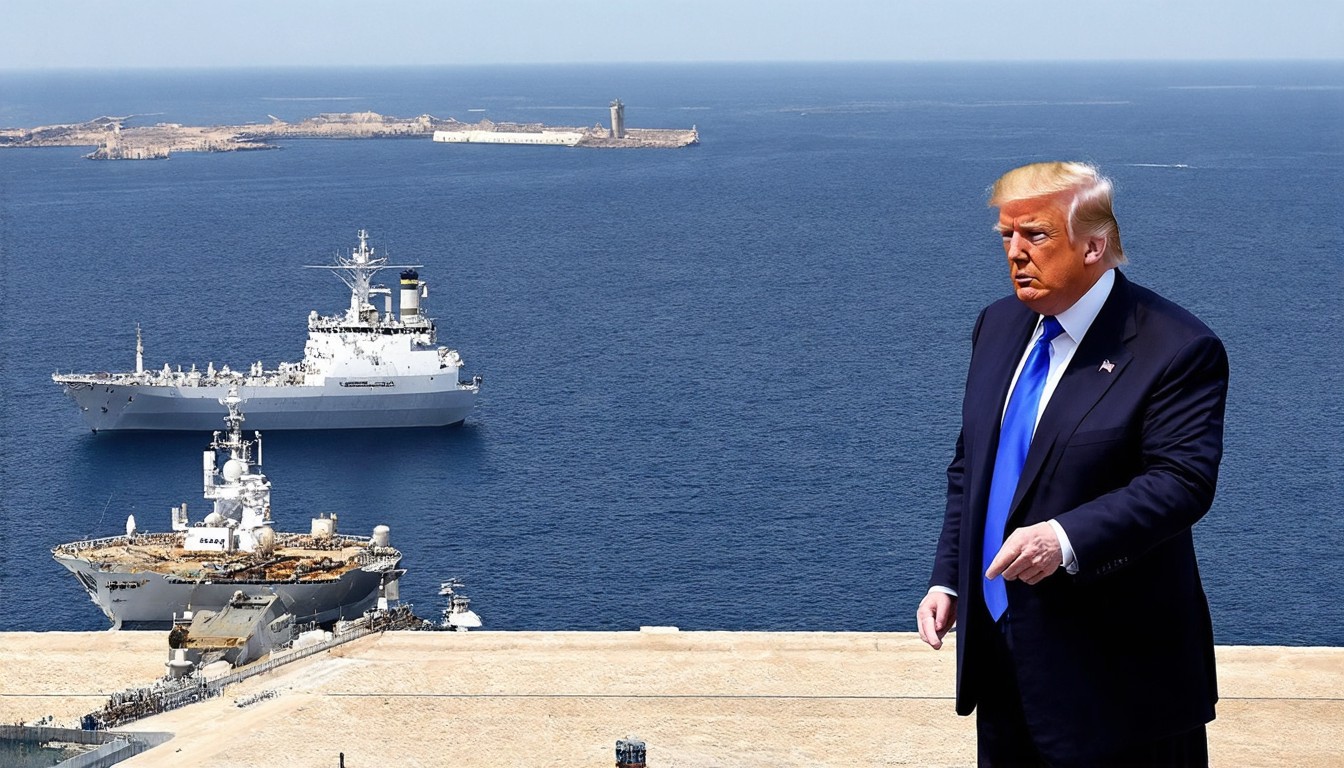
President Donald Trump has recently emphasized the Strait of Hormuz as a "very big priority" amidst heightened tensions with Iran. His administration has issued an ultimatum to the Iranian government, demanding that it agree to a ceasefire and end the ongoing conflict by Tuesday. This ultimatum comes as Pakistan, a key player in the region, pushes for a ceasefire to alleviate the humanitarian crisis that has engulfed the area.
The Strait of Hormuz, a narrow waterway between the Persian Gulf and the Gulf of Oman, is of strategic importance due to its role as a critical chokepoint for global oil shipments. Approximately 30% of the world's oil trade passes through this strait, making it a focal point for geopolitical interests. Trump's emphasis on the strait signals the administration's concern over potential disruptions to global energy supplies and the economic implications that could follow.
The ultimatum issued by the U.S. to Iran highlights the administration's determination to resolve the conflict swiftly. If Iran fails to comply with the demands by the specified deadline, the U.S. has threatened to take military action, targeting Iranian power plants and bridges. This stark warning comes as both nations have been engaged in a series of provocative actions, including the downing of a U.S. drone by Iranian forces and the imposition of new sanctions by the U.S. on Iranian oil exports.
The situation is further complicated by Pakistan's ceasefire push. As a neighboring country to both Iran and Afghanistan, Pakistan has a vested interest in maintaining regional stability. The ceasefire initiative aims to halt the violence in the region, which has led to widespread destruction and human suffering. However, the U.S. ultimatum to Iran adds an additional layer of complexity, as it could potentially undermine Pakistan's efforts to broker a peaceful resolution.
Pakistan's role in the region is multifaceted. The country has long been a key player in Afghanistan, hosting U.S. troops during the war and playing a crucial part in the peace process. Additionally, Pakistan has historical ties to both Iran and Afghanistan, making it a potential mediator in the ongoing conflict. The ceasefire push demonstrates Pakistan's commitment to addressing the humanitarian crisis and promoting peace in the area.
The U.S. administration's ultimatum to Iran raises questions about the potential consequences of military action. If the U.S. were to carry out attacks on Iranian infrastructure, it could lead to retaliatory measures by Iran, potentially escalating the conflict and destabilizing the entire region. Furthermore, such actions could disrupt global oil markets, leading to spikes in oil prices and economic instability worldwide.
In contrast, a negotiated ceasefire could provide a pathway to long-term stability in the region. By working together, the U.S., Iran, and Pakistan could establish a framework for peace that addresses the root causes of the conflict and promotes sustainable development. However, achieving such an outcome will require diplomatic efforts and a willingness to engage in dialogue, rather than resorting to military force.
As the deadline for the U.S. ultimatum approaches, the international community is closely monitoring the situation. The outcome of this crisis will have far-reaching implications for the region, as well as for global energy markets and geopolitical relations. The Strait of Hormuz, once again, finds itself at the center of a complex geopolitical standoff, with the fate of the region hanging in the balance.









