
Trump says Iranian civilians want America to unleash military power as he threatens to wipe out 'every power plant' and leave no bridges standing
President Donald Trump claimed the Iranian people want the US to unleash its military power on the country as he threatened to take action amid the closure of the Strait of Hormuz.
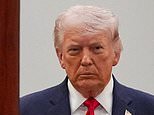
President Donald Trump recently made a bold statement, claiming that Iranian civilians are eager for the United States to deploy its military might against their country. This assertion came as tensions escalated following the closure of the Strait of Hormuz, a critical chokepoint for global oil shipments. Trump's remarks have sparked concern among international observers, as they suggest a potential escalation in the ongoing conflict between the U.S. and Iran.
In a series of tweets, Trump warned that the U.S. would take decisive action against Iran, threatening to destroy every power plant in the country and leave no bridges standing. He argued that the Iranian people are not satisfied with their current situation and are secretly hoping for American intervention. This stark contrasts with the official narrative from Tehran, which portrays the U.S. as the aggressor and frames the conflict as a matter of national security.
The closure of the Strait of Hormuz, which connects the Persian Gulf to the Indian Ocean, has raised global concerns due to its significant impact on global oil supplies. The strait accounts for approximately 30% of world oil production, and any disruption could lead to skyrocketing fuel prices and economic instability. Trump's threats have intensified these fears, as they imply a possible military confrontation that could further destabilize the region.
Critics of Trump's approach argue that his aggressive rhetoric risks provoking an unintended response from Iran, potentially leading to a full-scale conflict. They also question the accuracy of his claim that Iranian civilians desire U.S. military action, pointing out that such a statement lacks credible evidence and could be seen as an attempt to justify military intervention.
On the other hand, supporters of Trump's stance believe that his tough rhetoric is necessary to deter Iran's alleged aggressive intentions. They argue that the U.S. must act decisively to protect its interests and prevent further provocations, such as the recent seizure of a British tanker in the strait.
The situation in the Strait of Hormuz has also drawn attention to the broader geopolitical dynamics in the Middle East. The U.S. has long sought to counterbalance Iran's influence in the region, which has led to a complex web of alliances and rivalries. Trump's threats have further complicated these dynamics, as they could potentially embolden Iran's regional adversaries, such as Saudi Arabia, to take a more assertive stance.
Meanwhile, international organizations and other nations are urging both sides to de-escalate tensions and engage in diplomatic dialogue. The European Union, for instance, has called for a peaceful resolution and has expressed concerns about the potential consequences of a military conflict.
As the situation continues to unfold, it remains unclear how far Trump will go in his confrontation with Iran. His threats to destroy Iranian infrastructure and leave no bridges standing are unprecedented in their severity, and they could have far-reaching implications for global energy markets and regional stability.
In conclusion, President Trump's recent statements have intensified tensions between the U.S. and Iran, particularly in the context of the Strait of Hormuz closure. His claim that Iranian civilians want U.S. military action is controversial and lacks substantiation, but it underscores the volatile nature of the current geopolitical landscape. As the world watches closely, the stakes are high, and the potential for a full-scale conflict cannot be ruled out. The international community is now waiting to see whether diplomacy can prevail over brinkmanship and avert a crisis that could have far-reaching consequences for global security and the economy.








