
Trump Moves Deadline for Iran to Open Strait of Hormuz
The new deadline comes as the president and Iranian leaders have ramped up bombastic threats against one another.
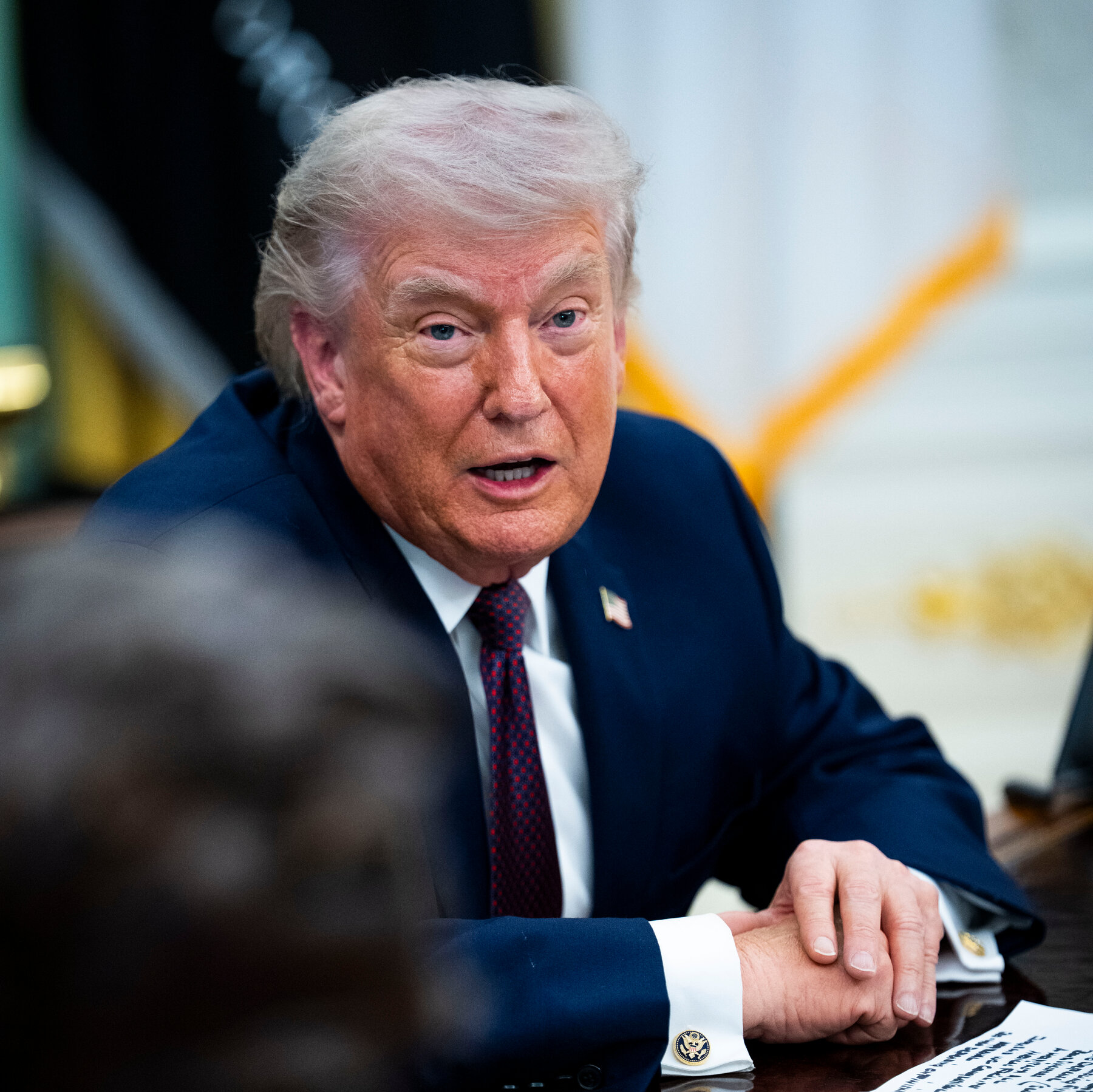
President Trump has extended the deadline for Iran to open the Strait of Hormuz, a critical maritime route for global oil shipments, as tensions between the two nations continue to escalate. The new deadline, which was not specified, follows a series of increasingly aggressive statements from both sides, highlighting the volatile nature of the ongoing standoff.
The Strait of Hormuz, located between the Persian Gulf and the Gulf of Oman, is a narrow waterway that serves as a chokepoint for approximately 30% of global oil production. Its strategic importance has long been a point of contention between the United States and Iran, with each side vying for control over the region's vast oil reserves.
In recent weeks, President Trump has repeatedly warned Iran of severe consequences if it were to disrupt the flow of oil through the strait. He has also accused Iran of attempting to "choke off the world's oil supply," a claim that has been dismissed by Iranian officials as baseless. In response to these accusations, Iranian leaders have issued their own threats, warning that any attempt by the United States to interfere with their sovereign rights in the region would be met with a "harsh response."
This latest development in the Trump administration's approach to Iran follows a pattern of shifting deadlines and escalating rhetoric. Earlier this year, President Trump initially set a deadline for Iran to cease its nuclear program and ballistic missile activities, promising that if it did not comply, the United States would impose "the most severe sanctions in history." However, when Iran did not meet this deadline, the administration did not immediately implement the threatened sanctions, instead opting for a more measured approach.
The extension of the deadline for the Strait of Hormuz to be opened reflects a broader strategy by President Trump to manage the complex and multifaceted relationship between the United States and Iran. While some critics argue that this approach risks emboldening Iranian leaders, others contend that it provides a necessary opportunity for diplomatic engagement and de-escalation.
The geopolitical implications of the Strait of Hormuz are significant. Any disruption to the flow of oil through this narrow waterway could lead to a sharp increase in global oil prices, potentially triggering a global economic downturn. Furthermore, the region's instability could have far-reaching effects on the global energy market, as well as on the economies of countries reliant on oil imports.
As tensions continue to rise, the international community is closely monitoring the situation, with many countries expressing concerns about the potential for a full-blown conflict. The European Union, in particular, has called for a diplomatic solution to the crisis, emphasizing the need for dialogue and cooperation between the United States and Iran.
In the meantime, the Trump administration has continued to build a coalition of like-minded nations to support its stance on Iran. This includes countries such as Saudi Arabia, the United Arab Emirates, and Israel, all of which share concerns about Iran's regional ambitions and its alleged support for terrorist groups.
Despite the mounting pressure, however, there is still a sense of uncertainty about how the situation will unfold. The extension of the deadline for the Strait of Hormuz to be opened may signal a temporary respite, but it does not necessarily indicate a long-term resolution to the underlying tensions.
As the world watches with bated breath, the question remains: will the United States and Iran find a way to de-escalate the situation, or will the bombastic threats and shifting deadlines continue to escalate the conflict, with potentially catastrophic consequences for the global economy and regional stability? Only time will tell.








