
Trump makes explicit threat to Iran over Strait of Hormuz
President Trump posted an explicit, threatening message to Iran on social media on Sunday over the Strait of Hormuz. Meanwhile, Mr. Trump is set to hold a briefing Monday afternoon on the successful search-and-rescue mission for a missing crew member after Iran downed F15-E fighter jet. Nancy Cordes has more.
President Donald Trump escalated tensions with Iran on Sunday by posting an explicit, threatening message on social media, targeting the country over its control of the Strait of Hormuz. The move comes as tensions between the two nations have been mounting in recent weeks, following the downing of a U.S. F-15-E fighter jet by Iranian forces. Trump's message, shared on Twitter, warned Iran of severe consequences if it continued to threaten U.S. interests in the region.
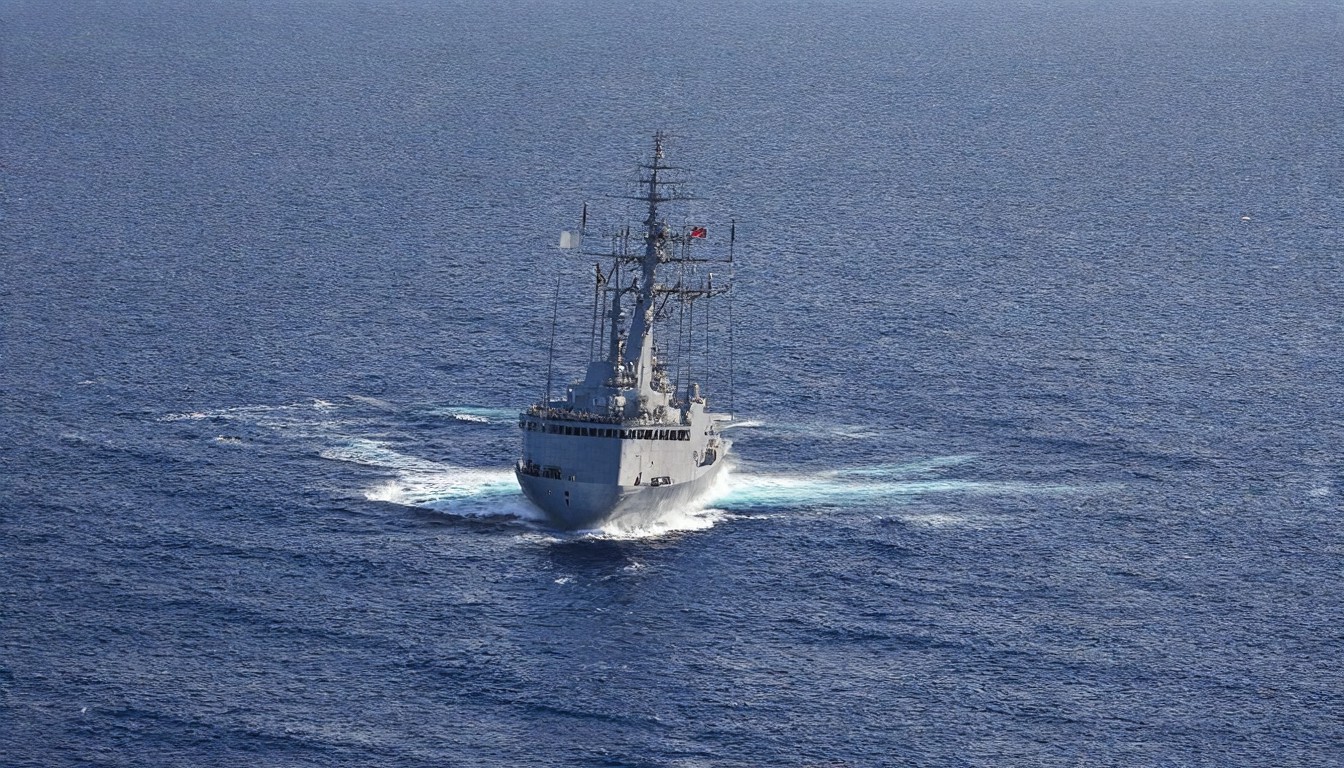
The Strait of Hormuz, a narrow waterway between the Persian Gulf and the Gulf of Oman, is a critical chokepoint for global oil shipments, with approximately 30% of the world's oil passing through it daily. Iran has long maintained a strong presence in the strait, and has previously threatened to blockade the waterway in response to U.S. sanctions. Trump's message, which included a photo of a U.S. warship, seemed to signal a willingness to take military action to protect U.S. interests in the region.
"Iran should never threaten the United States or anyone else. The U.S. has been watching for a long time. This can't continue. Any attack on American interests will be met with total destruction and annihilation, not just by the United States, but by all of our allies and partners," Trump wrote on Twitter. The message came as Iranian officials had been warning of retaliation against U.S. forces in the region following the downing of the F-15-E jet.
The downing of the F-15-E, which occurred on June 20, prompted a search-and-rescue mission to locate the pilot, Captain Faig Greer. The mission was successful, with Greer being rescued by U.S. forces after spending 22 hours in international waters. Trump was scheduled to hold a briefing on the operation on Monday afternoon, highlighting the successful outcome for the U.S. military.
Despite the successful rescue, tensions between the U.S. and Iran remain high. Iranian officials have insisted that the F-15-E was flying in their airspace, while U.S. officials maintain that the jet was in international waters. The incident has further strained relations between the two nations, which have been deteriorating since Trump withdrew from the 2015 nuclear deal with Iran.
Trump's explicit threat to Iran comes as he faces mounting pressure from Democrats and some Republicans to de-escalate the situation. Critics argue that Trump's aggressive rhetoric could lead to a full-blown conflict in the region, which could have far-reaching consequences for global oil prices and U.S. foreign policy.
In response to Trump's message, Iranian Foreign Minister Mohammad Javad Zarif dismissed the threat, tweeting that "the language of threats doesn't solve any problem, but rather increases tension." Zarif added that Iran would continue to defend its airspace and territorial waters.
The situation in the Strait of Hormuz has been a focal point of U.S.-Iran tensions for years. In 2019, Trump warned of a "great day" coming for Iran, which many interpreted as a threat of military action. Since then, the U.S. has increased its military presence in the region, deploying additional warships and aircraft to monitor the strait.
As tensions continue to rise, both the U.S. and Iran are likely to remain on high alert. The downing of the F-15-E and Trump's subsequent threat have underscored the volatile nature of the relationship between the two nations. With global oil markets closely watching the situation, any further escalation could have significant implications for the global economy.
In the coming days, it will be crucial for both sides to avoid further provocation and engage in diplomatic channels to address their differences. However, given Trump's history of aggressive rhetoric and his administration's tough stance on Iran, it remains unclear whether a diplomatic solution is feasible. The situation in the Strait of Hormuz will undoubtedly remain a hotspot of geopolitical tension in the coming months.








