
Trump, Israel pressure Iran ahead of deadline as search goes on for missing U.S. crew member
U.S. President Donald Trump and Israel on Saturday stepped up pressure on Iran to open the strategic Strait of Hormuz waterway or face attacks on its energy infrastructure,…
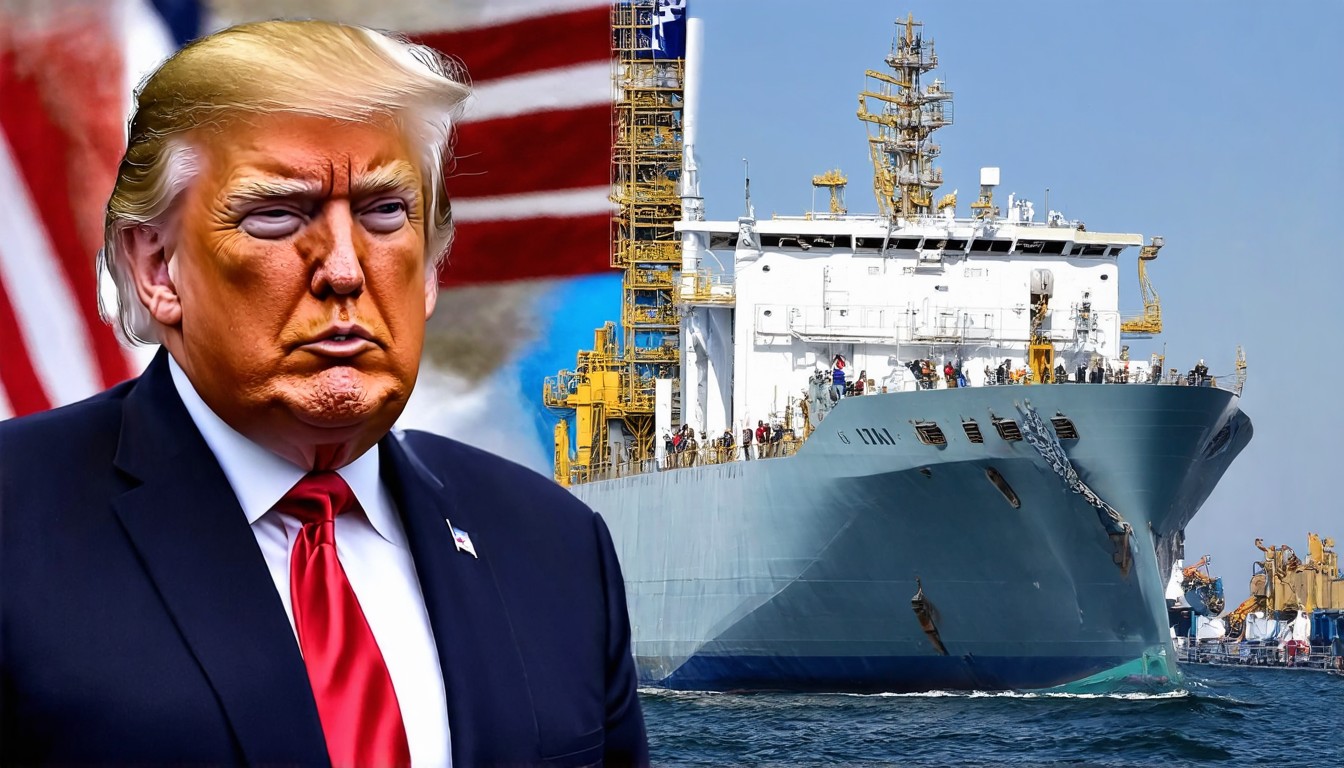
U.S. President Donald Trump and Israeli officials have escalated pressure on Iran, demanding that the country open the strategic Strait of Hormuz or face potential attacks on its energy infrastructure. This comes as the search for a missing U.S. crew member continues, with tensions rising between the two nations over recent events in the region.
The Strait of Hormuz, a narrow waterway connecting the Persian Gulf to the Gulf of Oman, is a critical chokepoint for global oil and gas shipments, with approximately 30% of the world's daily oil supply passing through it. Iran has previously threatened to block the strait in response to U.S. sanctions, which have severely impacted its economy.
In a series of tweets, President Trump warned Iran that any further aggression would not be tolerated and that the U.S. would retaliate decisively. He emphasized the importance of maintaining the free flow of commerce and the security of global energy supplies. Israeli Prime Minister Benjamin Netanyahu also weighed in, stating that Iran's actions posed an existential threat to Israel and the international community.
The situation has intensified following the reported capture of a U.S. drone crew by Iranian forces in the Gulf of Oman last week. The U.S. has accused Iran of involvement, though Tehran has denied any involvement. The fate of the missing crew members remains uncertain, with both the U.S. and Israel urging Iran to provide answers and ensure their safety.
Iranian officials have dismissed the U.S. and Israeli threats, insisting that their actions are defensive and aimed at protecting their sovereignty. They have also accused the U.S. of destabilizing the region through its support for regional allies like Israel and Saudi Arabia.
The U.S. has previously warned of potential military action in response to Iranian aggression, citing the need to protect U.S. interests and allies in the Middle East. Israel, which has a long-standing rivalry with Iran, has also expressed its support for a strong U.S. response, viewing any concessions to Iran as a threat to its regional security.
The current standoff has raised concerns among global oil markets, as any disruption to the Strait of Hormuz could lead to significant price increases. Additionally, the situation has prompted international diplomatic efforts, with European and Asian nations urging both sides to de-escalate tensions and engage in dialogue.
As the deadline for Iran's response approaches, the U.S. and Israel are preparing for a range of possible outcomes, from a diplomatic resolution to a potential military escalation. The search for the missing U.S. crew members continues, with both nations demanding answers and the safety of their personnel.
In the background, the complex history of U.S.-Iranian relations and the longstanding Israeli-Iranian rivalry adds layers of tension to the situation. The U.S. has imposed severe sanctions on Iran in recent years, targeting its oil and gas industries, which have been critical to its economy. Israel, meanwhile, has conducted covert operations against Iranian nuclear facilities, citing the need to prevent Iran from developing nuclear weapons.
As the situation unfolds, the international community watches closely, hoping for a diplomatic resolution that avoids further escalation. The stakes are high, with global energy security, regional stability, and the safety of U.S. personnel at risk. Both the U.S. and Israel are determined to protect their interests and allies, while Iran insists on its right to defend its territorial waters and sovereignty.
In the coming days, the focus will remain on the Strait of Hormuz and the fate of the missing U.S. crew members. The pressure on Iran to respond to the U.S. and Israeli demands will only intensify, with the possibility of military action looming large. The world now awaits the outcome of this tense standoff, hoping for a peaceful resolution that avoids further destabilization in an already volatile region.








