
Trump, in expletive-laden message, threatens to rain 'hell' on Iran if Strait of Hormuz stays shut
U.S. special forces rescued an airman in a high-risk mission deep inside Iran while President Donald Trump threatened to rain "hell" on Tehran if it did not reopen…
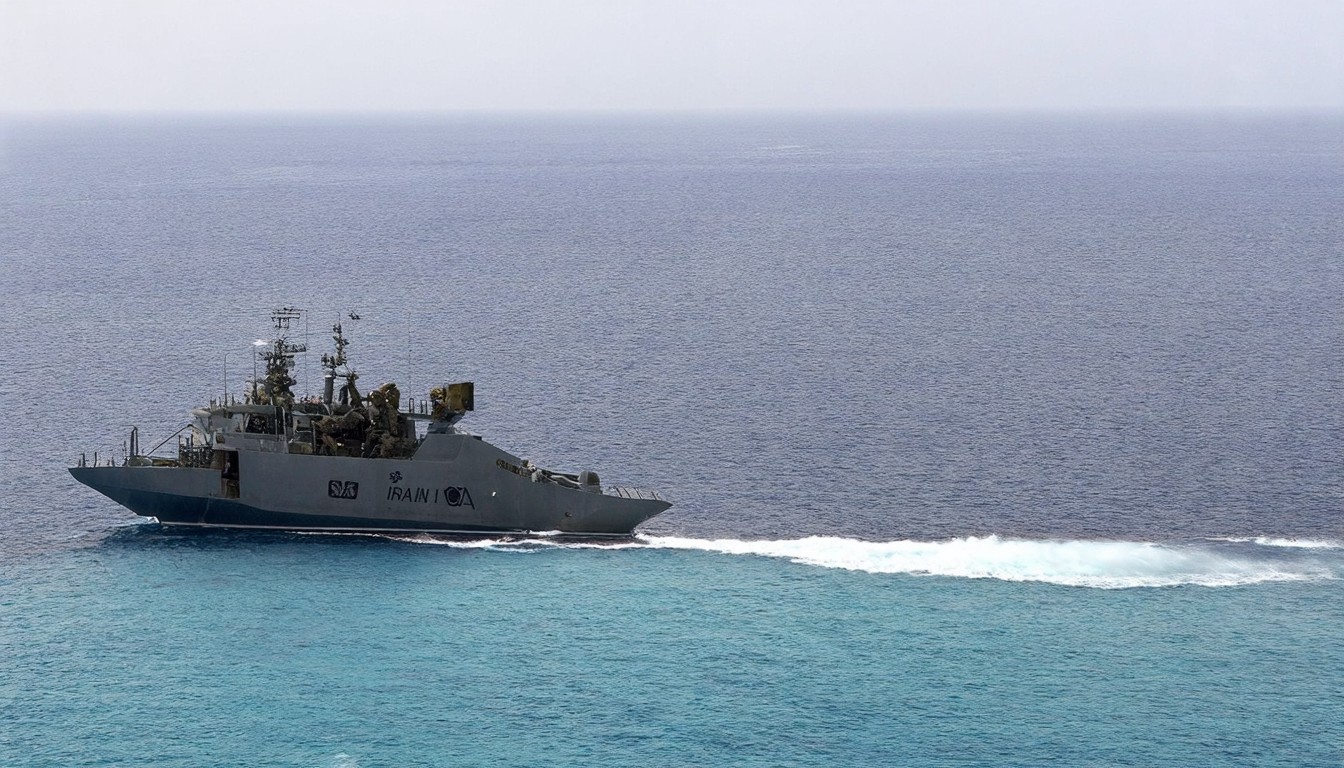
On a tense day in the Middle East, the U.S. special forces executed a daring rescue mission deep within Iran, successfully extracting an American airman from captivity. Simultaneously, President Donald Trump delivered a fiery message to Iran, warning that Tehran would face severe consequences if it continued to block the Strait of Hormuz. Trump's expletive-laden tweet, filled with threats of retaliation, underscored the escalating tensions between the two nations over regional security and nuclear agreements.
The high-stakes operation, carried out with precision and stealth, involved a small team of elite U.S. forces infiltrating Iranian territory. The mission was a direct response to the airman's capture, which had been a source of concern for the U.S. administration. The successful extraction of the individual marked a significant victory for the U.S., demonstrating its capability to conduct clandestine operations in hostile environments.
The rescue mission coincided with a volatile geopolitical landscape, as tensions between the U.S. and Iran reached new heights. The Strait of Hormuz, a crucial chokepoint for global oil shipments, had been closed by Iran in a bid to pressure the international community over its nuclear program and economic sanctions. The U.S., along with its allies, viewed this move as a direct threat to global energy security and stability.
In his message, President Trump warned Iran that any further disruption of the Strait of Hormuz would not be tolerated. Using strong language, he threatened to unleash "hell" on Tehran, emphasizing the potential consequences of such actions. The tweet, filled with expletives and aggressive rhetoric, was a stark contrast to previous diplomatic efforts and signaled a shift towards a more confrontational approach.
The U.S. administration's decision to escalate tensions came as part of a broader strategy to counter Iran's influence in the region. The Trump administration had long accused Tehran of supporting terrorist groups and destabilizing efforts in the Middle East. The closure of the Strait of Hormuz was seen as another provocative act by Iran, designed to assert its dominance and pressure the international community.
The rescue mission and Trump's threats have raised concerns among global leaders about the potential for an armed conflict between the U.S. and Iran. Experts warn that any military action could lead to a broader regional conflict, with far-reaching implications for the Middle East and beyond. The situation has also prompted questions about the future of the nuclear deal, which has been under strain since the U.S. withdrew under Trump's administration.
In response to the U.S. actions, Iran has dismissed the threats as empty rhetoric, insisting that it is within its right to defend its territorial waters and enforce its sovereignty. Tehran has also accused the U.S. of engaging in aggressive behavior in the region, including support for regional rivals and interference in internal affairs.
The rescue mission and the subsequent threats have further complicated an already fragile region. As tensions rise, the international community is closely monitoring the situation, hoping for a diplomatic resolution that avoids further escalation. The future of U.S.-Iran relations now hangs in the balance, with both nations poised on the brink of a potential showdown over regional influence and global energy security.
In conclusion, the U.S. special forces' daring rescue mission and President Trump's aggressive threats have intensified the already volatile relationship between the U.S. and Iran. The closure of the Strait of Hormuz by Iran has been met with a firm response from the U.S., raising concerns about the potential for conflict and the stability of the Middle East. As tensions escalate, the international community watches closely, hoping for a path forward that avoids further military confrontation and promotes regional peace.








