Trump hints at US withdrawal from Iran, markets show mixed optimism for ceasefire
Trump's hint at US withdrawal from Iran could signal a shift towards diplomatic solutions, impacting market expectations and geopolitical dynamics. The post Trump hints at US withdrawal from Iran, markets show mixed optimism for ceasefire appeared first on Crypto Briefing .
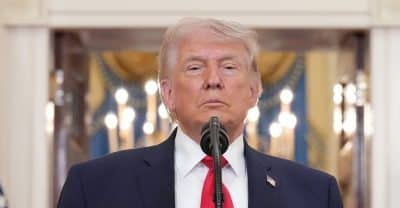
President Donald Trump's recent remarks about the possibility of the United States withdrawing from its involvement in Iran have sparked a flurry of reactions across global markets and geopolitical arenas. While some analysts view this as a potential turning point towards diplomatic engagement, others remain cautious, noting that the situation remains complex and uncertain.
Trump's comments come at a time when tensions between the U.S. and Iran have been escalating, with both sides accusing each other of aggressive actions in the region. The U.S. has been heavily involved in supporting regional allies, such as Saudi Arabia and the United Arab Emirates, while Iran has been expanding its influence through proxies in places like Syria and Yemen. The prospect of a U.S. withdrawal could signal a shift in strategy, potentially opening the door for diplomatic negotiations to de-escalate the situation.
Markets have reacted with mixed optimism to Trump's hints. On one hand, investors are hopeful that a diplomatic solution could stabilize the region and reduce geopolitical risks, which could have a positive impact on commodity prices, particularly oil. This could benefit companies in the energy sector and, by extension, economies heavily reliant on oil exports.
However, the markets also display cautious optimism. The uncertainty surrounding the actual implementation of a U.S. withdrawal and the potential outcomes of any diplomatic talks means that investors are not yet fully convinced that a ceasefire is imminent. This hesitance is reflected in the volatility of financial markets, with some sectors showing signs of cautious growth, while others remain subdued.
Geopolitically, the situation is equally complex. A U.S. withdrawal could be seen as a signal of reduced commitment to regional stability, which might embolden Iran to take more aggressive actions. Conversely, it could also be interpreted as a willingness to engage in dialogue, which might encourage Iran to reconsider its approach.
The impact of a U.S. withdrawal on regional alliances is another critical factor. Countries like Saudi Arabia and the United Arab Emirates have relied on U.S. support to counterbalance Iranian influence. A reduction in U.S. involvement could force these nations to find alternative strategies, potentially leading to a realignment of alliances in the Middle East.
In addition, the prospect of a U.S. withdrawal could have implications for ongoing conflicts, such as the Syrian Civil War and the Yemeni Civil War, where both the U.S. and Iran support opposing factions. A diplomatic solution could lead to a more stable environment in these regions, allowing for potential peace processes to gain traction.
However, it is important to note that any diplomatic efforts would need to be carefully balanced. History has shown that past attempts at diplomacy with Iran have faced significant challenges, including the cancellation of the Iran nuclear deal in 2018. The success of any future negotiations would depend on a willingness to compromise and a shared commitment to regional stability.
In conclusion, Trump's hint at a U.S. withdrawal from Iran has set off a ripple effect across global markets and geopolitical dynamics. While there is some optimism that this could lead to diplomatic solutions and a ceasefire, the complexities of the situation mean that the path forward is far from certain. The coming weeks and months will be crucial in determining whether this shift in strategy will lead to lasting peace in the region or exacerbate existing tensions.