
Transforming maize productivity in Sub Saharan Africa through the developments of breakthrough hybrids
By 2050, maize yields will need to double to keep pace. What to read next: AGG-Maize project registers impressive progress | New project to ramp up genetic gains in maize for better livelihoods | Reaching women with improved maize and wheat | Collaborating to accelerate genetic gains in maize and wheat
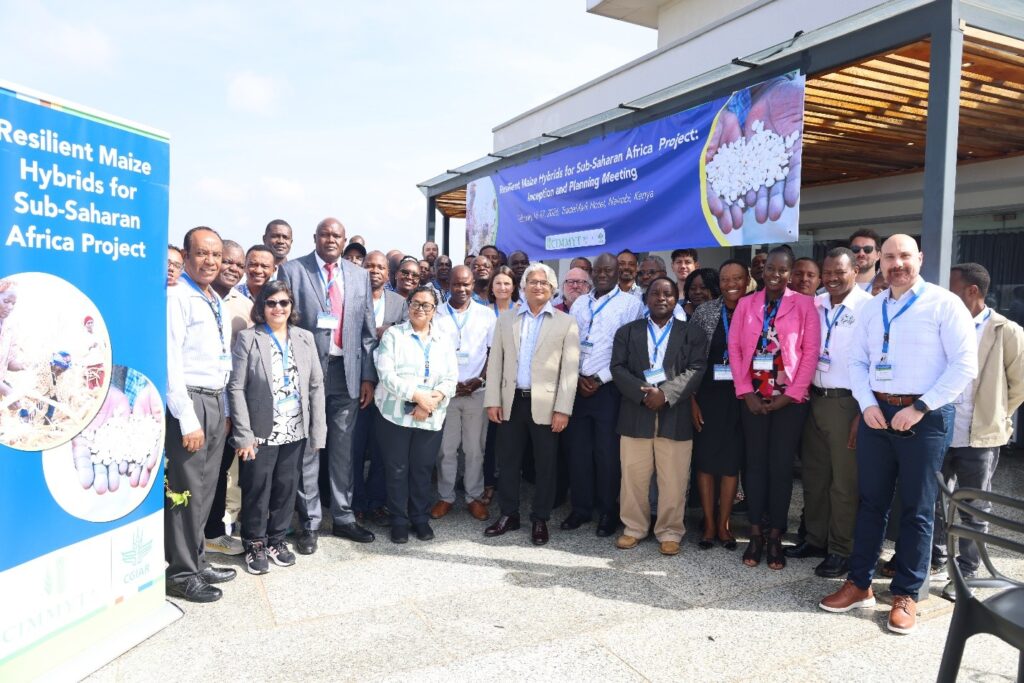
In the face of rapidly rising demand, Sub-Saharan Africa's maize production faces a significant challenge. By 2050, yields will need to double to meet the region's needs, as the crop feeds over 700 million people and covers more than 40 million hectares. Without this increase, the area could face a 76 million ton import gap and require an additional 28 million hectares of land under cultivation. To address this, the Resilient Maize Hybrids for Sub-Saharan Africa project was launched, with its inception and planning meeting held in Nairobi, Kenya, on February 16 and 17, 2026.
The meeting brought together a diverse group of stakeholders, including national agricultural research systems, seed companies, development partners, and technical collaborators from across Eastern, Southern, and West Africa. Representatives from 13 countries participated, including the Kenya Agricultural and Livestock Research Organization, the Gates Foundation, Corteva Agriscience, Qualibasic, IITA, CGIAR centers, and leaders from the seed sector.
Dr. Ashish Saxena, CIMMYT Global Maize Program Director, opened the meeting by emphasizing the broader purpose of the initiative. "Maize is more than a crop," he said. "It is food security, it is income, it is dignity." He stressed that incremental gains were no longer sufficient and that transformative solutions were needed. Moreover, he highlighted the importance of ensuring African farmers had access to the technologies shaping global agriculture.
Dr. Gary Atlin of the Gates Foundation also spoke, underscoring the long-term investment in maize improvement efforts and the responsibility to translate that investment into measurable results. Over the past two decades, approximately $200 million had been invested in maize breeding in the region, he noted. The outputs of this investment had been significant, and real impact had been achieved. However, he emphasized the need to continue delivering on that investment.
The project builds on advancements from various initiatives, such as DTMA, STMA, AGGMW, TELA, and MLN gene editing. The goal is to develop breakthrough hybrids that can significantly boost maize productivity in Sub-Saharan Africa. By combining cutting-edge genetic research with collaboration among various stakeholders, the project aims to accelerate genetic gains and ensure that these improvements ultimately reach farmers, improving their livelihoods and food security in the region.
The Nairobi meeting marked a pivotal moment in aligning the efforts of all involved parties on a shared pathway from genetic gain to farmer impact. With the stakes so high, the success of this project will depend on sustained collaboration, innovation, and a commitment to addressing the region's maize productivity challenges head-on. Only through such concerted efforts can Sub-Saharan Africa hope to meet the growing demand for maize and ensure a sustainable and secure food future for its people.








