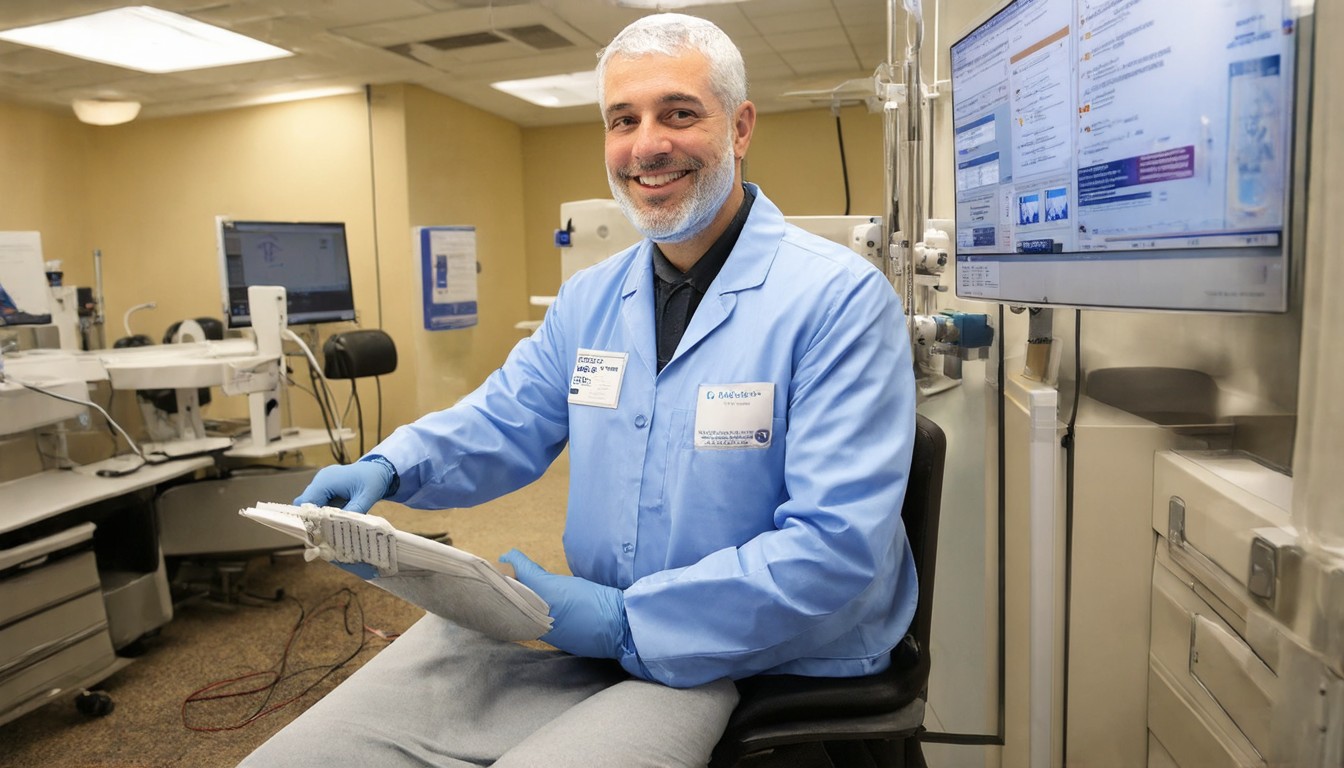
Todd McNutt: how an AI software solution enables creation of the best possible radiation treatment plans
Medical physicist Todd McNutt explains how Plan AI, an artificial intelligence-powered plan quality software solution, uses data mining to streamline and improve radiotherapy planning for cancer treatments The post Todd McNutt: how an AI software solution enables creation of the best possible radiation treatment plans appeared first on Physics World .

Todd McNutt, a radiation oncology physicist at Johns Hopkins University in the US and the co-founder of Oncospace, has developed an artificial intelligence (AI)-powered tool that revolutionizes radiation treatment planning for cancer patients. This innovative software, now rebranded as Plan AI and available from US manufacturer Sun Nuclear, leverages data mining to streamline and improve radiotherapy planning, ensuring the lowest possible dose to healthy tissues for each new patient.
The journey of Plan AI began in 2007 when discussions were held about utilizing clinical data for discovery and knowledge generation. McNutt, who had previously collaborated with Alex Szalay, a co-developer of the Sloan Digital Sky Survey, was inspired to apply similar principles to the field of radiotherapy. Szalay's work with large databases of galaxies and stars had become a valuable research platform for both amateur and professional astronomers. Drawing from this example, McNutt and his colleagues at Johns Hopkins sought to create a structured data collection system for patients in the clinical environment.
By integrating radiation treatment plans with patient data, the team aimed to study how dose distributions across the anatomy impact patient outcomes. This led to the creation of a database for radiotherapy, which would later form the foundation of Oncospace. The transition from academic research to founding Oncospace Inc in 2019 was driven by the realization that the accumulated data could be used to identify anatomic features that influence the ability to minimize radiation dose to normal tissues while effectively treating target volumes.
The development of Plan AI was a natural evolution of this research. The software uses data from thousands of previous radiotherapy treatments to predict the optimal dose distribution for each new patient. Treatment planners then utilize this information to set goals that streamline and automate the creation of the best achievable radiation treatment plan.
The benefits of Plan AI extend beyond individual patients; they also enhance the overall efficiency and consistency of cancer treatment centers. By reducing the time required for planning and ensuring that plans are of the highest quality, the software allows healthcare professionals to focus more on patient care. Additionally, the improved accuracy of treatment plans can lead to better patient outcomes and reduced side effects.
In an interview with Physics World's Tami Freeman, McNutt highlighted the significance of the Oncospace project in advancing the field of radiotherapy. He explained that the project's success was built on the foundation of structured data collection and the application of AI to analyze this data. The resulting software, Plan AI, has the potential to transform radiation treatment planning, ensuring that patients receive the most effective and personalized care possible.
As the field of AI continues to evolve, the integration of such technologies into medical practice offers exciting possibilities for improving patient outcomes and streamlining healthcare processes. The story of Todd McNutt and Plan AI serves as a testament to the power of data-driven solutions in advancing the field of radiotherapy and delivering better care to cancer patients.