TMC Rebellion: Lok Sabha Challenge to Abhishek Banerjee Looms
Political observers suggest a significant internal rebellion within the Trinamool Congress could soon reach the Lok Sabha, potentially involving 20 or more MPs. This move is seen as a direct challenge to Abhishek Banerjee's leadership, possibly leading to a ch
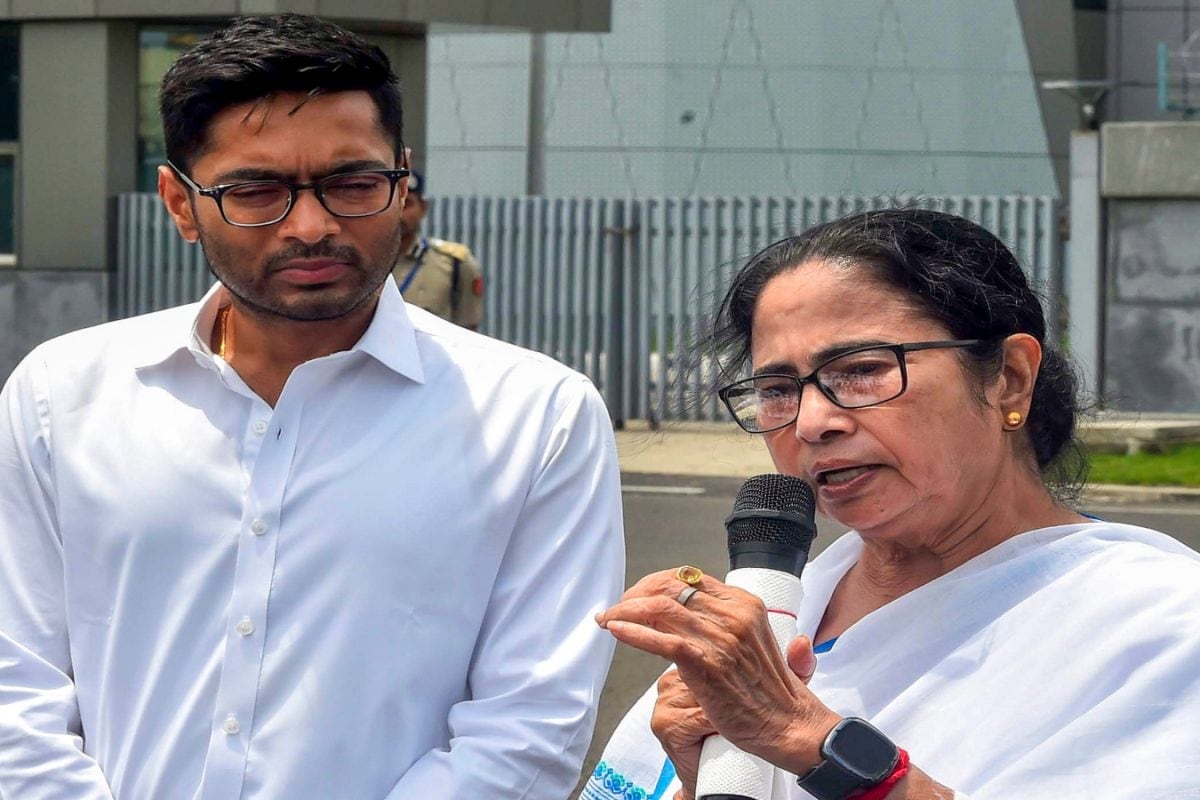
Reports from political circles indicate a significant internal churn within the Trinamool Congress (TMC), with speculation mounting that the ongoing rebellion could soon escalate to the Lok Sabha. This potential development is seen as a direct challenge to the authority and leadership of Abhishek Banerjee, a prominent figure within the party. Political observers are closely monitoring the situation, suggesting that the internal dynamics are reaching a critical juncture that could redefine power equations within the party's parliamentary contingent. The whispers of dissent, which have reportedly been simmering for some time, now appear poised to manifest on a larger, more public stage, potentially impacting the party's national presence and strategic direction.
The Trinamool Congress, a dominant political force in West Bengal, has historically maintained a strong, centralized leadership. However, like many large political organizations, it is not immune to internal disagreements and factionalism. A rebellion, in this context, typically refers to a significant group of members expressing dissent against the established leadership or specific policies, often leading to calls for change. Such internal strife can be particularly challenging for a party that aims to project a united front, especially when facing external political adversaries. The current situation, as interpreted by political analysts, suggests a deeper malaise that could have lasting implications for the party's structure and its operational efficacy both within the state and at the national level.
A key aspect of the current speculation revolves around the potential alignment of a substantial number of Members of Parliament (MPs) with the dissenting faction. Political observers specifically highlight a threshold: if "potentially 20 MPs or more" decide to align with the rebels, it could create an undeniable force within the party. In the Indian parliamentary system, a bloc of 20 or more MPs represents a significant number, capable of influencing legislative proceedings, party strategy, and internal decision-making processes. Such a large-scale defection or alignment would not merely be symbolic; it would carry considerable weight, potentially altering the balance of power within the TMC's parliamentary group and forcing the leadership to address the grievances of the rebels more directly and urgently.
The direct challenge to Abhishek Banerjee is particularly noteworthy. As a key leader and often seen as a successor figure within the Trinamool Congress, any significant internal opposition against him would test his authority and leadership mettle. A challenge of this magnitude could undermine his standing, impact his ability to steer party affairs, and potentially lead to a re-evaluation of his role and influence. Political analysts suggest that such a move would be a direct questioning of his leadership style, strategic decisions, or even his vision for the party's future. The outcome of this internal power struggle could significantly shape the future trajectory of Abhishek Banerjee's political career and his position within the party hierarchy.
Should the scenario of 20 or more MPs aligning with the rebels materialize, political observers anticipate mounting pressure for a change in parliamentary leadership. This could mean a reshuffle in who leads the party's contingent in the Lok Sabha, who serves as the chief whip, or other crucial parliamentary roles. A change in parliamentary leadership would not only be a symbolic victory for the rebels but would also grant them greater control over the party's legislative agenda and its voice in national debates. Such a shift would indicate a significant internal power transfer, reflecting a loss of confidence in the current leadership structure by a substantial portion of the party's elected representatives. It would inevitably lead to a re-calibration of the party's strategy and representation in the national legislature.
While specific details regarding the grievances of the alleged rebels remain under wraps, internal party rebellions often stem from a confluence of factors. These can include disagreements over policy direction, perceived centralization of power, dissatisfaction with candidate selection processes, concerns over organizational restructuring, or even personal rivalries among leaders. Generational shifts within a party, where older guard members might clash with younger, emerging leaders, can also contribute to such tensions. Without concrete information, it is difficult to pinpoint the exact catalysts, but the scale of the potential dissent, as suggested by observers, implies deep-seated issues that have reached a boiling point, necessitating a significant response from the party's top brass.
The broader political implications of such a rebellion extend beyond the internal dynamics of the TMC. A fractured Trinamool Congress could potentially weaken its position as a formidable regional force and an important voice in the national opposition landscape. In an era of coalition politics and the need for strong regional allies, internal instability within a major party like the TMC could have ripple effects, impacting its ability to forge alliances or effectively counter its political rivals. Furthermore, it could influence public perception, potentially eroding voter confidence in the party's stability and leadership, which is crucial for electoral success in the long run. The unfolding situation is therefore being watched not just within West Bengal but across the national political spectrum.
Political observers, whose insights form the basis of these reports, play a crucial role in interpreting the subtle signals and undercurrents of political activity. Their assessment, though speculative, is often grounded in a deep understanding of party structures, historical precedents, and the motivations of key political actors. It is important to reiterate that these are projections based on current observations and potential scenarios. The fluidity of political situations means that outcomes can change rapidly, but the very fact that such a scenario is being discussed by seasoned analysts underscores the gravity of the internal challenges reportedly facing the Trinamool Congress. The coming weeks and months will likely reveal the true extent of this internal friction.
The resolution of this potential rebellion could take various forms. It might lead to a reconciliation, a strategic compromise that addresses the rebels' concerns, or it could escalate into a more definitive split or a significant overhaul of the party's internal power structure. The top leadership will be faced with the delicate task of either quelling the dissent through negotiation and concessions or confronting it head-on, risking further fragmentation. The approach taken will be critical in determining the future unity and effectiveness of the Trinamool Congress, especially as it navigates the complex political landscape of India.
As the political temperature rises within the Trinamool Congress, all eyes remain on the developments that could potentially reshape its parliamentary presence and internal hierarchy. The prospect of a significant bloc of MPs challenging Abhishek Banerjee's leadership and demanding a change in parliamentary roles marks a critical moment for the party. The coming period will undoubtedly be a test of resilience, leadership, and the ability to maintain cohesion in the face of considerable internal pressure, with implications that could resonate far beyond the party's immediate confines.