Tiny “talking” robots form shape-shifting swarms that heal themselves
Scientists have designed swarms of microscopic robots that communicate and coordinate using sound waves, much like bees or birds. These self-organizing micromachines can adapt to their surroundings, reform if damaged, and potentially undertake complex tasks such as cleaning polluted areas, delivering targeted medical treatments, or exploring hazardous environments.
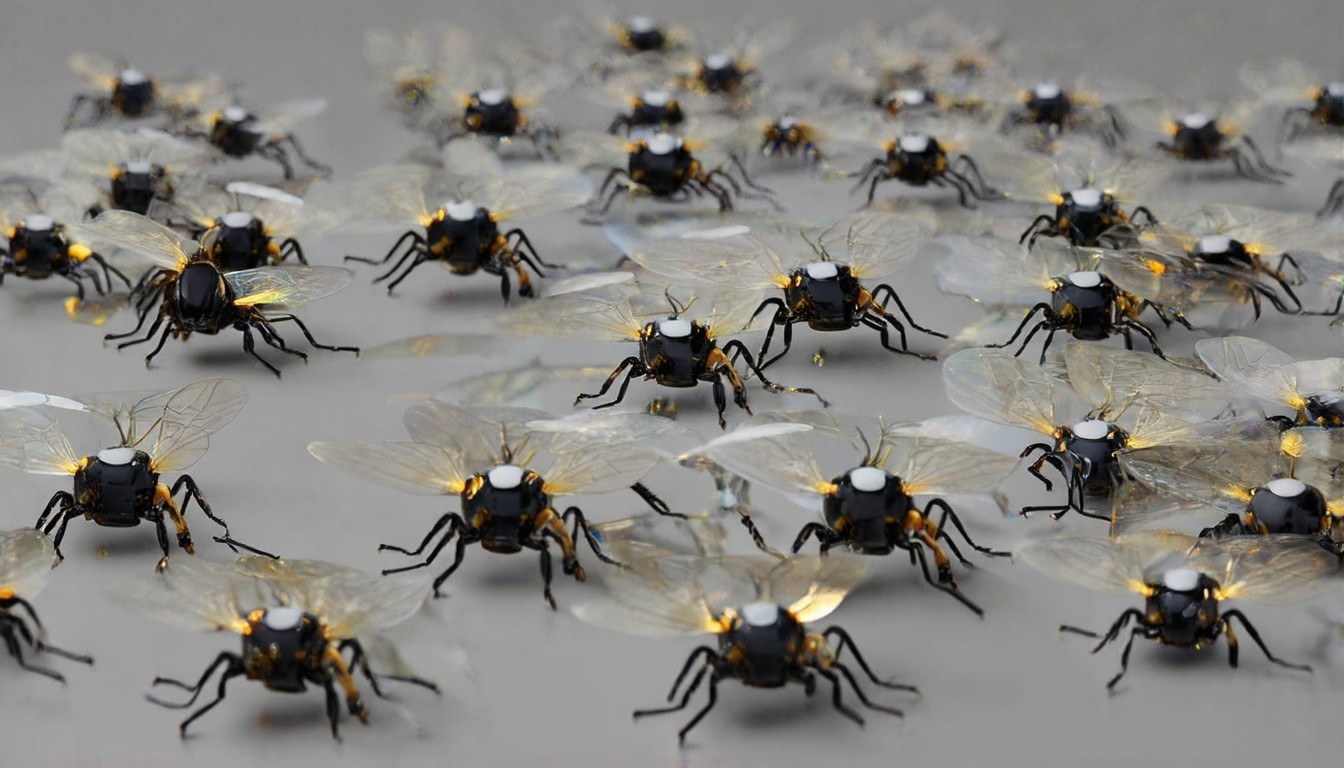
In a groundbreaking development in robotics and microengineering, scientists have created tiny "talking" robots that form shape-shifting swarms capable of self-healing. These microscopic machines, smaller than a grain of sand, communicate and coordinate using sound waves, mimicking the intricate behaviors of bees or birds. This innovative technology opens up a world of possibilities for applications ranging from environmental cleanup to medical delivery systems, and even hazardous environment exploration.
The research, conducted by a team of engineers and biologists, focuses on developing self-organizing micromachines that can adapt to their surroundings. These robots, each no larger than a few micrometers, are equipped with tiny speakers and microphones, allowing them to emit and detect sound waves. By producing specific frequencies and patterns, the robots can communicate with one another, coordinate movements, and collectively form dynamic shapes. This ability to communicate through sound waves is a departure from traditional robotics, which often rely on wireless signals or direct contact.
One of the most remarkable features of these swarms is their capacity for self-healing. If a robot within the swarm is damaged or malfunctions, the surrounding robots can detect the issue and reroute their movements to maintain the integrity of the group. This adaptability allows the swarm to continue performing its tasks even in the face of adversity. Furthermore, the swarm's ability to reform itself suggests potential applications in areas where traditional robotics are limited, such as in tight spaces or environments with restricted access.
The potential uses for these shape-shifting swarms are vast. One of the most promising applications is in environmental cleanup. By deploying swarms of these robots in polluted areas, they could potentially break down and neutralize contaminants, such as oil spills or chemical leaks, more efficiently than current methods. The swarms' ability to adapt to their surroundings would also enable them to navigate complex terrains, such as underwater or underground environments, where human intervention is often impractical.
In the medical field, these microscopic robots could revolutionize targeted drug delivery. By programming the swarms to release specific medications at precise locations within the body, they could potentially treat diseases with greater precision and reduced side effects. Additionally, the swarms' ability to self-heal could make them ideal for long-term implantable devices, as they would be less likely to malfunction or require replacement.
Another area where these robots could make a significant impact is in exploring hazardous environments. From inspecting damaged nuclear reactors to assessing the aftermath of natural disasters, swarms of microscopic robots could operate in areas that are inaccessible or dangerous for humans. Their small size and ability to adapt would allow them to gather data and perform tasks in real-time, providing valuable insights that could otherwise be difficult to obtain.
The development of these talking robots is not without its challenges. One of the primary obstacles is the miniaturization of the necessary components, such as speakers, microphones, and power sources. Scientists are currently working on improving the efficiency and durability of these components to ensure that the robots can function effectively over extended periods. Additionally, the coordination of such a large number of individual units requires sophisticated algorithms and control systems, which are still being refined.
Despite these challenges, the potential benefits of these shape-shifting swarms are significant. By leveraging the principles of collective behavior observed in nature, scientists are pushing the boundaries of what is possible in robotics. As the technology advances, it is likely that we will see these microscopic robots play a crucial role in addressing some of the most pressing challenges facing our world today.
In conclusion, the creation of tiny "talking" robots that form self-healing swarms represents a major leap forward in the field of robotics. These microscopic machines, communicating through sound waves, have the potential to revolutionize industries ranging from environmental cleanup to medical delivery, and even hazardous environment exploration. While there are still hurdles to overcome, the possibilities for these shape-shifting swarms are vast, and their impact on society could be profound. As research continues, it is clear that we are witnessing the dawn of a new era in robotics, where collective intelligence and adaptability are at the forefront.