
This Startup Is Building The OS For India’s Shrimp Economy
When four professionals with careers across Germany, the US, and Argentina returned to India more than a decade ago, aquaculture…
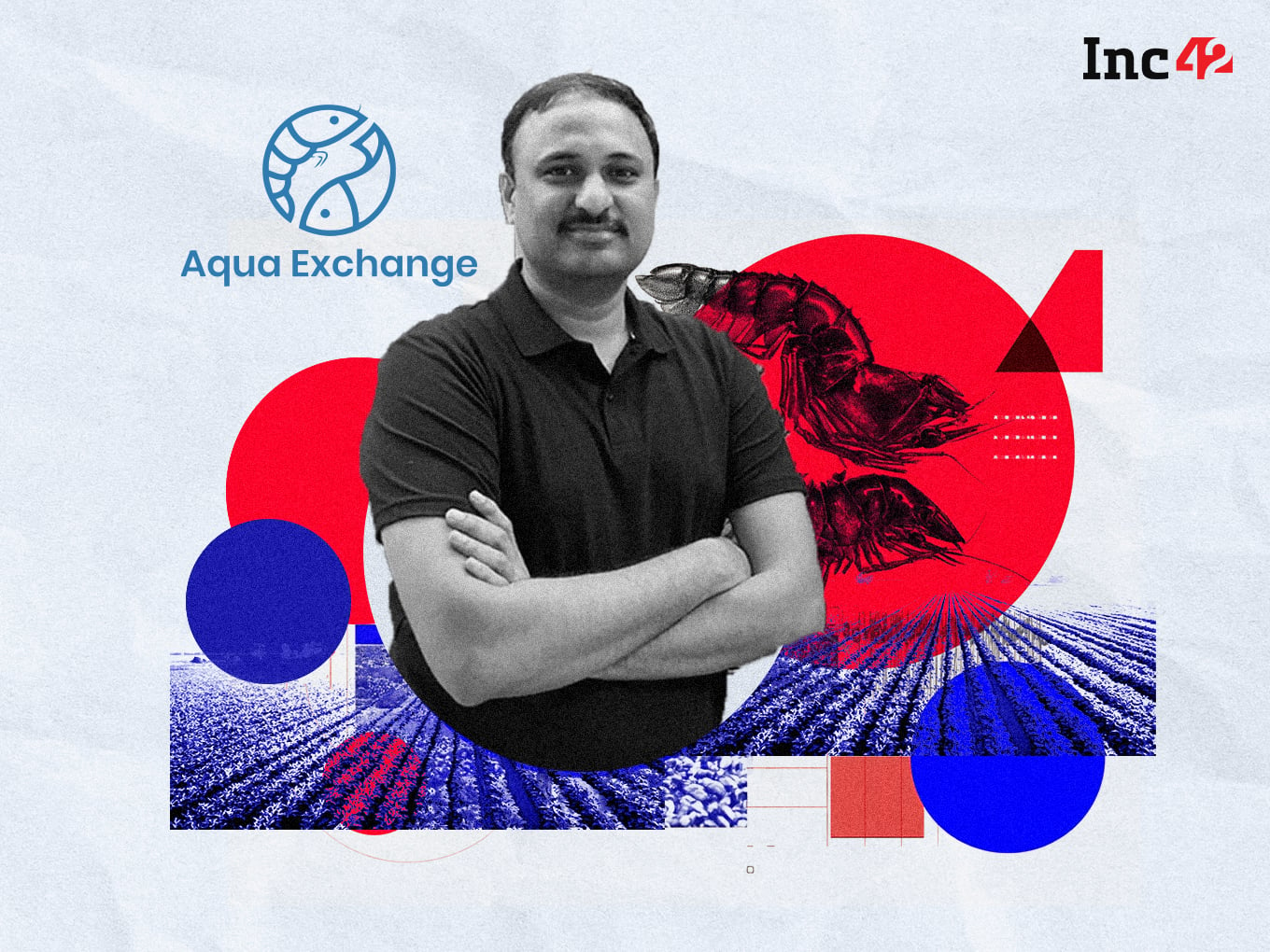
When four professionals with careers across Germany, the US, and Argentina returned to India more than a decade ago, aquaculture was not an industry they knew or one they were born into. But what they did see was a ₹35,000 Cr export industry in Andhra Pradesh running largely without formal finance, insurance, or even reliable data. That gap is what led to the creation of AquaExchange, an agritech startup that is building a full-stack technology platform for shrimp farming which combines IoT devices, AI models, financing, insurance, and market linkages. Founded by Pavan Kosaraju, Hemasundar Dhavili, Kareem Mohammod, and Kiran Bandi, after years of studying shrimp farms on the ground, the startup is now working across more than 71,000 acres of farms and nearly 6,000 farmers. Its larger ambition is to transform aquaculture, which is the controlled breeding, rearing, and harvesting of marine livestock (shrimps in this case) and eventually other animal-protein sectors using data infrastructure built directly on farms.
India's shrimp exports are among the largest agricultural exports from the country; during 2023-24, the country exported 7.16 lakh MT of frozen shrimp worth $4.88 billion, making it the most significant item in the basket of seafood exports, accounting for a share of 40.19% in quantity and 66.12% of the total dollar earnings, according to data released by the Marine Products Export Development Authority (MPEDA). Yet the ecosystem lacks basic visibility and even fundamental questions such as how many acres were under cultivation in a region often had no clear answers. Pavan Kosaraju, one of the founders of AquaExchange, told Inc42, “We had already spent some time on this before incorporation, but post-incorporation, it took us about a year to a year and a half to truly identify the core problem which was the lack of structured data and risk management. From there, we began building a bottom-up infrastructure.”
The approach was simple: acquire data from shrimp farms and use it to create a platform that would address the critical gaps in the industry. AquaExchange started by deploying IoT devices on farms to collect real-time data on water levels, temperature, and other critical parameters. This data was then fed into AI models to predict potential issues, such as disease outbreaks or water quality problems, allowing farmers to take proactive measures. The startup also developed a financing model that enables farmers to access loans based on the performance of their farms, rather than relying on traditional collateral-based lending. Additionally, AquaExchange offers insurance solutions tailored to the specific risks faced by shrimp farmers, such as losses due to disease or environmental factors.
One of the key challenges AquaExchange faced was convincing farmers to adopt their technology. Many farmers were hesitant to share their data or invest in new technologies, fearing that it would be too costly or that their competitors would gain an unfair advantage. However, the startup worked closely with farmers to demonstrate the benefits of their platform, such as improved yields and reduced losses due to early detection of issues. Over time, the number of farms using AquaExchange's technology grew, and the startup expanded its reach to other regions beyond Andhra Pradesh.
AquaExchange's larger ambition is to transform not just the shrimp farming industry, but the entire aquaculture sector. The startup believes that by building a robust data infrastructure directly on farms, they can help farmers make more informed decisions, reduce risks, and ultimately increase productivity. This could have a ripple effect across other animal-protein sectors, such as poultry and dairy farming, where similar challenges exist.
The founders of AquaExchange are optimistic about the future of their startup. They believe that by addressing the critical gaps in the shrimp farming industry, they are not only helping individual farmers but also contributing to the overall growth of the aquaculture sector in India. As the startup continues to expand its reach and refine its technology, it remains committed to using data and innovation to transform the way shrimp farming is done in India and beyond.









